- Narrator: Leon Nixon's steady delivery again anchors dense, argument-heavy material, this time leaning political rather than historical.
- Subjects: Pan-African federation, cultural and linguistic unity, decolonization-era political argument
- Tone: Argumentative, urgent, more overtly political than historical
- Bottom line: Worth seeking out for Diop's actual federation argument, but confirm the content directly since this listing's own description belongs to a different book.
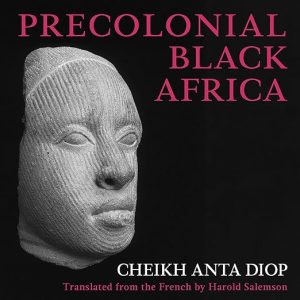
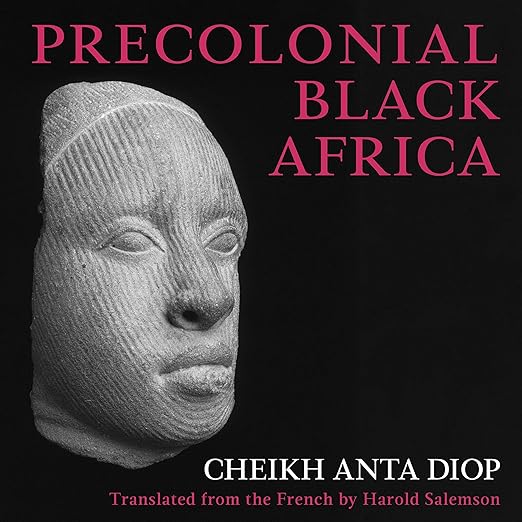
Federation, not colonization, is the argument Cheikh Anta Diop actually builds in this book, and it's worth saying plainly that the description attached to this specific listing belongs to a different Diop title, Precolonial Black Africa, whose listing carries an identical synopsis and review set. Diop's real Black Africa: The Economic and Cultural Basis for a Federated State makes a distinct, more overtly political case, that Africa's nations share enough historical, linguistic, and cultural unity to justify a federated pan-African state, not merely cultural kinship. This audiobook, narrated by Leon Nixon across eight and a half hours, deserves an accurate description rather than one borrowed from its more famous sibling.
A Policy Argument, Published First in French
Diop's actual argument in this book moves through sections on historical unity, linguistic unity, political unity and federalism, energy resources, and the industrialization of the continent, closing with an extended interview in which Diop lays out his reasoning directly. That structure makes the book read as more overtly a policy and political argument than the more historically descriptive Precolonial Black Africa, even though both titles share an author and a broader intellectual project.
The book originated in French, published by Editions Presence Africaine in the 1970s, before an expanded English translation reached wider audiences years later. Presence Africaine itself carries real historical weight, a Paris-based publishing house that served as a genuine hub of Pan-African and Negritude intellectual life through the mid-twentieth century, which situates this book within a larger, serious tradition of politically engaged African scholarship rather than a fringe or isolated project.
Scholarship in Service of African Federation
That origin also situates the book within Diop's decades-long project of putting scholarship directly in service of a political case for African unity, rather than producing detached historical analysis for its own sake, a distinction worth understanding before assuming this is simply a companion volume to his more famous comparative history.
The English translation reached readers through Lawrence Hill Books, a respected independent press with a genuine specialty in African diaspora history and politics. That publishing pedigree matters for a book this explicitly political: it signals a serious, considered English-language release rather than an incidental or poorly vetted translation of a foreign-language original.
The federation argument didn't emerge in a vacuum. It sits alongside a real, contested mid-twentieth-century debate among African leaders themselves, playing out through bodies like the Organization of African Unity, founded in 1963, over whether newly independent nations should pursue continental federation or preserve individual national sovereignty. Diop's book takes a clear side in that live political argument rather than surveying it neutrally from the outside.
Nixon Returns for the Denser Policy Chapters
The closing interview format gives listeners something the more historical sibling title doesn't: Diop's own voice and reasoning delivered directly, in his own words, rather than only secondhand through historical argument and evidence. For listeners specifically wanting his direct political positions rather than just the scholarship behind them, that closing section carries real, distinct value.
Leon Nixon narrates again here, and his steady, unhurried pacing suits this book's heavier data and statistics sections, energy resources, industrialization figures, arguments for federal structure, arguably even more directly than it suited the more purely historical material in Precolonial Black Africa. Dense policy argument benefits from exactly this kind of measured delivery that doesn't rush past the numbers.
Hearing the linguistic-unity and political-unity sections argued back to back, rather than reading them as separate chapters days apart, makes Diop's larger federation case land as a single, cumulative argument rather than a set of loosely related essays. That's a real structural advantage audio has over a print edition someone might otherwise dip in and out of over weeks.
The energy-resources and industrialization sections put Diop's argument in direct conversation with postcolonial development economics, a live, urgent question for newly independent African nations in the 1970s: whether individual states had the scale to industrialize competitively on their own, or whether pooling resources across a federated continent was the only realistic path to real economic independence from former colonial powers. That's a sharper, more concrete stake than the cultural-unity argument alone would carry.
That urgency was sharpened further by Cold War geopolitics, which newly independent African states were navigating in real time as this book took shape: aid, arms, and political pressure flowing from both the American and Soviet blocs turned the continent into a genuine arena of great-power competition. Diop's federation argument was partly a response to that vulnerability, a case that a unified continental bloc would be harder to pick apart than a collection of individually courted, individually pressured nation-states.
This Listing's Reviews Belong to a Different Book
The metadata mismatch itself is a real, practical buying caveat here, not just an editorial footnote. Listeners should not assume the synopsis and reviews attached to this specific listing describe this book, and should look up Diop's actual federation argument separately if confirming content before committing to the purchase matters to them.
Because the synopsis, reviews, and possibly the numeric rating and review count here appear to be inherited from the sibling Precolonial Black Africa listing rather than genuinely tied to this title, that 4.8 rating from 763 ratings should be treated with real caution rather than assumed to reflect this specific book's reception. Like its sibling, the actual content is dense, argumentative nonfiction, now compounded with an overtly political dimension the historical title doesn't carry.
A practical tip worth passing along: when a listing's own description doesn't match its title this clearly, cross-checking the publisher's own catalog page or the audiobook's specific ASIN before buying is a reasonable extra step, rather than relying on the platform listing alone to confirm exactly which of Diop's books a given purchase will actually deliver.
Political Economy Readers Get the Better Fit
Readers specifically interested in Diop's pan-Africanist political argument and federation case, not just his historical scholarship, are the clearest audience, as are listeners who've already worked through Precolonial Black Africa and want the more overtly political companion piece to round out the picture.
Readers and students of African political economy specifically, not just African history broadly, will find this the more directly relevant of Diop's two titles, since the federation argument engages concretely with resource and industrialization questions rather than institutional history alone, questions that remain live in African policy debates well beyond the 1970s moment that produced this book, a gap of decades rather than a handful of years.
Skip it if what you actually want is the historical comparative study of political and social systems, that's Precolonial Black Africa, not this title, or if this listing's mismatch with its own synopsis makes you want to confirm content directly with the publisher before committing to an eight-and-a-half-hour purchase, since accuracy matters more than usual here.
Common Questions
Is this Black Africa audiobook the same as Precolonial Black Africa, also by Cheikh Anta Diop?
No, they're distinct titles. This listing's synopsis and reviews currently describe Precolonial Black Africa's content, a historical comparative study, while Diop's real Black Africa makes a separate, more overtly political case for African federation.
Why doesn't this audiobook's listed synopsis match its actual title and subject?
The synopsis and attached reviews on this listing appear to have been copied from a sibling Diop title, Precolonial Black Africa, rather than describing this book's own federation-focused argument, a metadata mismatch worth knowing before buying.
What case does Diop make for a federated African state in this audiobook?
He argues that Africa's nations share enough historical, linguistic, cultural, and economic unity to justify formal political federation, building the case through sections on unity, energy resources, and industrialization before closing with his own interview.
How long is the Black Africa audiobook, and who narrates it?
It runs approximately eight and a half hours in this listing, narrated by Leon Nixon, though given the metadata mismatch, confirming the exact runtime directly before purchase is a reasonable precaution.