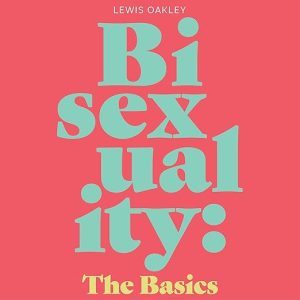
Questions, not chapters, are the organizing unit of this audiobook, and the description opens with three of them before it tells you anything about the author. My partner doesn't believe I'm bisexual, what should I do. How should I approach sex with someone of a different gender for the first time. Can I reconcile being bisexual with wanting a biological child. Whatever else Lewis Oakley's book is, it starts from what people are actually stuck on rather than from a definition that has to be argued down first.
Answering Real Questions Instead of Justifying the Book
Lewis Oakley writes the Ask A Bi Dad column, and this book is what happens when a columnist's inbox gets organized into four hours of answers. The format carries an advantage that is easy to underrate: nobody has to build a case for why the subject deserves a book. The questions do that work by existing, and Oakley can spend his time answering rather than justifying, which keeps the register conversational instead of defensive.
Bi-specific guidance is thinner on the ground than the size of the population would suggest, and a great deal of general queer writing treats bisexuality as a stop on the way somewhere else. The copy names that problem directly: experimentation versus orientation, presenting as a straight-passing member of a queer community, having your attraction to multiple genders discredited by people on both sides of it. Those are the pressures the book is built to address, and it addresses them one at a time.
John Murray published it, and the copy sells the tone as warm, chatty, wise and startlingly honest before signing off with the phrase your new bi bible. That last flourish is publisher language and oversells a modest book, but the four adjectives before it are accurate to what Oakley is doing. He answers as a person who has lived the questions rather than as an authority delivering findings, and the difference shows in how few of the answers end in a rule.
Partners and Relatives Get Just as Much
Partners, relatives and friends are half the intended audience, which is unusual for a book shelved under identity. A five-star entry headed Fantastic sensible book about a subject many find challenging says so outright: it recommends the book to bisexual people working out what the word means for them and, in the same breath, to the partner, friend or relative of someone bisexual. Books that can be handed sideways like that are rarer than they should be.
Oakley's range across the questions is what most recommends the book. The description alone moves from a partner's disbelief to first experiences with a different gender to the question of biological children, which spans doubt, sex and long-term planning inside three lines. Four hours and six minutes is not long enough to be exhaustive on any of them, and the book does not pretend otherwise. What it offers is a first pass that leaves you better equipped to have the conversation you were avoiding.
Author-read nonfiction of this kind gains something specific: the answers come from the person who wrote them, in the register a column is written in, so the shift between a light aside and a serious answer belongs to one voice rather than to an interpretation of it. Oakley is credited as the sole reader and no second performer appears in any field, which suits a book that is essentially one long conversation held with a lot of different people.
Two Written Reviews, and Neither Discusses Listening
Nine ratings sit behind this listing and only two written responses accompany them, which is a thin evidence base by any measure. Both are positive, one at four stars and one at five, and the longer of them breaks off mid-sentence while describing a reading experience, so even that entry stops before its point arrives. Treat the average as a signal rather than a finding, and read both entries yourself before you weigh it.
Both written entries describe reading rather than listening, which is worth knowing on a question-and-answer book. A reader can skim to the question that applies to them and skip forty they have already worked out. A listener cannot, unless the file carries a usable chapter list, and no chapter or question index appears anywhere in the fields. On this format the navigation problem is not cosmetic, it is most of the value.
Sex is discussed directly, starting with the second question in the description, and the listing carries no content guidance of any kind. That matters mainly for anyone planning to share it with a teenager working through their own questions, which is a plausible use for a book pitched at this level. The four-star response praises the format and the relief of reading other people with similar experiences, which is closer to how the book actually functions.
Best When the Question Feels Slightly Embarrassing
Bisexual listeners in the middle of the confusion Oakley names are the obvious audience, and so is anyone who loves one of them and has run out of useful things to say. It works best when the question is specific and slightly embarrassing, the kind you would ask a friend before you asked a therapist, and it never treats those questions as beneath it.
Academic readers should look elsewhere. This is not a survey of the literature on bisexual identity, it carries no research apparatus, and its authority comes from experience and a correspondence column rather than from citation. Listeners who want structure and progression through a subject will also find the format loose by design, since a set of answers does not build the way an argument does. What you get instead is a book you can hand to someone who needs it, which is the harder thing to write.
A Few Questions About Bisexuality: The Basics
Is the audiobook useful if you are not bisexual yourself?
Yes, and that appears to be half the design. The opening question in the description comes from someone whose partner does not believe them, so the partner sits inside the frame from the first minute. Oakley answers with both parties listening, and nothing in the register assumes you already know the vocabulary.
How does the audiobook handle the question-and-answer structure?
Oakley answers one question at a time rather than building a continuous argument, so passages stand alone. The drawback is navigation: no chapter or question index appears in the listing fields, and a listener cannot skim to the entry that applies to them the way a reader can.