Before You Press Play
- Voice: Saskia Maarleveld brings a grounded, warm register to Rees's practical and occasionally blunt text, the tone suits the book's refusal to be either saccharine or lecture-heavy.
- Big ideas: Body image and body neutrality, the psychology of social comparison, practical self-confidence without toxic positivity
- Atmosphere: Clear-eyed and encouraging, with enough edge to feel honest rather than comforting
- Worth it?: One of the more genuinely useful audiobooks in the self-confidence space, Rees applies psychology rather than affirmation, which makes the tools she offers actually stick.
Anuschka Rees wrote Beyond Beautiful as a psychology-driven response to a wellness industry that offers self-love as a destination you can reach by feeling differently about yourself. This audiobook makes the case for a more rigorous approach: the problem is not primarily how you feel about your body but the thought patterns and social mechanisms that produce those feelings in the first place, and addressing the roots is more effective than managing the symptoms. That distinction is the book's backbone, and it is a cleaner and more honest framework than most books in this space manage to sustain across their full length. The Library Journal gave the book a starred review, praising its coverage of every aspect of the body-image problem and its feasible ideas for accepting one's physical appearance in ways that enhance confidence and joy.
The audiobook runs to four hours and twenty-seven minutes, and Rees is precise throughout rather than expansive. She does not pad her arguments with the kind of repetitive affirmation that inflates many self-help titles in this genre. Each section identifies a specific mechanism, social comparison, the distortions produced by photography and social media, the gap between self-image and how we actually appear to others, and offers concrete tools for addressing it rather than simply reframing it through more positive language. The distinction between addressing and reframing is the whole argument, and Rees earns it by staying concrete throughout.
Body Neutrality Asks You to Disengage Entirely
The body neutrality framework Rees works with is genuinely different from body positivity, and it is worth understanding the distinction before you begin listening. Body positivity asks you to feel good about your body. Body neutrality asks you to disengage from the evaluation entirely, to move your body's appearance from the center of your self-assessment to a position where it carries less weight. Rees does not tell you that you should love how you look. She tells you that the amount of mental and emotional energy most people spend assessing how they look is itself the problem, and that reducing that energy rather than redirecting it is the actual goal. One reviewer described this as a relatively new concept she had not fully grasped before encountering the book, and found it more durably liberating than the positivity approach had been for her.
The questions Rees addresses are specific and recognizable: why do I hate how I look in pictures, how do I stop feeling like a total slob compared to everyone on social media, what does self-confidence without performance actually look like in practice. These are not abstract questions, and Rees's answers are not abstract either. She draws from cognitive psychology, from research on social comparison, and from the practical experience of working through these questions with real rigor. The result is a book that feels usable rather than inspirational in the hollow sense of the word.
Maarleveld Turns Skepticism Into Solidarity
Saskia Maarleveld's narration is a genuine asset to the listening experience. She reads Rees's text with a steady, grounded warmth that suits the material's tone precisely. The book is blunt in places, and Maarleveld delivers the bluntness without making it land as harsh or dismissive. When Rees asks questions like how exactly does this self-love thing work, Maarleveld's delivery makes the skepticism feel like solidarity rather than condescension. That tonal calibration is not easy to achieve, and it makes the audiobook a considerably more welcoming experience than a flat or lecture-heavy narration would have been.
The audio format works particularly well for the sections where Rees is walking through specific strategies for challenging negative self-talk in real time, because hearing the process described creates a different kind of cognitive access than reading it on the page. You can absorb the framework while moving through your own day in ways that keep the material from feeling like homework. One reviewer noted she could not stop talking about the book after listening to it, which is a useful indicator of the kind of active processing the audio seems to prompt in the people who encounter it this way.
The Illustrations Stay Behind in Print
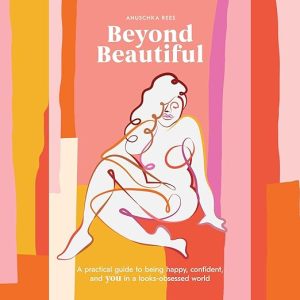
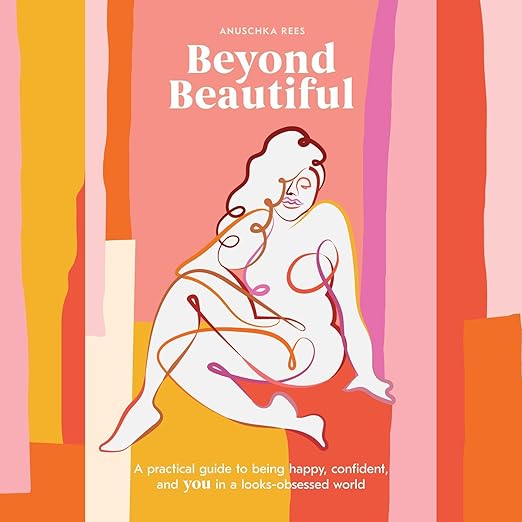
The print edition of Beyond Beautiful is illustrated with full-color art, and that visual dimension is part of its appeal. At least one reviewer specifically mentioned the illustrations and the book's layout as adding to the experience. The audiobook carries the complete argument and all practical content, but the illustrated design of the original cannot travel into audio. Listeners who discover the audiobook first and find it useful may want the print edition as a companion object, particularly for sections they want to return to and work with actively.
At just over four hours, the audiobook is short enough that certain topics receive less development than they might deserve. The sections on social media and photography as specific distorting mechanisms are particularly useful but move quickly. Listeners who want to go deeper on the psychology of self-image after finishing this audiobook will find references in Rees's source material, and several of the frameworks she draws from have longer dedicated treatments available. Think of this audiobook as an essential map rather than the complete territory.
An Unusually Productive Use of Four Hours
This audiobook is for women who have found body positivity frameworks either theoretically appealing or practically ineffective, and who are looking for a more grounded, psychologically rigorous approach. It is also for anyone who spends significant mental and emotional energy on self-assessment and wants tools for reducing that expenditure rather than just redirecting it. Listeners who have struggled with body image in the context of injury, illness, or significant physical change will find Rees's framework specifically useful. One reviewer described returning to the book after a back injury that destabilized her relationship to her body, and finding it more genuinely helpful than fat acceptance literature had been. Maarleveld's narration and the precision of Rees's thinking make this four hours an unusually productive use of listening time.
What is the difference between body neutrality and body positivity, and how does the Beyond Beautiful audiobook address it?
Rees explains body neutrality as the goal of removing body appearance from the center of your self-assessment rather than trying to feel positively about it. Body positivity asks you to feel good about how you look; body neutrality asks you to disengage from the evaluation as a primary measure of self-worth. Several reviewers describe this distinction as the book's most clarifying contribution.
Does the Beyond Beautiful audiobook lose anything from the print edition's illustrated format?
Yes, the print edition is illustrated with full-color art, and at least one reviewer specifically mentions the visual design as part of the book's appeal. The audiobook carries the full argument and all practical content, but the illustrated dimension of the original design is absent. Listeners who discover the audiobook first may want the print edition as a companion.
Is Saskia Maarleveld's audiobook narration well-suited to Rees's blunt, psychology-driven style?
Yes. Maarleveld delivers the book's more direct observations with warmth rather than severity, which keeps the material from feeling like a lecture. The balance between candor and encouragement that reviewers praise in the book comes through clearly in the narration.
How long is the Beyond Beautiful audiobook, and is it substantive enough for its subject?
The audiobook runs to four hours and twenty-seven minutes. Rees works efficiently rather than comprehensively, she addresses specific mechanisms and offers concrete tools without padding the argument. Some topics move quickly, and listeners who want deeper development on particular sections will find references for further reading in the source material.