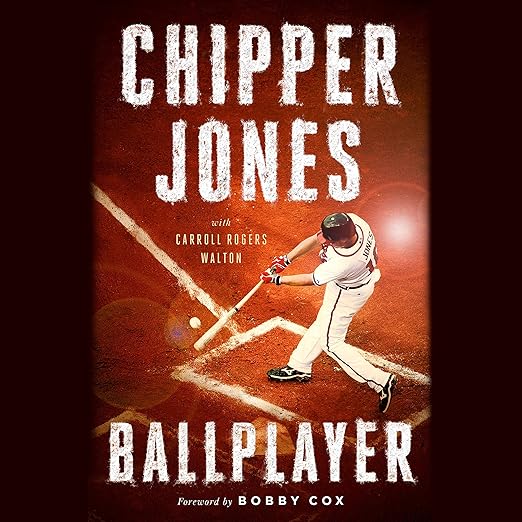
I started listening to Ballplayer on a long drive home from visiting family in Georgia, which felt oddly fitting. There is something about that stretch of interstate, kudzu climbing the tree lines, that pulls you toward a certain kind of Southern storytelling. Chipper Jones is that kind of storyteller: direct, proud of where he comes from, and not especially interested in protecting his own image when the truth is more interesting. By the time I hit the city limits, I was already deep into his minor league years, and I kept the engine running in the driveway for another twenty minutes rather than break the thread. That does not happen with every sports memoir.
How Ballplayer Holds Up
Jones builds his story from the ground up, beginning in Pierson, Florida, where he learned switch-hitting in his backyard with his father. That origin story could easily turn saccharine, but Jones keeps it grounded in specifics: the mechanics of hitting from both sides of the plate, the particular stubbornness his father instilled, the way small-town life shaped his sense of what loyalty meant long before the Braves made him the number one overall pick in the 1990 draft. He earns the nostalgia rather than just invoking it.
What works best here is the window into the Braves' fourteen-straight division-title run from the inside. Jones reconstructs the clubhouse chemistry between Maddux, Glavine, and Smoltz with the kind of pitch-by-pitch detail that will make any baseball fan put down whatever they are doing and pay attention. The 1995 World Series championship section is vivid and specific, and his account of facing Clemens and Randy Johnson at their peaks is the sort of baseball writing that reminds you how precise and almost philosophical the confrontation between pitcher and hitter actually is. He tracks each at-bat with a recall that should feel impossible for something that happened thirty years ago, and yet it reads as lived rather than reconstructed.
The sections covering the 2005 Baby Braves, Jones reflecting on what happens when a dynasty finally ages out of itself, are among the most quietly moving passages in the book. There is a particular sadness to watching someone describe the end of an era they were central to, and Jones does not flinch from it.
Why Ballplayer Works as an Audiobook
Most athletic autobiographies are thinly disguised blueprints for the speakers circuit. Ballplayer is not that. Jones is open about his marital failures, his overnight celebrity and the personal wreckage that came with it, his complicated relationship with the New York Mets fans who genuinely despised him, and his equally complicated feelings about the steroid era and what it meant to compile Hall of Fame statistics during that period. He does not pretend these were easy things to sort through, and he does not wrap them in easy lessons learned.
One reviewer who admitted they had never particularly liked Jones came away understanding him better and recommending the book to anyone interested in how athletes navigate fame and failure. That is the test a memoir like this has to pass. Jones passes it, not because he is likable throughout, but because he is honest enough to let listeners form their own conclusions. Another listener compared the experience to the film Lady Bird, which is a striking comparison for a baseball book, but the instinct is right. This is fundamentally a coming-of-age story dressed in baseball gear.
Weak Spots in Ballplayer
Deakins is a seasoned narrator with the kind of warm baritone that suits Southern storytelling, and he handles the material with appropriate confidence. The choice to have Jones read the prologue and epilogue himself is the right one: you hear the slight drawl, the deliberate pacing of a man who has told these stories many times but still means them. Deakins carries the full body of the book, and the transition between narrators is smooth enough that you rarely feel the seam.
The narration is particularly effective in the technical baseball passages, where Deakins slows slightly to let the pitch sequences land. Some audiobook narrators rush through sport-specific detail as if embarrassed by it. Deakins treats it as the substance it is, giving the plate confrontations the weight Jones clearly intends them to carry.
It is worth noting that the book's treatment of the Braves' heartbreaking postseason losses, the years when they won their division and then fell short in October, carries a particular weight in audio. Jones does not soften these stretches or explain them away. He sits with the frustration in a way that resonates whether or not you have ever cared about baseball, because what he is really describing is the specific ache of sustained excellence that never quite converts into ultimate success. That is a recognizable human experience in almost any field.
Should You Listen to Ballplayer?
If you grew up watching the Braves dynasty of the 1990s, this audiobook will feel like a long-overdue reunion. Braves fans and anyone who followed that era of National League baseball will find the clubhouse anecdotes and era-specific detail completely absorbing. The book also works well for listeners who enjoy memoirs that do not flinch from personal failure alongside professional triumph.
If you have no patience for baseball culture at all, the pitch-by-pitch reconstructions and the season-by-season structure may wear on you. Jones is writing for people who care about the game, and he does not apologize for that. The personal candor might carry you through if you are otherwise indifferent to the sport, but it is a secondary draw rather than the main event.