- Voice: Marc Cashman is a confirmed fit for this exact series, warm and age-calibrated without condescension, precisely what an early chapter book mystery needs.
- Big ideas: Amateur kid detectives, real ballpark settings, sports-adjacent mystery
- Atmosphere: Gentle, brisk, and genuinely puzzle-driven
- Worth it?: A strong, low-stakes entry point for young baseball fans just graduating from picture books; short runtime, but that's the point.
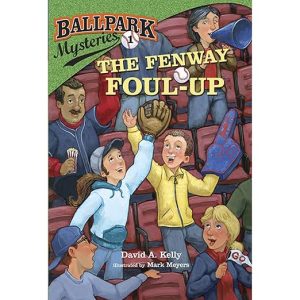
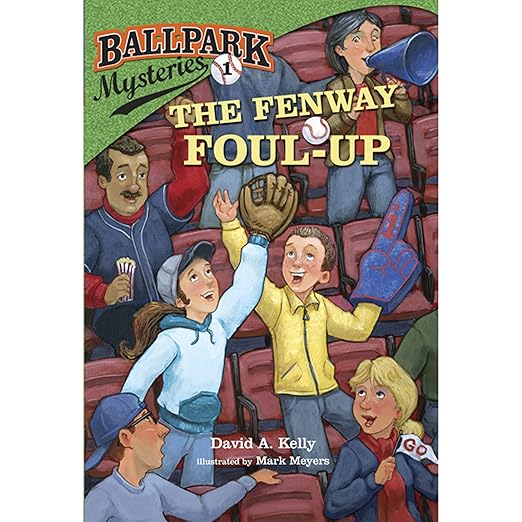
Cousins Mike Walsh and Kate Hopkins get all-access passes to Fenway Park thanks to Kate's mom, a sports reporter, and within minutes of arriving, a Red Sox star's lucky bat goes missing right in front of a crowd of witnesses. That's the setup for The Fenway Foul-up, the first audiobook in David A. Kelly's Ballpark Mysteries series, and it wastes no time getting young listeners into the middle of a real whodunit. Big D, the Red Sox slugger whose bat vanished, can't seem to hit anything without it, which gives Mike and Kate a ticking clock alongside the mystery itself. At just over an hour, this is an early chapter book built for kids who are ready to graduate from picture books but aren't ready for anything long.
A Reluctant Reader Ends Up Assigning a Report
Kelly clearly built this series with a formula in mind, real ballpark, real regional detail, kid detectives, a theft or mystery that ties into the sport itself, and Fenway Foul-up executes that formula cleanly for a launch title. The bonus fun-fact page about Fenway Park included with this edition signals the series' real ambition: teach kids something true about American ballparks while they're absorbed in a puzzle plot. It's a smart pairing, since baseball fans get the stadium trivia and mystery fans get an actual case to solve alongside Mike and Kate.
Reviewer Danielle's account captures what this book does well for reluctant readers: her seven-year-old, a serious baseball fan, went from uninterested in books to assigning himself a book report on Fenway Foul-up, with the next installment already queued up. That's the series doing exactly what an entry point is supposed to do, hook a specific kind of kid through a specific kind of interest.
A Game Clock and a Mystery Clock Together
The synopsis pitches the series as a cross between Ron Roy's mystery novels and Matt Christopher's sports fiction, and that comparison is a useful shorthand for parents scanning for the right next book, familiar puzzle-solving structure paired with real sports detail rather than a generic mystery with baseball scenery bolted on. Each entry in the series is set in a different American ballpark, which gives the whole series a built-in hook for baseball-loving families working through actual stadiums their kids might recognize from watching games.
A nice structural trick ties the mystery's stakes directly to the game itself: Big D can't hit without his lucky bat, so the Red Sox's chances in the game currently being played hang in the balance right alongside whether Mike and Kate solve the case in time. That dual clock, the game clock and the mystery clock running together, gives even young listeners a clear, immediate reason to keep paying attention beyond simple curiosity about whodunit.
This Holds Up Across Every Reading Format
Marc Cashman narrates, and this is squarely in his wheelhouse. He's narrated other entries in this same Ballpark Mysteries series, and his work across David A. Kelly's early chapter books consistently gets described as warm and age-calibrated without condescension toward the youngest listeners. For a mystery aimed at kids who are just old enough to follow a plot with real stakes, a stolen bat, a ticking clock before the game, that balance matters. Too flat and kids disengage, too broad and the mystery elements stop feeling like a real mystery.
Reviewer B. Ormond described alternating between reading pages aloud and letting her six-year-old read independently, noting the books are 'challenging enough that they take a while to read,' which for a family listening together instead translates into an audiobook that holds attention without being so simple it's boring for an adult in the room too. Kristina McDaniel's kindergartener finishes a book roughly every week, a pace that suggests the mystery unfolds at exactly the right speed for beginning listeners.
The alternating reading approach several reviewing parents describe, part read-aloud, part independent reading, part audiobook, suggests this material holds up across multiple formats, which is a meaningful endorsement for any narration. A book that only works well in pure audio, or only in silent reading, would show more strain when families mix formats the way real households actually do.
Three Reviews, Zero Mentions of the Narration
At just over an hour, this is not a book that will occupy a long car ride on its own, so go in knowing this is designed as the first course in what's clearly meant to be a long series, not a standalone adventure. The mystery itself is appropriately gentle for the age range: no real menace, just a puzzle to solve, so don't expect much tension beyond who took the bat and why.
None of the narration specifically comes up across the three reviews attached to this listing, they're largely written from the perspective of parents reading the print edition with their kids, so if narration quality on this exact title is the deciding factor for you, treat that as an area with limited direct listener feedback rather than a confirmed strength.
The mystery's resolution also arrives efficiently rather than through an elaborate series of red herrings, which suits the age range but means older kids already accustomed to more complex whodunits in shows or books built for slightly older readers may find the reveal fairly straightforward. That simplicity is a feature for a first mystery, not a flaw, but it's worth calibrating expectations around.
That same fun-fact bonus is a small but meaningful addition for parents hoping their kids absorb real information alongside the fiction. It's a light-touch approach to education, no quiz, no forced lesson, just genuine ballpark trivia tacked onto a story a kid already wants to finish, which tends to work better than material that announces itself as educational up front.
A Low-Risk Test Before a Longer Series
This is aimed squarely at early readers and listeners in the five-to-eight range, particularly kids who already love baseball or sports in general. The Fenway setting and the fun-fact page give it an educational hook that parents looking for content with some real-world value alongside the entertainment will appreciate.
Families building a consistent bedtime or car-ride listening routine will appreciate how quickly this can be finished, and how naturally it leads into the next ballpark and the next mystery once a young listener is hooked. It's a low-risk way to test whether a particular child responds better to mystery stories or straightforward sports narratives before committing to a longer series.
Parents of kids who need faster-paced, higher-stakes mysteries should probably wait until their reader has grown into the chapter-book mysteries built for slightly older audiences. This one is deliberately gentle, appropriately so for its intended listener, but it won't satisfy an eight- or nine-year-old already craving real twists.
Frequently Asked Questions
What age range is the Ballpark Mysteries audiobook series appropriate for?
This is built as an early chapter book, roughly ages five to eight, based on reviewer accounts of kindergarteners and early elementary kids finishing it independently or with a parent.
How long is The Fenway Foul-up audiobook?
Just over an hour, short enough for a single car ride or a couple of bedtime sessions.
Do I need to visit Fenway Park or know baseball to enjoy this audiobook?
No prior baseball knowledge is required. The mystery plot carries younger listeners along on its own, though the included fun-fact page about Fenway Park is a nice bonus for kids already into the sport.
Is this the first book in the Ballpark Mysteries series?
Yes, The Fenway Foul-up is book one, and each entry in the series is set in a different American ballpark.