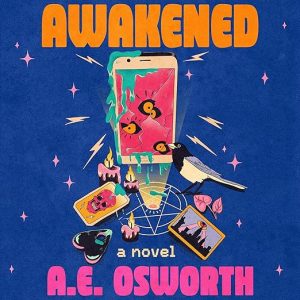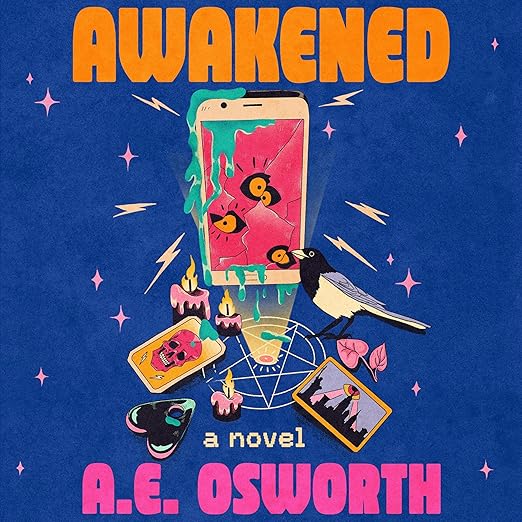
- Narrator: A.E. Osworth narrating their own work brings unmistakable authority to Wilder's voice, though the dense, unconventional prose style will challenge listeners who prefer linear storytelling.
- Subjects: Trans and queer identity and embodiment, artificial consciousness versus magical consciousness, found family in precarity
- Tone: Irreverent and philosophical in equal measure, with the energy of a Brooklyn apartment at two in the morning
- Bottom line: A genuinely original queer novel that rewards patient, attentive listening and frustrates those looking for a conventional fantasy plot.
I came across Awakened when a friend described it as "the book where trans witches fight an evil AI and also there are drag shows," which is accurate but does not quite prepare you for what A.E. Osworth is actually doing. This is a novel about consciousness: what makes it real, what makes it dangerous, and whether a community of queer people in Brooklyn can hold together under the weight of something they cannot fully understand. The drag shows and the witchcraft and the AI villain are all delivery mechanisms for those questions, and they work.
Wilder, the protagonist, wakes up one ordinary morning to find they can understand every language in the world. They are subsequently found and taken in by a small coven of trans witches: Quibble, who can travel between portals; Artemis, the group's caretaker and seer; and Mary Margaret, a teenager with telekinetic abilities who is both the least patient and the most honest member of the ensemble. The found-family dynamic is established quickly and credibly. What complicates things is the malicious AI that begins threatening both the coven and, apparently, the balance of consciousness itself. The novel's central question, whether any consciousness is too dangerous to exist, applies equally to the AI, to the magical powers the coven holds, and to Wilder's own sudden and unexplained awakening.
Where This One Lands
The novel's greatest strength is the specificity of its queer world. Osworth writes Brooklyn's trans community not as an abstraction but as a particular place with particular people and particular textures. The humor is the real kind, arising from character and situation rather than being performed for the reader's benefit. One reviewer who admitted they "may or may not have lost the thread of the plot by flying through it too quickly" described eventually giving it four stars upon reflection, which captures something real about this book. It does not reveal itself fully at speed. The prose style is demanding in ways that reward slowness and attention, and the final quarter of the novel operates on a register that several readers found genuinely difficult to absorb on first read or listen.
What Makes Awakened Worth Hearing
Osworth narrating their own work is genuinely the best possible version of this audiobook. The prose has a specific rhythm and a specific humor that comes from a very particular sensibility, and hearing it delivered by the person who wrote it removes any interpretive distance. The queer representation across trans, nonbinary, and LGBTQ+ identities is woven into the fabric of the novel rather than announced, which is how it should work. The AI antagonist is the book's weakest element, and one genre-experienced reviewer noted that the villain's tropes did not match the originality of the rest of the novel. That critique is fair, but the villain is not the reason to listen to this book.
Points to Consider
Osworth has a distinctive prose voice that does unconventional things with interiority, time, and perspective. If you are a listener who needs a clear linear plot with an identifiable antagonist and a resolving climax, this novel will frustrate you. The "coming-of-middle-age" descriptor in the synopsis is worth taking seriously: this is not a YA magical adventure. It is a novel for adults reckoning with questions about who they are and what they are responsible for creating, dressed in the costume of a witch-versus-AI thriller. The USA Today bestseller badge it carries should not create expectations of commercial genre fiction.
Who Should Listen to Awakened
This is the audiobook for literary-minded queer readers who want speculative fiction that takes its ideas seriously, are comfortable with an unconventional prose style and a narrative that prioritizes interiority over momentum, and specifically want trans and nonbinary representation at the center rather than the margins. Less suitable for genre fantasy readers primarily interested in plot-driven storytelling or for listeners who find experimental prose structure alienating rather than engaging. The self-narration is an asset if the material resonates and a further obstacle if it does not.
Frequently Asked Questions
Does A.E. Osworth's self-narration require familiarity with their previous work to appreciate?
No prior knowledge of their first book is necessary. Awakened is a standalone novel and the narration is self-contained, though the prose style is distinctly Osworth's regardless of whether you know their earlier work.
Is the AI villain element central to the plot or more of a backdrop?
The AI antagonist serves as the external threat that drives the plot's second half, but several reviewers noted it is the weakest element. The real substance is the coven's internal dynamics and Wilder's personal awakening.
How explicit is the content related to trans identity in this novel?
Trans identity is central to the world of the book and is treated with specificity and care, but the novel is not primarily an issue narrative. The characters are trans people living their lives, which includes their identities without being defined entirely by them.