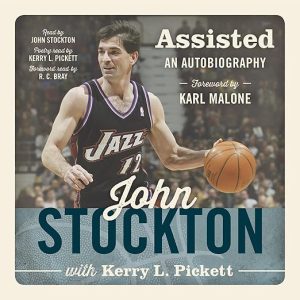
- Voice: John Stockton reads his own memoir with the same understated directness he brought to the court, never performing emotion he hasn't earned.
- Big ideas: Faith and family as foundations of athletic longevity, competitive humility, small-market legacy
- Atmosphere: Reflective and warm, with quiet conviction running throughout
- Worth it?: Stockton fans wanting to understand the man behind 15,806 assists will find this memoir far more personal and affecting than a straight basketball retrospective.
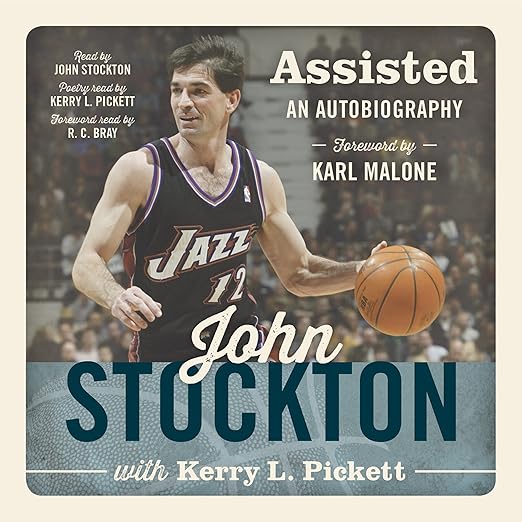
John Stockton's Assisted is the kind of autobiography that keeps circling back to a central conviction: the people around you matter more than the records your name holds. That's a striking position for the NBA's all-time assists leader to take, and yet this audiobook, narrated by Stockton himself, makes that conviction feel earned rather than performative. His voice carries the same quiet authority that defined his 19 seasons with the Utah Jazz, and listening to him tell his own story, you begin to understand why the man who retired with 15,806 career assists and 3,265 steals spent so little time acting like he was aware of either number.
Self-narrated sports memoirs occupy a distinct category in the audiobook world. When the subject reads his own words, you either get someone genuinely at ease with introspection or someone visibly uncomfortable with the intimacy the form demands. Stockton belongs to the former group, and it shapes the entire listen. This is not a performance calibrated for dramatic effect. The pacing is conversational, occasionally almost too modest, but that modesty is precisely the point, and it reveals something about Stockton's character that a polished professional narrator would inevitably smooth away.
What We Made of It
What sets this memoir apart from standard NBA retrospectives is its refusal to make basketball the organizing principle of the narrative. Stockton structures his life around family, faith, and the relationships built across decades of competition, with his basketball career woven through rather than foregrounded. Coach Frank Layden's observation, cited in the book, captures the underlying theme well: nobody measured his heart. The statistical record that everyone knows is almost beside the point here. Stockton is more interested in the network of people who helped him become who he is, which is exactly what the title signals and what the memoir consistently delivers.
This approach has drawn some gentle pushback from listeners who arrived hoping for more court-level basketball content. One reviewer noted that fans might crave more coverage of the game itself rather than life's lessons. That's a fair observation but not a criticism of what the book actually set out to do. Stockton wrote the book he wanted to write, one described as a thoughtful recounting of the people, places, and events that connected with him along his path. If your primary interest is tactical analysis of the Jazz's pick-and-roll offense or the full back story of back-to-back Finals runs with Malone, you'll need to supplement elsewhere. But if your interest is in the man behind the records, the book is generous with exactly that.
Why Assisted Works as an Audiobook
The audiobook format suits this material particularly well because Stockton's voice carries emotional information that the written page would present more flatly. When he discusses family, faith, and the particular texture of growing up in Spokane before anyone imagined him playing 19 NBA seasons, the read is distinctly personal in a way that benefits from hearing him say it. One reviewer called it a shining example of how we may aim high, own up to limitations and occasional defeats, and keep pushing forward while welcoming wisdom from others, and that framing is accurate. The book sounds like an extended conversation with someone who has spent a great deal of time thinking carefully about what actually matters.
For listeners who grew up watching the Jazz and never quite understood why Stockton remained so resolutely unpretentious throughout a career that made him one of the best point guards in league history, this memoir provides the context. The competitive fire is acknowledged but not romanticized. The fame is treated as secondary to the obligations that come with it. Even the famous moments, including his partnership with Karl Malone and Utah's playoff consistency across his entire career, are recalled with more attention to relationship than to scoreline.
What Might Not Land
Faith is central to this book, not incidentally referenced but genuinely structural. Stockton's Catholic faith informs his values, his family life, and his approach to competition in ways the text doesn't shy away from. Listeners who prefer their sports memoirs secular should know that going in. The treatment is personal rather than evangelical, but it's substantive and consistent, not a passing reference in an otherwise secular sports narrative.
Similarly, the book's emotional register is consistently measured. Stockton doesn't dramatize. The writing, and his reading of it, tends toward understatement even in moments that might invite more heat. One reviewer described it as very John Stockton: humble, and unaware of his own greatness. A second noted it as a beautiful sequel to his Hall of Fame speech in sensibility. Whether that tonal consistency reads as authenticity or emotional restraint depends on what you're looking for, but it's worth knowing that this is a quiet book about a famously quiet competitor.
Who Should Listen to Assisted
This audiobook rewards Utah Jazz fans, anyone interested in how elite athletes sustain long careers through values rather than ego, and readers who appreciate memoir structured around relationships rather than achievement lists. It's also a natural fit for listeners drawn to faith-centered sports biography, given how central that dimension is to Stockton's self-understanding across all nine hours of listening.
If you're primarily interested in basketball analysis, tactical retrospectives, or behind-the-scenes NBA front-office dynamics, this audiobook won't satisfy that appetite. But if you've ever wondered how a man spends 19 seasons as the league's best at making everyone else better and comes out the other side genuinely unaffected by his own legend, Stockton's answer is worth the time to hear him give it in his own voice.
Does John Stockton narrate the audiobook himself, and does that work well?
Yes, Stockton reads his own memoir throughout the full 8 hours and 55 minutes. His delivery is understated and conversational, which suits the reflective, relationship-focused material well, though listeners expecting dramatic performance should adjust their expectations accordingly.
How much of the audiobook covers basketball specifically versus Stockton's personal and spiritual life?
Basketball is woven through the narrative but isn't the dominant focus. Family, faith, and the relationships built throughout his life take center stage. Listeners wanting detailed coverage of Jazz tactics or specific game moments may find the balance tips more personal than expected.
Is this audiobook accessible to listeners who aren't NBA fans?
Yes. Stockton's storytelling centers on universal themes of competitive humility, faith, and family rather than assuming deep basketball knowledge. Non-fans interested in how elite athletes think about longevity and legacy will find the material engaging on its own terms.
Does the audiobook address Stockton's post-retirement public life or later controversies?
The memoir focuses on his career and personal life through a faith and family lens, without significant coverage of events or statements from his post-retirement public life. It reads as a career and life retrospective rather than a current-events account.