- Narrator: Sean Runnette captures Gaimon's self-deprecating wit without overselling the jokes, letting the material breathe at its own comedic pace.
- Subjects: The unglamorous economics of professional cycling, insider peloton culture, the gap between fan mythology and rider reality
- Tone: Sardonic and warm, like a very good post-race debrief from someone with nothing left to lose
- Bottom line: Phil Gaimon's Q&A collection is sharper and more revealing than the format suggests, and Runnette's narration makes even the footnotes feel earned.
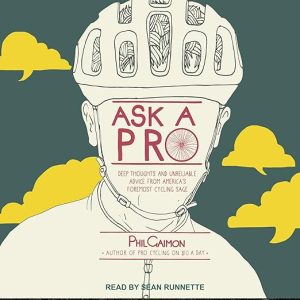
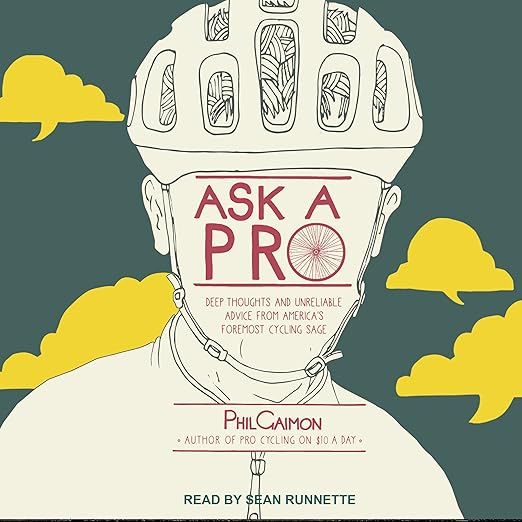
Phil Gaimon's Ask a Pro is the audiobook version of the VeloNews column that made him the peloton's most reliable whistleblower, and narrator Sean Runnette handles the Q&A format with enough timing and texture to make it feel genuinely live. At 3 hours and 47 minutes, this is a brisk listen, but Gaimon's wit is concentrated enough that it earns the brevity. The book draws from six years of reader questions and Gaimon's answers, covering his rise through the amateur ranks into the professional peloton, his contract loss for 2015, and his bold return to the sport's upper tier, all rendered with the acerbic candor that made his 2014 debut, Pro Cycling on $10 a Day, a cult favorite among racing fans.
The book's coverage of the race buffet, one of the more absurd and load-bearing institutions of professional cycling culture, is a case study in how Gaimon works. He begins with a real phenomenon, the elaborate tactical negotiation that occurs at team hotel breakfast before a race day, and builds outward into everything it reveals about the sport's economy of calories, status, and hierarchy. By the time the bit is done, you understand something true about professional cycling that no stats sheet would give you. Runnette delivers this section with the same even comedic intelligence he brings to the rest of the collection, and it functions as a useful exemplar of what the audiobook does at its best: information and comedy welded together in a way where neither is legible without the other.
Why the Retrospective Asides Need Sequenced Listening
The Q&A format is a structural gamble that Gaimon wins largely because his voice is so specific. Unlike most cycling memoirs, which treat the sport's suffering with solemnity, Gaimon approaches professional racing as a system full of absurdities that he finds genuinely funny: the feudalism of team budgets, the social dynamics of the team dinner table, the baroque rituals around host housing, the collective delusion that any of this is glamorous. Runnette conveys this through careful pacing; he never telegraphs the joke before the sentence lands, which means Gaimon's reversals hit with the timing they require.
The added commentary that Gaimon layered onto the original columns is where the audiobook format earns its place. The retrospective asides, delivered with the distance of someone who has already lost and regained his contract, give the early answers a different texture than they had on first publication. Questions about managing team politics or surviving the race buffet feel different when you know what came next. Runnette navigates these tonal shifts, between present-tense confidence and retrospective irony, with enough subtlety that the listener tracks which version of Gaimon is speaking without a scorecard. That temporal layering is one of the structural pleasures of the collection and the reason it works better as a sequenced audiobook than as individual columns encountered out of order.
The Host Housing Guide Doubles as Comedy
Cycling fans who read VeloNews will find value in the updated commentary and the experience of hearing these columns in sequence, which reveals patterns in Gaimon's thinking that the monthly format obscured. Non-cycling fans who found their way to Gaimon through other channels will find the book accessible without deep technical knowledge of the sport; Gaimon consistently explains the context before the joke without making it feel like homework. The short runtime also makes this an ideal audiobook for a single long ride, a double commute, or an afternoon that wants a specific kind of company, one that is honest and funny about the gap between how sports look from the outside and how they feel from within.
The book includes what Gaimon calls resources: a guide to winning the race buffet, a cautionary account of host housing dynamics, and his prerace warm-up routine. These read as extended jokes with practical nuclei, and Runnette delivers them with appropriate deadpan. They are not instructional in any meaningful sense, but they are funny in the way that insider knowledge dressed as advice always is. The cautionary guide for host housing in particular is worth the price of admission for anyone who has ever tried to figure out whether professional cyclists are even slightly normal human beings. The answer, delivered here with surgical timing, is no.
A Different Niche Than Analytical Cycling Literature
Listeners hoping for deep tactical analysis of specific races or detailed accounts of how professional training programs are structured will find the book deliberately light on both. Gaimon's expertise is anthropological rather than technical; he is interested in how cyclists behave and why the sport's culture produces those behaviors, not in power-to-weight ratios. That is a clear choice rather than a gap, but it means the book occupies a different niche than something like Tim Krabbé's The Rider or the more analytically inclined cycling literature.
At under four hours, the production also moves quickly through what is actually a substantial arc of Gaimon's career. Some listeners who wanted the full memoir treatment of his 2015 contract loss and comeback will feel underserved. That story exists more fully in his debut and in his later writing; this book is best understood as a complement rather than a comprehensive account. Think of it as the extended track commentary rather than the documentary.
Grand Tour Fans, Not Readers Chasing Confession
Strong for professional cycling fans, particularly those who follow Grand Tour racing and enjoy the sport's self-aware insider commentary. Accessible to anyone with a general interest in sports culture who wants a short, funny book about the gap between athletic mythology and professional reality. Less rewarding for listeners who want psychological depth or race-by-race narrative; Gaimon is at his best in the register of informed comic observation, not confessional memoir. Fans of his previous work will find this a satisfying extension rather than a reinvention, and Runnette is a reliable guide through the sardonic terrain Gaimon has always occupied most comfortably.
Do I need to follow professional cycling to enjoy this audiobook?
Not closely. Gaimon explains the sport's culture and context as he goes, and the humor is built on recognizable human dynamics, workplace politics, ego, money, that translate well outside a dedicated cycling audience.
At under 4 hours, is Ask a Pro substantial enough to be worth it as a standalone audiobook purchase?
At that length the content is concentrated rather than padded, and the Q&A format means individual sections can be revisited easily. Listeners who want a longer Gaimon experience should start with Pro Cycling on $10 a Day, but Ask a Pro stands on its own terms.