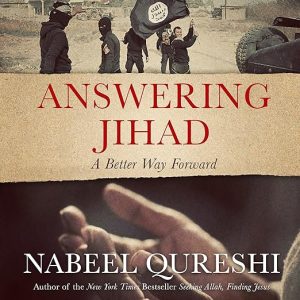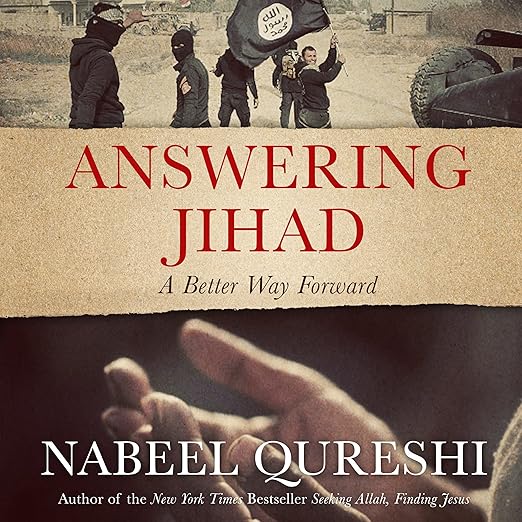
I picked up Answering Jihad during a period when the news was full of events that demanded some kind of honest framework for understanding, and most of the frameworks being offered seemed either too simple or too politically motivated to be genuinely useful. Nabeel Qureshi is a former Muslim who became a Christian, holds academic credentials spanning medicine, Christian apologetics, religion, and New Testament studies, and wrote this book as someone with a foot in multiple worlds at once. The biographical position he occupies is not incidental to the book's value: he is not an outside observer explaining Islam to a nervous Western audience. He is someone who spent years as a devout, thinking Muslim trying to reconcile the religion of peace he had grown up practicing with the violent expressions of jihad erupting on the global stage, and who therefore has personal familiarity with the source texts, the classical teaching, and the modern Western interpretations he draws on throughout the book's four-hour runtime.
The book is organized around eighteen questions, structured to build logically from foundational definition toward practical response. What is Islam, and is it a religion of peace or violence? Is there a clear definition and doctrine of jihad in the canonical texts? How are we to understand the surge of Islamist terrorism in relation to the broader Muslim community, the majority of whom condemn it? How does the Quranic call to warfare compare to the Old Testament? At four hours, it is a compact listen, and the concision is clearly intentional: Qureshi is writing for a lay reader who wants genuine engagement with the material without an academic apparatus that requires specialized prior knowledge to navigate.
What Nabeel Qureshi Delivers
Multiple reviewers across multiple countries and years identified Qureshi's personal background as what most distinguishes this book from comparable titles. An academic reviewer described the research as thorough and the writing as clear, concise, and compassionate, noting that the book addresses a potentially volatile topic with understanding and a surprising degree of objectivity for the subject matter. Another reviewer, writing from the United Kingdom, identified Qureshi as perfectly positioned to write this book precisely because he spent years as a practicing Muslim genuinely wrestling with the questions he is now answering. That wrestling gives the book's conclusions weight that an outside analysis simply would not carry. Qureshi takes time to explain carefully and honestly that moderate Muslims do not embrace violent jihad, and that there are many serious interpretations of the relevant texts within the tradition. His engagement with the diversity within Islam is not a diplomatic courtesy or a politically motivated disclaimer; it reflects his own lived understanding of how devout Muslims actually relate to their tradition and to the violent expressions of it that have emerged in recent decades.
The question-and-answer format that organizes the book is more than an organizing convenience. It reflects Qureshi's evident purpose: to model the kind of careful, honest engagement with difficult questions that he believes is both intellectually necessary and genuinely respectful to all parties. He is not writing a polemic, though he has clear convictions. He is writing a resource for people who want to think clearly about a subject that is freighted with political pressure in both directions, where both the claim that Islam is a religion of peace and the claim that Islam is a religion of violence are partial truths being used in bad faith by people with agendas. Qureshi's framework allows him to hold the complexity with intellectual honesty rather than resolving it prematurely in either direction. Reviewers from India, Mexico, the United States, and the United Kingdom all found value in the same text, which suggests it is calibrated at a level of rigor and fairness that travels across very different political and cultural contexts rather than being useful only to one of them.
Where Nabeel Qureshi Loses Some Ground
At four hours, this audiobook is a compact and self-contained listen, and the author's own narration is genuinely important to its effect. Qureshi's voice carries the specific gravity of someone who is not exploring these questions academically but has lived them personally and at real cost. The chapter on how to respond to Muslims with love and friendship rather than fear or hostility is delivered with a warmth and specificity that a hired narrator could not replicate without the biographical grounding that Qureshi brings to every sentence. One reviewer described the book as a real eye-opener that answers what is going on in the world and why, while another noted that Qureshi acknowledges throughout that the majority of Muslims are peaceful people who condemn violence, which places his critique of specific theological claims within a framework of genuine human care rather than cultural opposition. The book is honest about the genuine difficulty of the questions it addresses, and the author-read format makes that honesty feel personal and earned rather than performed for a general audience.
Listen if you want an informed, careful, and personally grounded guide to one of the most contested topics in contemporary religious and political discourse, from someone positioned by both background and education to navigate it with genuine nuance. The brevity of the listen makes it a low-risk investment in a difficult subject.
Who Nabeel Qureshi Is Writing For
Valuable for anyone seeking a thoughtful, accessible introduction to the theology of jihad from an insider perspective. Particularly useful for people who want to engage seriously and compassionately with Muslim friends, neighbors, and colleagues rather than simply react to news coverage. Less suited to readers seeking a purely political or sociological analysis without the religious and interfaith dimension that Qureshi's background makes central to everything he writes.