I finished Aloha Rodeo on a long drive through flat country, which turned out to be the wrong landscape for a book this vivid. The images Wolman and Smith conjure, the volcanic slopes and thick tropical forests where Hawaiian cowboys had been chasing cattle since the late 1700s, kept clashing with the flat horizon outside my windows. I had to mentally recalibrate constantly. That productive disorientation, the sense of your assumptions being quietly dismantled and rebuilt in a different configuration, is exactly what this book does to American Western mythology, and it does it without grandstanding.
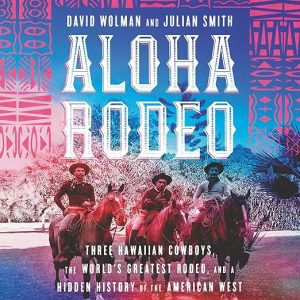
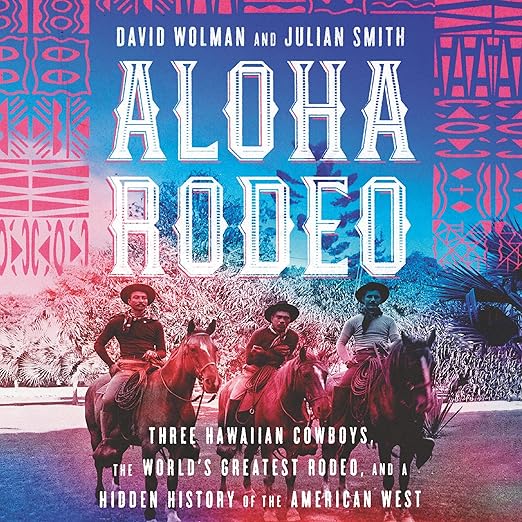
In August 1908, three riders arrived at the Cheyenne Frontier Days rodeo wearing wildflowers in their hatbands. Ikua Purdy, Jack Low, and Archie Ka'au'a had traveled 4,200 miles from Hawaii. They were dismissed, publicly and privately, by the white cowboys who considered themselves the only legitimate heirs to the Western tradition. They went home champions. That is the story's premise, but Wolman and Smith are interested in everything that premise contains and implies, and that turns out to be an enormous amount.
The Verdict, Briefly
The central argument of the book is that the paniolo tradition in Hawaii was older and in some respects more deeply rooted than the cattle culture of the Great Plains. Hawaiians had been working cattle on the islands' rugged volcanic terrain since the late eighteenth century, long before the American West acquired its mythological identity. The three men who rode into Cheyenne were not underdogs discovering a new skill. They were the product of a cattle culture with nearly twice the history of the tradition they were entering.
That reframing is the book's most significant historical contribution, and Wolman and Smith handle it without triumphalism. The corrective is delivered through narrative rather than polemic. You understand the stakes before you understand the argument, which is the right order for this material. One reviewer who received the book secondhand reported that her father-in-law picked it up and didn't put it down for two days, impressed by how impeccably researched and well-told it was.
Why Listen to Aloha Rodeo
Because the 1908 Cheyenne Frontier Days is only the frame. Inside it, Wolman and Smith are telling a much larger story about the U.S. annexation of Hawaii in 1898, about the decade of imperial disruption that preceded the three riders' journey, and about the cultural pride that rode with them into Wyoming. The United States had forcibly taken the islands just a decade before. Purdy, Low, and Ka'au'a were not simply competing in a rodeo. They were carrying the identity of a people whose sovereignty had been erased and whose place in the American story had not yet been written.
Kaleo Griffith's narration is particularly effective in these sections. His reading of the Hawaiian history material has a quality that goes beyond technical competence, a genuine familiarity with the cultural weight of what he is conveying. The chapters on Parker Ranch and the development of the paniolo tradition land differently with a narrator who understands them from the inside.
Points to Consider
The book spends considerable time on the Cheyenne Frontier Days itself, on the figures like Theodore Roosevelt and Buffalo Bill Cody who turned the Wild West into a commercial mythology, and on the economic forces that had already transformed Cheyenne from a genuine cattle hub into something closer to a theme park of its own past. That context is essential for understanding what the three Hawaiians were actually walking into.
The binary narrative of cowboys versus Indians that the Wild West mythology relied on had no category for Hawaiian ranchers who were neither the heroic white cowboy nor the doomed Native American. Purdy and his cousins simply did not fit the story that Cheyenne was trying to tell about itself. Their success there complicated that story in ways that most of the people present were not equipped to process, and the book traces those complications with care.
The Right Listener for Aloha Rodeo
Listeners interested in American West history who want the received mythology complicated rather than simply celebrated will find this essential. Listeners with Hawaiian heritage or interest in Hawaiian history will find a narrative that takes the islands' past seriously rather than treating them as peripheral to the mainland story. Sports history listeners who appreciate when athletic competition opens into broader social questions will find the rodeo sequences satisfying on both levels.
At six hours and fifteen minutes, Aloha Rodeo is compact enough to finish in a weekend and rich enough to keep returning to in memory afterward. It is the kind of history that changes what you see when you encounter the genre it inhabits.
In Brief
- Narrator: Kaleo Griffith brings genuine cultural investment to the Hawaiian history sections; his narration is warm and unhurried in ways that suit the material's scope.
- Subjects: Hidden American histories, imperialism and identity, the mythology of the Wild West
- Tone: Revelatory and unhurried, rich in historical texture
- Bottom line: A genuinely surprising piece of American history that upends assumptions about where cowboys came from and what the West actually meant.
A Few Questions About Aloha Rodeo
How does Kaleo Griffith's narration handle the Hawaiian language terms and names?
Griffith handles the Hawaiian material with evident familiarity and respect. Names and terms are pronounced with care rather than approximated, which matters considerably for a book whose argument depends on taking Hawaiian cultural identity seriously.
Is Aloha Rodeo primarily a sports history or a cultural and political history?
Both, but the rodeo competition functions as the entry point into a broader historical argument. Listeners who arrive for the rodeo sequences will find them well told, but the book's real subject is what the three Hawaiian riders represent within the larger story of American expansion and Hawaiian identity.
Is the book only interesting to people with connections to Hawaii?
Reviewers consistently note that you don't need ties to Hawaii to find this compelling. The story's implications for American mythology, for understanding how the Wild West identity was constructed and who it excluded, are broadly relevant. That said, readers with Hawaiian connections will find additional layers of meaning.