Before You Press Play
- Performance: Robbie Stevens carries the full run solo, a sensible call for a text that keeps ritual names and plain exposition inside the same paragraph.
- What it covers: Thelemic practice, the Holy Guardian Angel, ritual method, alchemy read as self-transformation
- Feel: Patient, technical, quietly evangelical
- Our call: Buy it if you plan to practice; the audio makes the case, and the PDF does the work.
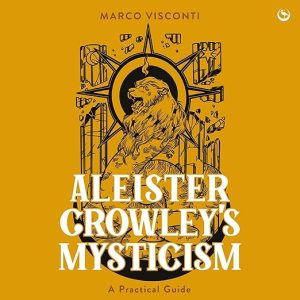
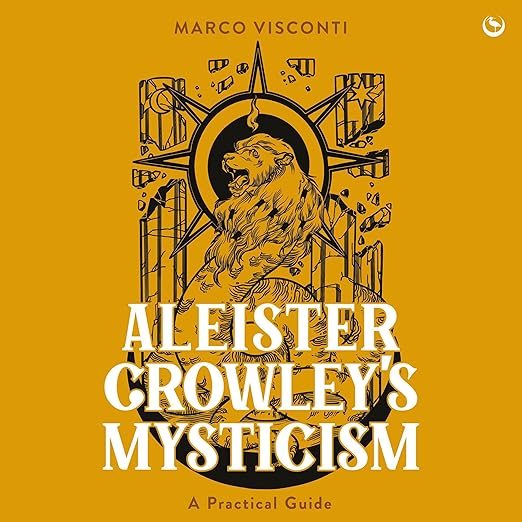
Handbooks rarely survive the move to audio without losing something, and Marco Visconti's follow-up to The Aleister Crowley Manual arrives with the loss printed on its own listing. Eight hours and nine minutes of Thelemic instruction, a companion PDF that lives outside the audio file, and a subject built out of rituals you are meant to perform rather than absorb. My verdict before the details: this audiobook is a strong argument for the practice and a partial substitute for it, and the fine print on the page says as much without meaning to. What you get in exchange is a spoken tour of a system that usually reaches beginners as either scandal or homework, delivered by someone who clearly does the work.
A Closer Look at Aleister Crowley's Mysticism
Sequel is the wrong word for what this does, even though the description reaches for it. A five-star notice posted in the middle of December works the distinction out carefully: the earlier Manual built a foundation of practices and exercises while pointing a little beyond it, and this volume turns around and concentrates on the pointing. Peter, writing the day after release, pushes further and calls it essentially a stand-alone introduction to Crowley's philosophy seen through the rituals and practices themselves, with the caveat that it was not designed for a purely academic audience. Those two readings are compatible, and both describe a book that quietly assumes you intend to do something rather than read about people who did.
What Visconti actually delivers is a survey with instructions attached. The Headless Rite, the Abramelin Operation, Liber Samekh and the Major Arcana of the Thoth Tarot each get unpacked, and the alchemical frame around them treats the old business of turning base metal into gold as a description of inner work rather than laboratory work. That single move decides whether you stay for the full run. If reading transmutation as self-transformation strikes you as an evasion dressed up in ritual vocabulary, nothing later in the book will win you back. If it strikes you as the only sane reading, the rest follows easily, and the Great Work stops sounding like branding.
What Makes Aleister Crowley's Mysticism Worth Hearing
Clarity is the quality this pool keeps returning to. Sheldrake123 describes a clear entry point into an often-dense world and credits Visconti with demystifying the Headless Rite and Liber Samekh without stripping away their traditional depth, which is by far the harder half of that job. KJ in Chicago comes at it from a more scholarly angle and praises the handling of historical context around Crowley's writings, along with the argument that the whole life-project deserves to be judged from where we stand now. Two very different appetites, one book, and neither notice complains about being condescended to.
Length is the second thing working in the audio's favor. Ritual instruction read aloud carries a rhythm that a page flattens, and the repetitions stop looking like padding once you hear them land in sequence. Robbie Stevens is the credited reader, and the production choice worth naming is that a text carrying the Holy Guardian Angel, the Abramelin Operation and Liber Samekh inside a single paragraph was handed to one voice to hold end to end rather than divided among a cast. For a book about unification, that is at least a coherent choice, and it spares the listener the jolt of a new speaker every time the register shifts from exposition to instruction.
Mat Auryn's name sits on the foreword, which tells you which shelf the publisher is aiming at and nothing at all about the argument inside. Watkins Publishing released this in early December 2025, and all five written notices landed inside the following four weeks. That is worth pausing on, because it is rare: the opinions attached to this page were formed on this edition, at this length, by people who bought it new. Most listings this rating strong are carrying a decade of inherited print reaction, and this one is not.
Things to Know Before Starting Aleister Crowley's Mysticism
Accompanying PDF is the phrase to catch on the listing, because it means the practical half of a practical handbook is not inside the audio at all. Rituals set out as numbered steps, tarot correspondences, anything that was originally a table: that material lives in a separate file you have to open somewhere else, on a different device, usually at a different time. For a book whose entire selling point is that you will run the operations yourself, that is a structural cost rather than a footnote, and it is the single strongest reason to buy print alongside rather than instead.
Suzanne Taylor makes the same point from the cheerful opposite direction. Writing about how the volume looks beside its predecessor and hoping aloud for a blue-lidded third to round out a trilogy, that notice is reviewing an object with a spine and a color. A file has neither. Anyone whose relationship with esoteric material runs partly through owning the set will feel that absence, and the listing does nothing to help: the series line is blank even though the book is openly a second volume, so nothing on the page tells a browser that a first one exists or where it fits. One sentence of the publisher copy is also garbled, promising to empower you will real life daily practices, which is a small thing but not a confidence-building one.
Who Should Pick Up Aleister Crowley's Mysticism
Practitioners already working inside a Thelemic system are who this was built for, and they should have the companion file open from minute one. Several of the notices come from people who treat this material as instructions rather than history, and the book rewards exactly that posture. Scholars are less well served but not shut out, since the historical framing is careful enough to survive a reader who wants context rather than instructions. Curious outsiders can genuinely start here, given how confidently the stand-alone claim is made, provided they accept that a fair amount of vocabulary arrives already assumed.
Crowley explained from the outside, biography first and doctrine later, is not what this is; the man as a scandal holds no interest for Visconti whatsoever. Distracted listening is the other bad fit. Ritual method delivered to half an ear turns into vocabulary and stays there, and the replay button quietly becomes your main interface. I would also warn off anybody who wants an argument about whether any of this works, since the book assumes the question was settled before you arrived. Give this one a chair, something to write on, and the PDF within reach, and it repays the setup handsomely.
Do I need The Aleister Crowley Manual before this audiobook?
Not strictly, and the listing gives no guidance either way. The book is positioned as a second volume and some practice vocabulary arrives assumed rather than taught. Coming in cold works if you are willing to pause and look things up; it will not walk you in from absolute zero the way a first book would.
Is this audiobook Crowley's system or Visconti's reading of it?
Mostly Visconti. Crowley supplies the system and the rituals, while the sequencing, the interpretation and the practical instructions belong to a modern practitioner. Expect a working reading of Thelema rather than a presentation of the original texts, which is either the appeal or the objection depending on why you came.