Before You Press Play
- Narration: Patrick Lawlor handles the quieter, more reflective tone of this sequel well, capturing Quenton Cassidy's maturity without losing the athletic urgency that made Once a Runner work.
- Themes: Athletic identity after peak performance, the pull of competitive obsession, personal loss and rebuilding
- Mood: Meditative in the first half, propulsive in the second, the structure mirrors the training arc itself
- Verdict: A worthy, more emotionally complex companion to Once a Runner that will satisfy runners who loved the first book, though new listeners must start there.
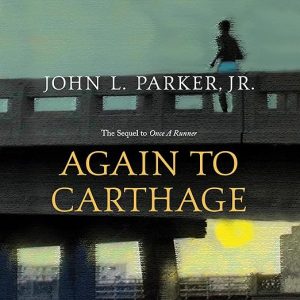
I listened to the second half of Again to Carthage during a stretch of particularly cold January mornings, headphones in before the city woke up. John L. Parker Jr.'s prose about running has always had a quality that suits early mornings, austere, deliberate, occasionally beautiful in the way that physical effort under difficult conditions can be. The book had been slow for me in the opening third, in the way that several reviewers warned it might be, and then somewhere around the training camp section it stopped being something I was working through and became something I was reluctant to put down.
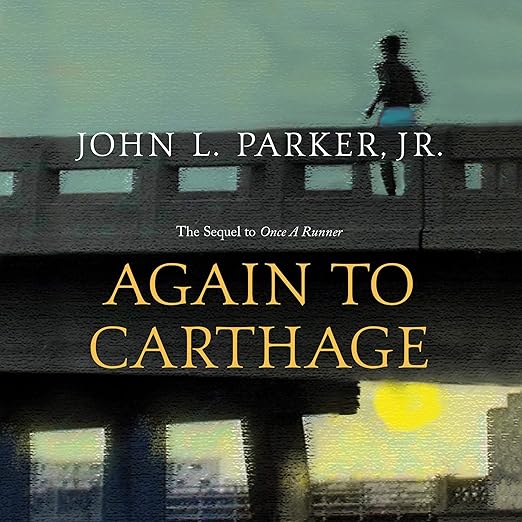
Again to Carthage is the sequel to Once a Runner, which Runner's World called the best novel about running ever written and which achieved genuine cult status among competitive runners over the decades it spent out of print. Parker finally delivered this follow-up in 2007, roughly thirty years after the original. The pressure of those expectations is visible in the book, it is more ambitious than Once a Runner, more interested in the complications of midlife, and somewhat less focused as a result. That trade-off is worth understanding before you start.
Is Again to Carthage Worth Your Time?
Quenton Cassidy, the protagonist from Once a Runner, has built a successful legal career in south Florida. Several personal tragedies and the general accumulation of adult life have left him wondering whether he has surrendered something essential. The novel follows his return to competitive running and his attempt to make one final Olympic team. It is also, more than the first book, a study of character and time. Parker is interested in what happens to the person an elite athlete becomes when they are no longer competing at the level that defined them. Cassidy is older, more reflective, and carrying weight that the younger version of himself did not have.
One reviewer described the characters as being given "a bit more depth than in Once a Runner." Another noted that it is "a more complicated book" than its predecessor. Both are accurate. This sequel is not simply more of the same but a genuine attempt to extend what the first book established into more difficult emotional territory.
The Best Parts of Again to Carthage
Patrick Lawlor's narration suits the book's divided personality. The opening sections, which cover Cassidy's law career and his growing sense of incompleteness, require a quieter, more internal delivery, and Lawlor provides it. The training sequences and the Olympic trials sections, which one reviewer called "brilliant as in Once a Runner," need a different kind of energy, urgent, almost obsessive, and Lawlor shifts into that register without the transition feeling forced. Running fiction lives or dies on whether the physical sections feel embodied in audio, and Lawlor makes them work.
The book is 11 hours and 24 minutes, which is substantially longer than most running fiction. The runtime is justified because Parker is doing more work here than simple athletic adventure, the early legal career material, the personal losses, the relationship threads all have narrative purpose even when they seem to drift. Lawlor maintains momentum through the quieter stretches.
Before You Commit to Again to Carthage
A reviewer flagged that Parker "does not spend time introducing the characters and somewhat assumes that the reader is familiar with the first novel." This is an important warning. Again to Carthage does not function as a standalone. Characters, relationships, and the specific emotional history that makes Cassidy's return to running legible are all drawn from Once a Runner. Listening without that background will leave you following the surface of a story whose depths remain inaccessible.
The pacing is also genuinely uneven in the first half. Multiple reviewers describe the book as slow or meandering between the athletic set pieces. Parker is building something, and the construction is worth it, but listeners who are impatient with meditative fiction will find the opening hours testing. The second half, focused on Cassidy's training and the trials themselves, delivers the intensity that Once a Runner fans are waiting for.
Should You Listen to Again to Carthage?
This is for runners who have already read or listened to Once a Runner and want to know what happened to Cassidy. It is also for anyone who engages seriously with the literature of athletic obsession, it belongs alongside books like Haruki Murakami's What I Talk About When I Talk About Running as a text that treats running as a lens on larger questions of identity and time. Listeners who have not read Once a Runner should start there. This book does not work without that foundation, and Once a Runner is worth reading in its own right. New listeners to Parker who begin here will miss most of what makes Again to Carthage emotionally meaningful.