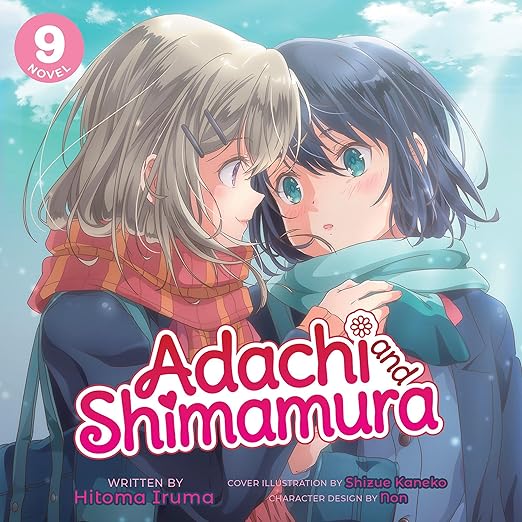
Winter, a second Christmas together, and a look back at junior high: that is the whole of the description for volume nine, and it runs to three sentences. The audiobook lasts three hours and fifty-eight minutes, Analise Scarpaci reads it, and Seven Seas put it out on January 30, 2026. What the copy never mentions, and what three of the four written responses open with, is that this volume mostly belongs to two characters whose names are not on the cover.
Where This One Lands
Eighty percent is the figure C. Miller reached for in August 2022, and it remains the most useful number anybody has attached to this book. That three-star entry states flatly that the novel is eighty percent about Nagafuji and Hino, admits to skipping all of it out of indifference to their backstories, and records real disappointment. Handing most of a ninth volume to the supporting pair is a legitimate thing for a series to do. It is also a legitimate thing to warn buyers about.
Volume nine is exactly where a long-running series can afford that detour, and the listing complicates even that. The title says Vol. 9, the series line reads Adachi and Shimamura (Light Novel), and the series number slot sits empty, so nothing in the metadata places this in sequence except two characters in the title and a number attached to it. For a nine-book run arriving in audio, that is a navigation problem a buyer only discovers after downloading.
The Best Parts of Adachi and Shimamura, Vol. 9
Hino and Nagafuji are the reason to press play, provided you know it going in. jessiea, writing from Australia in May 2022, treats the same shift as the best thing about the book: it finally answers the open questions about their relationship, and the endings handed to both pairs land as funny and heart warming. Same observation, opposite verdict, and the gap between them is about what a reader wanted from volume nine rather than about what the author delivered.
Analise Scarpaci carries four central characters in a book whose comedy depends on knowing instantly who is speaking. Light novel dialogue runs in long volleys with very few attributions, and a printed page separates speakers with line breaks that a listener never sees. The book is short enough that nobody stays lost for long, and short enough that a scene misheard at the start stays misheard right through to the end. That is the format's genuine risk on material like this.
Nostalgia is the actual mode, and it suits the length. The description promises a pause to reflect on the journey that brought these two this far, and frames even the most painful junior high memories as a gift to be treasured. That is a clip show with feelings attached, and at four hours it never outstays the idea. Series readers collect the emotional dividend of eight previous volumes with no new plot to track, which is either the appeal or the problem depending on why you came.
What Gives Us Pause
April 2025 produced the most detailed response of the four, and it arrives in French, filed in France. Mathieu gives four stars and reads the shift toward the supporting pair as overdue after nine volumes, praising the account of a friendship traced back to preschool and singling out a farcical encounter between two of the mothers. That entry is also the only one to comment on the writing itself, describing it as pleasant and very fluid to read.
Timing is the other thing to weigh. The audio arrived on January 30, 2026, while the written responses run from the spring of 2022 to the spring of 2025, so every one of them describes the printed light novel and its translation. They were also filed from three different markets. A 4.7 built out of a hundred and sixteen ratings is a verdict on the text, gathered over three and a half years before this file existed.
Thin is the only word for four written entries against a hundred and sixteen ratings, and the three that carry any text all report the same structural fact while grading it three, four and five stars. That spread is the honest summary of this volume. Nobody disputes what happens in it, and everybody disagrees about whether it was worth doing, so the decision turns entirely on how attached you are to the two people the series is named after.
Who Should Listen to Adachi and Shimamura, Vol. 9
Longtime readers of the series are the only real audience, and that is a fact about volume nine rather than a criticism of it. The description assumes you already know who these people are, what the previous Christmas meant, and why junior high carries weight for them. None of it gets re-established. Anybody who has followed the series through eight books receives a warm, low-stakes interlude with the supporting cast finally filled in properly.
Starting here is a mistake. A short volume with a seasonal framing looks like a cheap sample of a series, and it is the opposite: a reflective entry trading on accumulated affection, spending most of its length away from the pair on the cover. Anybody who came specifically for the central romance should weigh the pool's warning seriously, because this volume gives that relationship less room than its readers expected. None of that is hidden once you know to look for it.
Completists will want it regardless, and the format makes a genuine case here. Material built from memory and small domestic comedy plays well aloud, and Scarpaci is handed a text with almost no action to stage. Nine volumes in, the pleasure of hearing these four talk to each other is most of the point. Just make sure you are the person for whom that sentence reads as a recommendation.