Key Details
- Voice: Greg Boudreaux alone has to keep two first-person leads and three time layers distinguishable, and no second voice is credited for the alternation.
- Big ideas: Vigilante justice, moral gray areas, protective devotion, a killer hunting a killer.
- Atmosphere: Dark comedy with a genuinely uneasy center.
- Worth it?: Sharp and very funny if you can sit with a hero who murders, and worth skipping outright if that premise is a hard line.
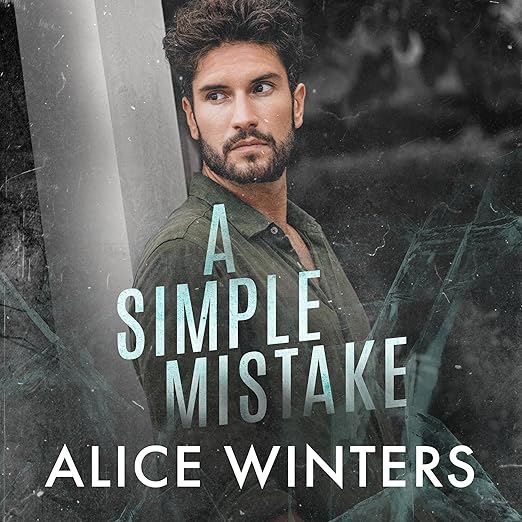
Half of this description is written by Liam and half by Gabriel, which tells you the structural fact that matters most about this audiobook before any plot beat does. Alice Winters splits A Simple Mistake between two first-person leads: a homicide detective caught standing over the body of a murderer who had walked free, and the colleague he adores, who is prepared to look the other way if Liam leaves homicide and promises never to kill again. Ten hours and eleven minutes of that alternation sit under one reader's name, and Greg Boudreaux has to keep two men separable inside a single voice for all of it.
Three Timelines and No Cue to Signal the Jump
January 20, 2025 carries the posting that explains the real architecture. Five stars, from someone who is normally not a fan of timeline changes and says this one works anyway, because the book runs three layers at once: the present, a year earlier when Liam crossed the line for Gabriel, and two years earlier when the pair first met. That is not decoration. The premise only lands if you already understand what Gabriel knew and when, so the flashbacks are carrying the moral weight while the present-day chapters carry the chase. Winters is using structure to withhold judgment, which is a more careful piece of construction than the cover promises.
In audio, three timelines and two narrators become a navigation problem before they become an artistic one. Nothing on the listing describes how the recording signals a jump, whether by chapter title, by a shift in delivery, or not at all. A printed page can put a header at the top and be done with it. A listener gets one continuous stream and has to catch the era from context, usually a sentence or two in. That lag is survivable across ten hours, though better anticipated before you start than discovered in chapter four.
Structurally the book turns on one line in Gabriel's half of the pitch: the killer is picking off his fellow detectives, and the only way out is with Liam heading the case. That reversal, a man told never to kill again being invited back precisely because of what he is, supplies the engine. Liam's own formulation is blunter, that he would destroy the world to keep Gabriel safe, and the description closes his section with a question doubling as a thesis: who could hunt a serial killer better than another one? Ten hours is exactly enough room to make that question uncomfortable rather than clever.
Boudreaux's Timing Turns Deadpan Menace Into Comedy
Returning readers get the most from the posting filed on January 15, 2025. It comes from someone who buys everything this author releases and was openly curious whether a new series could produce characters unlike the previous ones, then reports that Liam and Gabriel are very different from the others. That matters in a corner of the genre where series can blur. The same posting flags the flashback chapters as the first new thing on offer, which lines up with what the description does when it hands each man his own half of the pitch and lets their accounts of the same relationship disagree.
Comedy is the other reason to pick this up, and the description does not hide it. Liam's opening complaint is that people react badly to finding him over a corpse, and that a pat on the back, or a gold star at the very least, seems reasonable compensation. Gabriel's half concedes that one, or possibly five, of the coworkers in question are people Liam would rather not save. That register, deadpan menace played for laughs, is difficult to sustain in print and harder still aloud, since timing stops being the reader's own and becomes the performer's. The material is built for a voice; whether this voice delivers it is not something the page will tell you.
Four of Five Reviews Are Dated Before This Recording
June 5, 2025 produced the four-star posting, and it is the most honest thing on the page. The objection is stated cleanly: this reader dislikes stories where murderers are heroes, whatever the motivation, bought it anyway out of loyalty to the author, and found the trademark humor present in abundance and Liam's reasons comprehensible. Then comes the part worth quoting: once you start justifying extrajudicial killing, saying it is just a fun story does not quite make it okay, because it desensitizes us to the real thing. Nothing in the description prepares you for that argument, and it is the argument the book is actually having.
Dates are the second oddity. Four of the five postings on this listing are dated before the recording's own release date of February 22, 2025, which means most of the visible response was written about a version of this story that was not the audio one. The gap runs from eight days at the narrowest to five weeks at the widest. None of that is a reason to distrust the praise, but it is a reason not to read the star average above it as a verdict on the performance you are buying.
Content is the third. The premise is a serial killer being hunted by a detective who is himself a killer, colleagues are being picked off one by one, and Gabriel spends a stretch of the book in the hands of the antagonist. The violence is not gratuitous, but it is central, and the comic surface does not soften the body count underneath it.
Happy and Disturbed, the Reader's Verdict on Liam
January 17, 2025 offers the sharpest shorthand available: a mashup of this author's In the Mind series with Dexter, from a reader who loves the first and does not like the second at all, and who ends up both happy and disturbed by the decision to buy. If that combination sounds appealing rather than alarming, you are the audience. Romantic suspense readers who want their leads morally compromised rather than merely brooding, and mystery listeners who can tolerate a protagonist they would report to the police, will find the balance holds.
February 14, 2025 supplies the other end of the range, from a first-timer in dark comedy who ticked the box happily, fell for Liam's narcissism and intelligence, and singles out a gag about hitting the auto-start button on a car that still uses a key. Come for that and you will be fed. Avoid the book if you want a clean-handed detective, if extrajudicial violence played for laughs is a hard line, or if you need a self-contained mystery, because this is the opening book of the Deadly Mistakes series and the romance is built to run past it.
Questions Listeners Ask
Do I need to read anything else before this audiobook?
No. The listing marks it as book one of the Deadly Mistakes series, so nothing precedes it. The description introduces both leads from scratch and gives each man his own section, and the flashback layers supply the backstory rather than assuming you already have it.
How does the dual point of view work across a single-narrator recording?
Liam and Gabriel each narrate in the first person, and the publisher description is itself split into their two voices. Greg Boudreaux is the only reader credited across ten hours and eleven minutes, so both men, plus three separate time periods, come through one performer.
How long is the A Simple Mistake audiobook and when was it released?
Ten hours and eleven minutes, released on February 22, 2025. That places it at the shorter end for a series opener carrying two narrators and three timelines, which is part of why the pacing stays tight rather than sprawling.