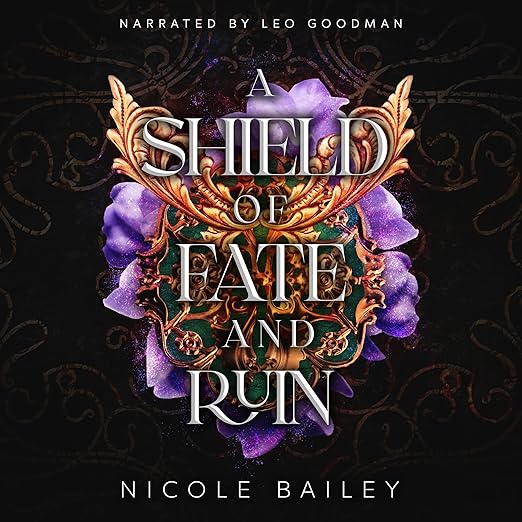
Ares arrives with word that the tide has turned and that war is thundering toward Niria, which ends whatever quiet Apollo and Hyacinth had managed to build for themselves. Nicole Bailey's third Apollo Ascending book runs ten hours and thirty-six minutes with Leo Goodman reading, and the audiobook was published in February 2025. Hold on to that date. Every written response on this page was filed before it, the most recent by nine months and the oldest by more than two and a half years.
Bailey is working with a myth that already has an ending, and everybody arrives knowing what it is. Apollo and Hyacinth are not a couple anyone can hand a quiet life to, which the description acknowledges with unusual bluntness in its opening lines: he would hide with him and hold him until the sun burned out, and that is not their destiny. Writing romance against a known tragedy is a particular discipline, and this series has now sustained it for three books.
July 2022 supplies a five-star that puts the achievement in the right place, crediting the reimagining of the Apollo and Hyacinth myth and the way the book plays with traditional royals-in-love tropes instead of simply inheriting them. That distinction is the useful one. Mythology supplies the stakes, romance convention supplies the shape, and the friction between a god who can do nearly anything and a story that has already decided how this ends is where the whole series lives.
Scale rises considerably in this volume. Zeus's wrath is the threat, Ares is the messenger, and the journey the pair undertake is framed as saving everyone rather than saving themselves. The copy declines to hide the risk, either: plans fail, and the danger becomes what the two of them might do to each other. Loyalty and sacrifice are the named themes, and a third book is where bills of that kind fall due.
Why A Shield of Fate and Ruin Works as an Audiobook
Pace is the practical argument. August 2022 brought a five-star that describes devouring the book, singles out an author who gets to the point rather than circling it, and reports genuine anticipation for every character's chapters, including Pip, a character that same account admits to having struggled with across the entire series. Prose that keeps moving survives being read at somebody else's speed, and a book able to turn a reader around on a character they disliked is doing real work with voice.
One reader for two men raises a genuine question here rather than a formality. A romance between two men, carried by one reader, has to keep both leads distinct while their closeness is the point of most scenes, and it has to hold them apart from Ares and from Zeus without reducing a pantheon to a set of accents. Ten hours and thirty-six minutes is a long stretch over which to stop two similar registers from converging.
Format fit makes the third case. Greek myth circulated as spoken narrative for centuries before anyone wrote it down, and a story that sets declared destiny against two people refusing it gains something from being heard rather than scanned. The rhythm of the description, short declarative lines stacked one on top of another, suggests prose already written with a certain amount of ceremony built into it.
Weak Spots in A Shield of Fate and Ruin
Dates are the first thing to check here, and they settle the matter outright. All five written responses predate the February 2025 audio release, the newest by roughly nine months and the oldest by about thirty-one. They grade the text, which is legitimate and useful in its own right, and not one of them heard a syllable of what Leo Goodman did with it.
Those five sit oddly against the average as well. Every one is a five-star, while the page reports 4.6 across a hundred and sixty ratings, which puts every grade below five outside the window a shopper can actually read. A February 2024 five-star calls the love between Apollo and Hyacinth real, respectful and heart-stopping, and enthusiasm at that pitch represents what is displayed rather than what is counted.
Publishing details repay a glance too. The imprint here is a personal name followed by Publishing LLC, which is the signature of a self-published series rather than a house edition, and the listing carries no genre tags whatsoever. A Greek-myth romance with an empty tag field has a discovery problem: the readers most likely to want it will need the author's name before they can find it.
Who Should Listen to A Shield of Fate and Ruin
Readers after a genuine MM romance inside a mythological epic are the audience, and an April 2024 five-star says so in one sentence: any fan of mythology or magic looking for a true MM romance should read this. That is the sharpest short description of the series anywhere on the page, and it is accurate about both halves of the appeal rather than just the mythology.
Leave it alone if you have not met Apollo and Hyacinth yet. This is the third installment, the copy opens mid-crisis, and every response on the page discusses the series as a whole rather than this book standing alone. Ten hours and change of a war that began two volumes back is an unwelcoming place to start a relationship with anybody.
One caution about tone. The copy promises tragedy alongside romance and adventure, and it names the myth being retold, so anyone who requires a guaranteed happy ending should weigh that framing before spending a credit. The legend it retells is not on their side, and this book has never pretended otherwise.