In Brief
- Read by: David Thorpe handles an Edwardian register where most of the comedy lives in what characters decline to say out loud.
- At its heart: Enemies to lovers, magical bureaucracy, inherited class and obligation, found belonging
- Vibe: Witty, unhurried and steadily tightening
- Short version: A confident debut that rewards patience through a slow opening third, then declines to finish its larger story, so plan on the sequel.
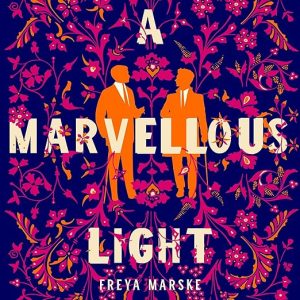
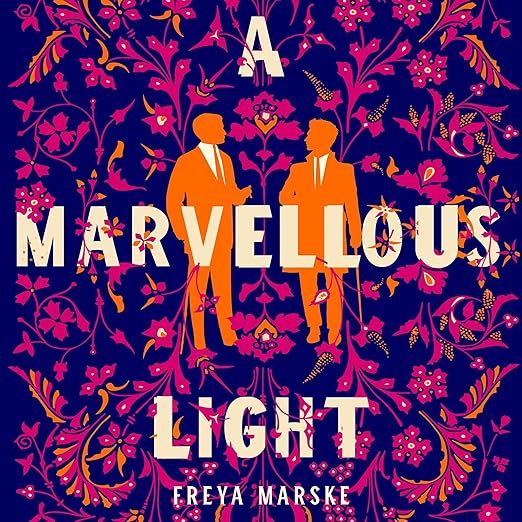
Edwardian manners, a murderous hedge maze and a secret magical bureaucracy sit at the center of this audiobook, which runs exactly fourteen and a half hours under a Tor imprint with David Thorpe as the only credited voice. The listing files it under LGBTQ+ and leaves the tag field empty, which badly undersells how many things are operating here at once. The copy itself counts four: comedy of manners, country-house mystery, murder plot and queer romance. This is book one of The Last Binding, and the description names the sequel before you have even started.
Grumpy sunshine is the shorthand, and the response headed Amazing fantasy romance reaches for it in its first breath, calling this a fantastic queer fantasy with complex characters and a world it found genuinely intriguing. The shorthand earns its keep. Robin Blyth is cheerful, physically confident and comprehensively out of his depth, a baronet who accepted what he took to be a dull government post. Edwin Courcey is the least magical person in a family that measures worth by magical power, and has built a personality around defending that position. Freya Marske puts the two of them in an office and lets friction do the work.
Around them, the mystery is better constructed than debut fantasy romance usually manages. A clerical error rather than destiny drops Robin into the job. The predecessor who vanished is a genuine absence with a genuine explanation. The curse laid on Robin produces visions that function as plot mechanism instead of decoration. Marske also does something quietly ambitious with the setting: this is not Edwardian England with magic bolted onto it, but an England whose magical population has committees, paperwork and its own well-developed contempt for the unmagical, all of which the copy flattens into the phrase secret magical society.
Highlights
One response arrived here straight from Witchmark by CL Polk, recognized the same atmosphere, and produced the most precise account of the setup anywhere on the page. Robin has recently inherited a title, needs immediate income badly, and lands in the office of Special Domestic Affairs and Complaints only because the person who held it, Reginald Gatling, went missing. That is a comic premise carrying serious structural weight. The bureaucracy is simultaneously the joke and the engine, which is what separates this from the many books that merely want to be Jonathan Strange.
Audio suits the material more than the period trappings suggest. A comedy of manners is built on timing, on the beat between what a character says and what they are actually doing, and that beat is easier to hear than to read. David Thorpe covers both leads, which on a book whose entire charge comes from the distance between Robin's ease and Edwin's guardedness means one instrument is responsible for holding a contrast the plot needs for fourteen and a half hours. It also means the drawing-room exchanges, and this book runs on them, arrive as speech rather than as attributed text.
Physical intimacy is explicit enough to matter and paced slowly enough to have earned it by the time it arrives. Listeners coming from Georgette Heyer or from Bridgerton, both named in the copy as reference points, should understand that the heat level here sits well above either. What the copy gets right is the emotional register. This is warm rather than anguished, and the wit survives intact into the tense stretches, which is harder to pull off than the finished book makes it look.
Things to Know Before Starting A Marvellous Light
Pace is the recurring reservation, and the page's one three-star entry states it without hedging. Filed from France, that response calls the book absolutely stunning, then says the story is very slow, and adds that you need to be in the mood for this very specific sort of book to love it. Read that as a warning rather than a complaint. The opening third is largely establishment work: offices, families, houses, rules. Anyone waiting for the murder plot to take the wheel from chapter one will be waiting several hours.
Marketplace spread is worth knowing about too. Five written responses arrive from four different territories, the United States, the United Kingdom, France and Turkey, and one of them carries a headline in Turkish with no review text underneath it whatsoever, which reads like a delivery rating attached to a book listing rather than an assessment of anything between the covers. Aggregation like that is standard practice on retail pages, but it does mean the impressions collected here are not all describing the same edition, or in one case the same transaction.
A structural caution before you commit. This is the first volume of The Last Binding and it behaves like a first volume. The immediate mystery resolves, but the larger scheme the copy describes, one that threatens every magician in the British Isles, is opened rather than closed, and the description sends you directly to A Restless Truth to continue. If unfinished arcs frustrate you, budget for the sequel now instead of discovering the obligation at hour fourteen.
Is This One for You?
Audience is easy to name here. Listeners who want historical fantasy where the manners are worked as carefully as the magic, and who want a queer romance that sits at the center rather than at the margins. One response, filed in the United Kingdom, catches the appeal in a single line, calling it part historical thriller, part magical fantasy, part romance, and saying it had read nothing else quite like it. That mixture is the selling point and also the risk, since anyone wanting one of those three at full strength may find it diluted by the other two.
Give it a miss if slow openings frustrate you, if explicit content inside a period setting is not what you came for, or if you need a story that closes on its own terms. And weigh the format question honestly before committing. Fourteen and a half hours of drawing-room dialogue, delivered by one voice covering both halves of a two-hander, is a specific proposition, and a few minutes of the sample will tell you which side of it you land on faster than any summary can.