Quick Take
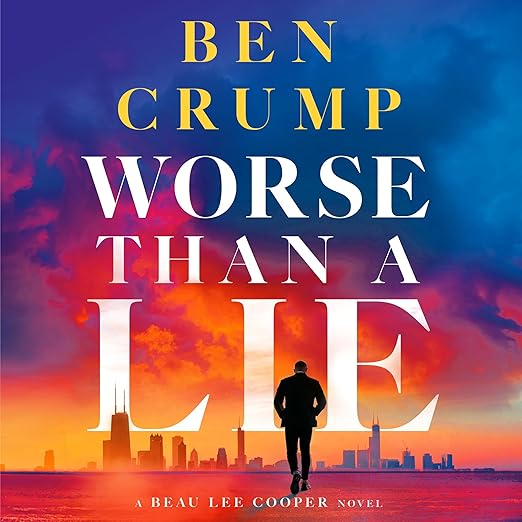
- Narration: Leon Nixon delivers Beau Lee Cooper’s Texas legal world with a voice that carries both the courtroom authority and the personal urgency the material demands.
- Themes: Systemic racism in law enforcement, legal fiction as truth-telling, Black professional solidarity under institutional pressure
- Mood: Tense and purposeful, with moral weight that outlasts the narrative
- Verdict: Ben Crump’s debut novel uses the legal thriller form to say things about American policing that nonfiction sometimes cannot, and the courtroom sequences carry the authority of someone who has lived this work.
There is a specific kind of reading experience that happens when an author brings professional expertise to fiction rather than just research. You can usually feel the difference. The procedural details sit differently, the institutional dynamics read as lived rather than observed, and the moral urgency underneath the plot feels less like advocacy and more like testimony. That is the quality that distinguishes Ben Crump’s debut novel from the considerable number of legal thrillers already in the market.
Crump is one of the most prominent civil rights attorneys in the United States, and his client list reads as a catalog of the past decade’s most significant police violence cases. When he writes about a traffic stop going wrong in November 2008, on the night of Barack Obama’s election, he is not constructing a hypothetical. He is building a fictional frame around a structure he has encountered, litigated, and lost sleep over across decades of practice. That biography is inseparable from what Worse Than a Lie does and why it works.
The Night of the Traffic Stop
The precipitating event is almost unbearably specific in its timing. Hollis Montrose, a fifty-three-year-old Black ex-police officer, is pulled over by four white officers on the night America elected its first Black president. He is shot ten times. He survives, but the Chicago police department has already controlled the narrative before he regains consciousness, and what follows is a wrongful conviction proceeding that Beau Lee Cooper, a Texas civil rights attorney, takes on with full knowledge of what he is walking into.
Leon Nixon’s narration is well-matched to the material. Beau Lee Cooper was raised in 1970s Texas, carries a To Kill a Mockingbird idealism that has been refined by real practice, and operates with a team that includes his longtime partner Nellie Rivers and the more flamboyant Brent Cape Capers. Nixon gives each of them distinct vocal texture without turning the cast into caricature, and he handles the courtroom sequences, which multiple reviewers identified as the book’s strongest passages, with genuine precision.
What the Fiction Does That Nonfiction Cannot
One reviewer, a Black woman who identified herself as a scholar, described reading this not as entertainment but as recognition. That distinction matters. Crump uses the novel’s form to name dynamics that legal nonfiction must be more careful about asserting: the collusion between DAs and judges that an attorney reviewer described as spot on, the way police narratives calcify before evidence is properly examined, the specific texture of what it costs personally to keep fighting inside a system that resists you.
Another reviewer with direct professional experience noted that the courtroom scenes match their own professional reality. That credibility, the sense that Crump is reporting rather than imagining, is what separates Worse Than a Lie from most politically engaged thrillers. The injustice here is not a plot device. It is the mechanism of the world the characters inhabit, and the narrative spends considerable energy showing exactly how that mechanism operates step by step.
Crump’s choice to set the novel on election night 2008 is not a coincidence and not a simple gesture toward historical context. It is a structural decision that the whole narrative supports: the gap between symbolic progress and material reality is the exact gap that the Hollis Montrose case inhabits. Beau Lee Cooper understands this gap from his own experience as a Black attorney in Texas, and the novel’s most powerful passages are the ones where he is forced to explain, again, why the symbols are not enough.
Where the Novel Stretches and Where It Holds
This is a debut, and it reads like one in places. The pacing in the early middle sections leans on exposition more than necessary, and the introduction of secondary characters occasionally interrupts the momentum built by the Hollis Montrose storyline. Beau Lee’s backstory, rendered in some detail through his Texas childhood and his early legal career, is compelling on its own terms but slows the narrative at points where the urgency of the main case is doing its best work.
The book’s emotional intelligence is more consistent than its structural discipline. Crump clearly knows how to build a legal argument, and the reader benefits from that, but the novelistic muscles around scene transitions and chapter-level tension management are still developing. These are the expected rough edges of a first novel, and they do not undermine what the book is trying to accomplish. The core story, one innocent man’s survival and the lawyers who refuse to let the lie stand, maintains enough propulsion to carry through the structural inconsistencies.
The Readers This Will Stay With
Listeners who come to legal thrillers for plot escapism will find genuine suspense here, but they should know the moral weight is real and does not resolve into comfortable fiction. Readers who engaged with Bryan Stevenson’s Just Mercy or Walter Mosley’s crime fiction will recognize the space this book occupies. If you want a legal thriller that carries the authority of practice behind the courtroom scenes and does not flinch from the systemic structures it is describing, Leon Nixon’s narration of Crump’s debut is worth the eleven hours.
Leon Nixon’s narration becomes particularly essential in the depositions and cross-examination sequences, where the rhythms of legal language need to feel procedurally accurate while still carrying dramatic tension. He manages both. The scene where Beau Lee takes on the police department’s version of the Hollis Montrose traffic stop in open court is the audiobook’s strongest single sequence, and it lands precisely because Nixon handles the shift between Beau Lee’s measured legal argument and his barely contained outrage with a discipline that makes both registers believable.
Frequently Asked Questions
Is Worse than a Lie the first book in a series, and does it resolve as a standalone?
The synopsis indicates this is the first in a series featuring Beau Lee Cooper, but the central case involving Hollis Montrose reaches a resolution within this installment. It is complete as a narrative while establishing the characters for future entries.
How does Ben Crump’s background as a civil rights attorney affect the authenticity of the legal fiction?
Significantly. Multiple attorney readers who reviewed the book noted that the courtroom dynamics, including institutional collusion and narrative control by law enforcement, match their professional experience. The book reads less like research and more like informed reconstruction.
Does Leon Nixon’s narration differentiate the ensemble cast clearly enough?
Yes. Nixon maintains distinct vocal registers for Beau Lee, Nellie Rivers, and Brent Capers without reducing any of them to accent performance. The courtroom scenes in particular benefit from his ability to shift register between legal argument and personal stakes.
The book is set on election night 2008. Does the historical timing serve the story beyond symbolism?
It does structural work beyond symbolism. The specific date creates an ironic counterpoint that Crump uses deliberately: the night America’s most visible racial milestone was celebrated is the night Hollis Montrose is shot ten times by police officers. The juxtaposition is not subtle, but it is not meant to be.