- Narrator: Nikola Hamilton brings clarity and enthusiasm to the progression sequences without letting the pacing drag between power-up moments.
- Subjects: Earned progression over gifted power, survival in an alien environment, tiered talent systems
- Tone: Adventurous and immersive, slow-build with consistent forward momentum
- Bottom line: A progression fantasy debut that outperforms its generic-sounding premise through careful character work and genuine world investment.
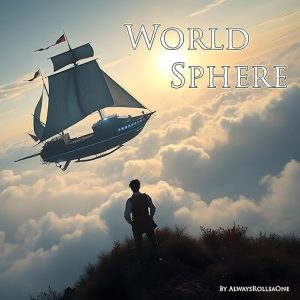
The title and blurb for World Sphere are not doing this book any favors. That is a direct quote from one of its most enthusiastic reviewers, and it is completely accurate, which is why I want to open with it rather than bury it. If you pass over this one because the premise sounds interchangeable with a hundred other LitRPG and progression fantasy titles, you will have made the same mistake I nearly made. I picked it up on a recommendation from a genre forum, skeptical, and I was somewhere around the fourth hour before I admitted to myself that I was genuinely engaged.
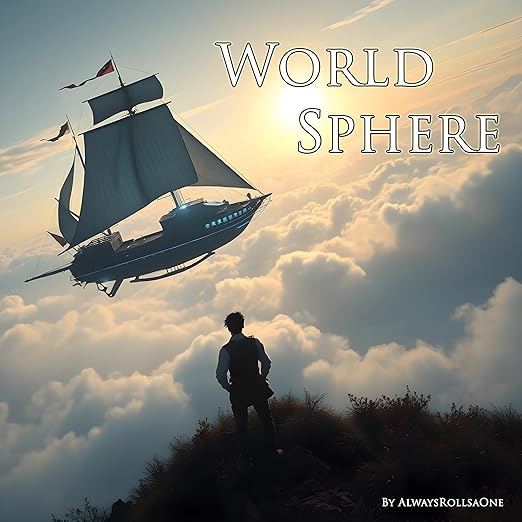
Author Always RollsAone, published through Erick Thiemke, has created a reincarnation fantasy set in a Dyson Sphere, a megastructure of almost incomprehensible scale stabilized with aetheric magic. The protagonist Storme makes his ability selections during an unattended reincarnation, choosing wealth and prosperity as his primary track, a choice that is immediately complicated by the nature of the world he finds himself in. He is an adventurer not because he planned to be, but because the world insists on it through the kind of compounding difficulty that progression fantasy does best.
Our Take on World Sphere
The quality that most distinguishes World Sphere from the crowded progression fantasy field is in how it treats the growth of power. One reviewer compares it favorably to Mark of the Fool and A Soldier's Life, describing it as real progression fantasy where power is earned rather than handed out through endless stat popups. That distinction matters enormously to readers who have grown fatigued with the genre's tendency toward effortless escalation. Storme's gains are hard-fought. His setbacks have real weight. The side characters are, to borrow the reviewer's phrase, not just wallpaper.
The tiered talent system that structures Storme's growth is described by another reviewer as different and genuinely original within the genre. The system creates meaningful choices and meaningful constraints rather than simply providing a progression ladder for the protagonist to climb endlessly. The gradual development of Storme's character alongside the power accumulation is what keeps the book from feeling like a delivery mechanism for ability descriptions with a thin fictional premise wrapped around it.
Why Listen to World Sphere
The Dyson Sphere setting is more than a backdrop. The scale of the structure, the nature of the aetheric magic that holds it together, and the variety of environments within it all become relevant to the plot and the progression in ways that feel integrated rather than decorative. Fantastical creatures, terrible dangers, and treacherous dungeons are all present in quantity, but the world contains enough texture around those elements that the dungeon crawls feel grounded rather than abstracted into pure mechanical exercise.
One reviewer describes finding Eric Thiemke's approach both humorous and original after reading several other books in the LitRPG genre. The humor is present but not overwhelming. It surfaces in character interactions and in the gap between what Storme planned for his new life and what it actually turned out to be, and it gives the book a lightness that keeps the more serious progression stakes from becoming oppressive.
What to Watch For in World Sphere
Some reviewers note editing problems: extra words in sentences, a character whose name shifts inconsistently between chapters. These are real problems and not trivial ones. At the level of polish, World Sphere is clearly self-published and bears the marks of that process. If those errors break immersion for you, that is a fair response. If you can read past them to the story underneath, the underlying work is substantially stronger than the surface execution in those moments suggests.
At thirteen hours and twenty-two minutes, narrated by Nikola Hamilton with evident enthusiasm and good pacing, World Sphere carries a 4.8 rating across over 760 listeners. For a debut series entry, that is a strong signal. Hamilton's performance is a meaningful part of why the audio version has found such a receptive audience. The energy he brings to the progression sequences specifically makes the earning of each gain feel like an event worth celebrating alongside the protagonist.
The Right Listener for World Sphere
If you have been looking for a progression fantasy that takes its time and stays genuinely invested in the world it builds rather than burning through setup in pursuit of power accumulation, World Sphere offers something worth the patience. It is aimed at genre readers who already appreciate the conventions and want them executed thoughtfully rather than mechanically. Readers entirely new to LitRPG or progression fantasy may find the pacing deliberate, but the character work gives them something to hold onto while the world builds around them. The Dyson Sphere setting remains genuinely underexplored at book one's end, with the aetheric magic system established in enough internal detail that future installments can develop it further without the world feeling invented on the fly. That kind of disciplined foundation is rarer in the genre than it should be, and it is one of the things that makes this series worth following into its next volumes.
Good to Know
Is World Sphere a true LitRPG with stats and system screens, or is it more of a progression fantasy?
It leans toward progression fantasy with a tiered talent system rather than full LitRPG with stat sheets and menu screens. Reviewers emphasize earned advancement over stat-driven progression.
Is this a good entry point for someone new to progression fantasy or LitRPG?
Yes. The genre conventions are present but the book does not assume deep familiarity with them. The slow-build approach and genuine character investment make it accessible to readers coming from adjacent fantasy subgenres.