Quick Take
- Narration: Virtual Voice AI narration, the automated delivery will not serve the atmospheric tension this story requires; listeners who care about performance should be aware before purchasing.
- Themes: Wrongful conviction and family complicity, rural silence as social control, the cost of returning to what you tried to leave
- Mood: Gothic and slow-burning, with the dread of the Ozarks’ harvest moon legend woven through the investigation
- Verdict: A genuinely promising small-town thriller launch with a compelling detective backstory, but the AI narration is a significant obstacle for a book that lives or dies on atmosphere.
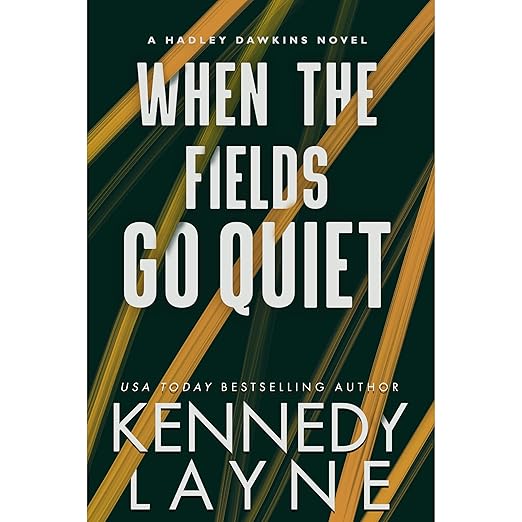
There is a specific kind of small-town thriller that I find myself reaching for in autumn, when the light changes and the landscape starts to feel like it is holding something back. When the Fields Go Quiet sets itself in the Ozarks, which is excellent instinct for a story about things that happen under harvest moons and disappear into fields. The premise is genuinely strong: Detective Hadley Dawkins returns to Cane County after two decades away, a place she helped destroy through the testimony she gave as a ten-year-old girl that sent her brother Mason to prison for a murder that may never have happened. Now a girl is missing again, the pattern looks familiar, and the legend of the Threshing Man has come back with it.
Kennedy Layne is an established thriller writer, and her instinct for emotional architecture is visible in how she has designed Hadley’s situation. The detail that Hadley was ten when she testified, and that her testimony was the thing that convicted her brother, is not just backstory. It is the psychological wound that everything else in the novel grows from. When she returns to Cane County and finds a community still organized around silence and suspicion, she is not just investigating a new case. She is investigating whether she destroyed an innocent person’s life.
Our Take on When the Fields Go Quiet
What Layne has built here is a mystery that works on two timelines simultaneously: the current disappearance pulling Hadley back to Cane County, and the original case from twenty years ago that she has been living with ever since. That double structure is a demanding thing to execute well, and from what reviewers describe, she largely manages it. One reader noted that a specific chapter completely changed the direction they thought the series was going, which is exactly the kind of structural surprise that distinguishes a mystery with genuine architecture from one simply ticking through investigation beats.
The Threshing Man legend, described in the book’s epigraph as a spirit that comes when the fields go quiet and the sky goes copper, is not merely decorative. The way it functions within Cane County’s social psychology, as a story used to keep people afraid and silent about what actually happens in the community, is where the book’s thematic sharpness lives. Rural communities using folklore to manage outsiders and maintain internal silence is not a new idea in American gothic fiction, but Layne appears to understand how to work within that tradition rather than simply borrowing its atmosphere.
Why Listen to When the Fields Go Quiet
The mystery community has responded warmly to this series launch. Readers describe Hadley as a strong female lead, and the emotional stakes created by her brother’s imprisonment give her investigative motive a personal weight that purely professional detective fiction sometimes lacks. For listeners who read Kennedy Layne’s Touch of Evil series, the comparison reviewers make between the two suggests this new series opens with a different kind of ambition, darker in setting and more emotionally complex in its protagonist’s relationship to the central crime.
For a series opener, the book sets up its Cane County world with enough detail to feel inhabited rather than atmospheric shorthand. The community’s organization around silence and the way that silence enables violence across decades is the kind of social texture that makes a series location feel real enough to return to across multiple books. Reviewers who are already invested in Hadley are looking forward to book two, which is the reliable sign of a well-constructed launch.
What to Watch For in When the Fields Go Quiet
The narration here is Virtual Voice, which is Audible’s AI text-to-speech system. This is a meaningful disclosure for a book like this one. Atmospheric thriller fiction depends on tonal control, on the hesitation in a witness’s voice and the weight of silence in a scene. AI narration, however technically competent, does not currently deliver the kind of performance that makes those moments land. Listeners who buy audiobooks primarily for the performed experience will find this a significant limitation. If you are happy to use the audio format primarily as a reading vehicle rather than a performance, the limitation matters less, but it is important to know going in.
The book was released in early 2026 and had a small but enthusiastic early readership. With only 34 ratings at the time of this writing, the full picture of how the novel performs across a broader readership has not yet emerged. What is present is consistent enthusiasm from readers who found it, which is a reasonable early indicator.
Who Should Listen to When the Fields Go Quiet
Best suited to listeners who love Ozarks-set atmospheric mystery with strong female investigators and cold-case personal stakes, and who can tolerate or are unbothered by AI narration. Also a good fit for existing Kennedy Layne readers curious about her move into darker, more gothic territory. Listeners who find AI narration intrusive or who specifically seek out audio performances as a central part of the listening experience should wait for a human narrator production or read the print version instead.
Frequently Asked Questions
Is When the Fields Go Quiet the start of a series, and does it resolve its central mystery?
Yes, it is the first book in the Hadley Dawkins series. Based on reviewer responses, it resolves enough of the immediate case to feel complete while leaving the larger question of Mason’s innocence and Cane County’s secrets as ongoing threads. Readers are anticipating book two.
Does the Threshing Man legend play an active supernatural role in the plot, or is it purely atmospheric?
Based on the synopsis and the way the legend functions within Cane County, the Threshing Man appears to serve a social rather than supernatural role, used by the community to explain and suppress knowledge of real crimes. The book seems to be grounded thriller rather than supernatural horror.
Why does this audiobook use Virtual Voice instead of a human narrator?
Virtual Voice is Audible’s AI narration system, used by some independent and small publishers to produce audiobooks at lower cost. It is a production decision rather than a reflection of the book’s quality. Listeners sensitive to AI narration should be aware before purchasing.
How does When the Fields Go Quiet compare to Kennedy Layne’s earlier Touch of Evil series?
Based on reviewer comments, this series opens with a darker, more emotionally complex tone than the Touch of Evil series. One reviewer noted that it took them a chapter or two to adjust, then found themselves completely hooked, suggesting a different register rather than a drop in quality.