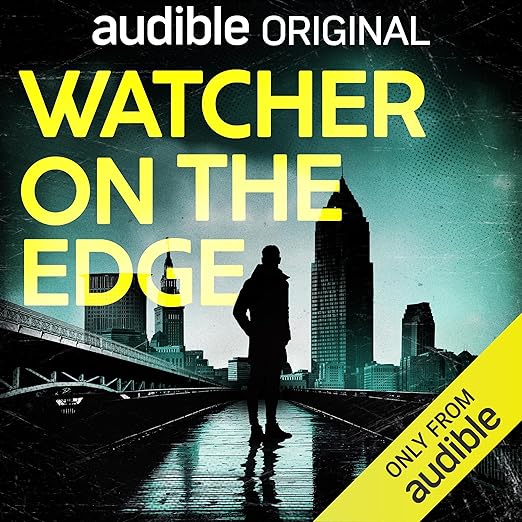
Quick Take
- Narration: Christopher Ragland delivers a grounded, controlled performance that suits Gage Dawson’s wounded-veteran interiority; the Cleveland setting and morally ambiguous plotting benefit from a narrator who never oversells.
- Themes: Veteran reintegration and moral compromise, witness as burden, crime thriller escalation.
- Mood: Tense and propulsive, with a working-class grit that keeps the thriller mechanics grounded.
- Verdict: A confidently plotted crime thriller that earns its Breaking Bad comparisons; stronger on character motivation than most in the genre.
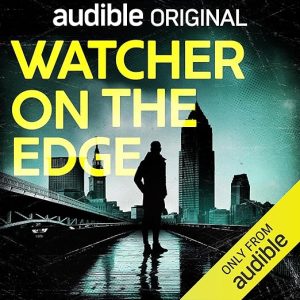
I was halfway through my evening before I realized I had been listening to Watcher on the Edge for three hours without once checking the time. That is the specific kind of testimony that matters for a thriller, and Jeff Marsick earns it. One reviewer described the experience of driving around past his destination to keep listening, which is a genre-specific compliment that captures exactly what this book does well: it creates the conditions where the next scene matters more than whatever you were going to do next.
The setup is deceptively lean. Gage Dawson is an Army veteran haunted by Afghanistan who has settled into a life as a small-time thief in the suburbs of Cleveland. During a burglary, something goes badly wrong and Gage becomes the sole witness to a cold-blooded murder. What follows is the unwinding of a web of blackmail and deception that draws him from petty crime into something with much higher stakes and much less room to maneuver. Marsick has been writing crime fiction for years, and the plotting here reflects that experience; the complications are intricate without becoming implausible, and the moral stakes escalate in ways that feel earned rather than arbitrary.
Our Take on Watcher on the Edge
The Breaking Bad and Don Winslow comparisons in the marketing materials are not idle; Marsick is working in a similar register, where an ordinary person is pulled into extraordinary criminality not by greed or malice but by circumstance and then, gradually, by something that starts to look like choice. The Cleveland setting is specific and lived-in rather than generic, which matters; the suburbs as a location for crime fiction has a particular kind of plausibility that Manhattan or Los Angeles does not. The banality of the environment makes the violence more startling.
Gage is a well-constructed protagonist for this kind of story. The veteran background gives him competencies that make the thriller mechanics believable, but the haunted quality and the self-imposed downward trajectory give him an interiority that keeps him from feeling like a genre placeholder. One reviewer described the story as reading as if No Country for Old Men and The Departed had a baby born in Cleveland, which is a good-natured way of identifying the film lineage Marsick is drawing on while also acknowledging its Ohio-specific particularity.
Why Listen to Watcher on the Edge
Christopher Ragland’s narration is exactly what this material needs: controlled, low-key, and emotionally internalized in the way Gage himself is. Ragland does not perform the thriller; he inhabits the character’s damaged steadiness and lets the plotting do its own work without amplifying the tension artificially. For a crime thriller with literary ambitions, that restraint is valuable. The dialogue has a dry humor that Ragland delivers with good timing, and the action sequences are clear without becoming frenetic.
At just over ten hours, the pacing is generous without feeling padded. Marsick uses the length to develop the web of characters surrounding Gage, and the complication of loyalties in the second half is more satisfying for the time spent establishing who is who and what they want.
What to Watch For in Watcher on the Edge
The book blurs right and wrong deliberately, and the protagonist is operating in morally compromised territory from the opening chapters. Listeners who prefer their crime fiction protagonists to be straightforwardly heroic will need to make peace with a lead whose method of scraping by involves theft before the murder complicates everything. That moral ambiguity is the book’s actual subject, and it is handled thoughtfully rather than gratuitously.
With only three reviews at the time of writing, the listener sample is small. All three are positive, and the consistency of their enthusiasm is encouraging, but prospective listeners should weigh a thin review trail when setting expectations.
Who Should Listen to Watcher on the Edge
Fans of crime thrillers in the Dennis Lehane or Don Winslow tradition who enjoy blue-collar settings, morally complex protagonists, and intricate plotting will find this immediately comfortable. The veteran-trauma element also appeals to readers drawn to character studies embedded in genre fiction. If you need your thriller to resolve into moral tidiness, the sustained ambiguity here may dissatisfy; if you find that ambiguity the most interesting part of the form, Marsick delivers it with genuine skill.
Frequently Asked Questions
Is Watcher on the Edge a standalone novel or the start of a series?
Based on the available information, it appears to be a standalone crime thriller. No series information is listed, and the synopsis does not suggest a continuing arc, though fans of the character may hope for more.
How much does the Afghanistan veteran backstory factor into the plot?
The veteran background is foundational to Gage’s character, his skills, his emotional damage, and his particular worldview rather than a plot element that drives specific scenes. It explains who he is and why he has ended up where he has more than it produces direct flashback or war narrative.
Is the Breaking Bad comparison accurate?
In terms of register and moral trajectory, yes. Both stories follow an ordinary person who becomes increasingly complicit in serious criminality through a chain of situational logic rather than a simple descent into villainy. The Cleveland setting and working-class texture reinforce the comparison rather than undermining it.
Does Christopher Ragland’s narration suit a first-person male veteran protagonist?
Yes. Ragland’s controlled, emotionally internalized delivery suits Gage’s damaged stoicism without flattening him. The narration restrains itself in the right places, letting the plotting generate tension rather than injecting it artificially through vocal performance.