Quick Take
- Narration: Brian Pederson delivers the material in a clear, motivational tone without pushing into infomercial territory, keeping the practical guidance easy to follow.
- Themes: Habit formation over intensity, accessible fitness for all levels, nutrition as a walking complement
- Mood: Encouraging and accessible, designed to reduce the intimidation factor of starting a fitness routine
- Verdict: A practical, low-pressure entry point to building a walking habit, with enough structure to be genuinely useful and enough flexibility to suit a wide range of starting conditions.
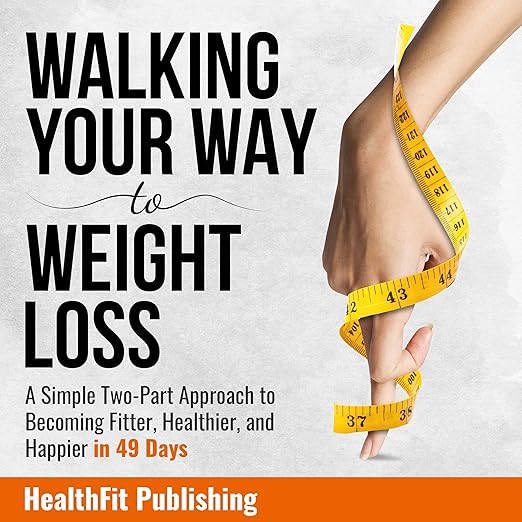
I went into this one with a small amount of skepticism, the kind that attaches itself to fitness audiobooks that make specific percentage claims in their synopses. Lose up to 25 percent more body weight in twelve weeks is the kind of statement that activates my editorial instincts. But Walking Your Way to Weight Loss is more honest than its marketing suggests. The core argument, that walking is underestimated as a fitness intervention, and that most people fail at exercise routines because the routines ask too much too fast, is not only defensible but actually well-supported by the structure of the book itself.
The statistic the synopsis leads with is worth considering on its own: 73 percent of people who set fitness goals abandon them before achieving the goal, and 42 percent of those who give up cite excessive difficulty as the reason. Walking addresses that directly, not by lowering the ambition but by lowering the entry barrier. You do not need equipment. You do not need a gym membership. You do not need to restructure your morning. You need to walk more than you currently do, consistently, and build from there.
Our Take on Walking Your Way to Weight Loss
The 49-day beginner plan is the book’s most practically useful element, and it is designed with the kind of graduated progression that behavioral science consistently shows increases long-term adherence. Rather than prescribing a fixed daily distance or duration from the start, the plan builds in increments that allow the body and the habit to develop together. The customization framing, the repeated emphasis that the program can be adapted to different ages, fitness levels, mobility constraints, and schedules, is not just marketing language. It reflects a genuine understanding that the most common reason people abandon walking programs is that the program assumed a starting condition the person did not actually have.
The nutrition section is sensible and proportionate. It does not attempt to be a diet book, which is the right instinct. It covers the basics of how nutrition interacts with a walking program without the kind of macro-obsession that can make fitness books feel like full-time jobs. One reviewer who lost eleven pounds in six weeks while using a cane describes the book as helpful and motivating within realistic limitations. That is the kind of testimonial that means something.
Why Listen to Walking Your Way to Weight Loss
Brian Pederson’s narration is well-calibrated for this kind of content. He has a voice that communicates encouragement without the synthetic enthusiasm that characterizes the less trustworthy end of the wellness audio market. The book is under four hours, which makes it a manageable listen in a single session, and the PDF companion available in the Audible library handles the visual content an audio-only listener would otherwise miss. That companion supplement is worth downloading before you start, particularly for the tracking elements and the walking plan itself.
What to Watch For in Walking Your Way to Weight Loss
The publisher name, HealthFit Publishing, is worth noting. This is a content company producing instructional audio rather than a traditional publishing house, and the book reflects that: the writing is functional and clear rather than distinctive, and the production is competent rather than polished. That is not a disqualifying observation for a book like this. You are not reading it for the prose. But it does mean the review ecosystem is somewhat more curated than it might be for a trade-published title, and the rating should be weighted accordingly. One reviewer also notes a physical printing error in the paperback edition, which does not affect the audio but is worth knowing if you intend to use both formats.
Who Should Listen to Walking Your Way to Weight Loss
People who have tried more demanding exercise regimes and abandoned them, and who want a lower-stakes alternative with genuine physiological backing. Seniors or people with mobility limitations, specifically addressed by the book’s flexibility framing. People who are already regular walkers and want a structured approach to using that activity more intentionally for weight management. Those looking for significant athletic challenge or detailed nutritional science will need to supplement this with more specialized resources.
Frequently Asked Questions
Is the 25 percent more weight loss claim in the synopsis realistic?
The claim references a comparison between walking plus the program and dieting alone over a twelve-week period. The qualifier ‘up to’ does significant work in that sentence. The practical guidance, however, is grounded in established principles of habit formation and exercise adherence, and reviewers report real results when they follow the program consistently.
Is this program accessible for people with limited mobility or seniors?
Yes. The book specifically addresses this. One reviewer who uses a cane describes finding the program realistic and motivating. The customization framing throughout the book means the 49-day plan is adjustable to different physical starting points.
Does the audiobook work without the accompanying PDF, or is the PDF essential?
The audio content stands on its own for the conceptual and motivational material. The PDF companion, available in the Audible library, covers the walking plan structure and tracking elements in visual form. Listeners who intend to actually follow the 49-day plan will find the PDF considerably more useful than trying to take notes from the audio alone.
How does this book compare to other walking-for-fitness audiobooks in terms of depth?
It is a solid introductory treatment rather than a deep dive. Multiple reviewers describe it as the most practical and accessible resource they have found on walking as exercise. Those who already have a walking practice and want advanced training protocol detail will need to look elsewhere.