Quick Take
- Voice: Jackie Meloche sustains the cozy, warm energy of this LitRPG world across a 20-hour runtime, making the farm management and community-building sections as engaging as the higher-stakes trial sequences.
- Big ideas: Community building, creature evolution, belonging across worlds
- Atmosphere: Cozy and propulsive in equal measure, with a bittersweet ending that polarized readers
- Worth it?: A satisfying and emotionally resonant conclusion to Owen's creature farm saga, though the ending decision will be a point of debate among devoted listeners.
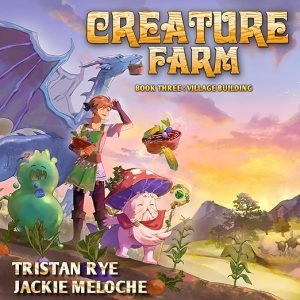
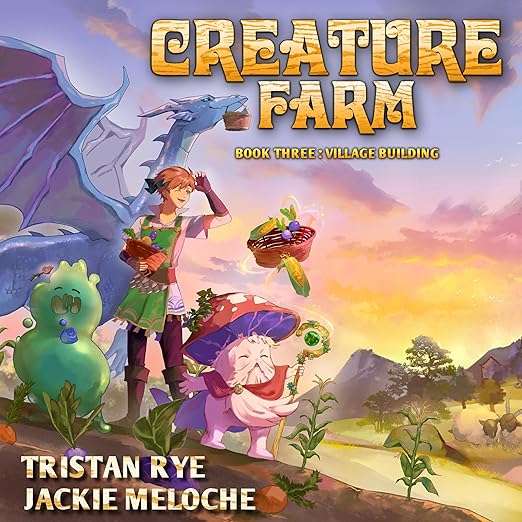
I started Village Building on a long drive and found myself genuinely reluctant to arrive at my destination. Tristan Rye has built something in the Creature Farm series that sits in a specific and not especially crowded space: cozy LitRPG that prioritizes community and relationship over stat optimization and combat dominance. Owen's underground slime habitat, his expanding farm, his friendships with villagers, these things matter here in a way that makes the twenty-hour runtime feel earned rather than padded.
Jackie Meloche carries the whole thing with a warmth that suits the material. The cozy-adjacent energy of this world, woodland fairy habitats, potion workshops, the rhythms of market day, requires a narrator who can make the quieter sections feel as significant as the trial sequences that escalate in the final act. Meloche does this consistently.
What We Made of It
This is the third and apparently final book in the Creature Farm arc. It covers the expansion Owen has been building toward since book one: new projects across the valley, new villagers needing help, and an ever-growing complexity of creature management and community investment. The LitRPG elements are present but never dominate the warmth of the character interactions. Owen's relationship with the villagers, the inn owner, the potion maker, the woodland creatures he raises and evolves, drives the emotional core more than any progression system.
The novel builds toward Owen's final trial, a challenge lurking in ocean and mountains that the synopsis deliberately keeps vague. The trial itself delivers on the tension the series has been building. What it leads to, the ending choice Owen makes, is where Village Building becomes something readers will debate. One reviewer described being in love with the story and deeply conflicted about where it closes. Another called it truly disappointing while simultaneously giving the reading experience five stars. That split response tells you something important about how the ending functions.
Why Village Building Works as an Audiobook
The primary draw is the emotional community Owen has built. Meloche's narration makes these relationships feel specific and earned. The slime habitat chapters, which sound unlikely on paper, are genuinely charming because Rye has constructed a world where creature care carries actual weight. Reviewers consistently describe being moved by how the author handles the bonds between Owen and the beings he has raised.
For fans of cozy fantasy who have found most LitRPG too focused on combat or optimization, this series and this final volume represent what the genre looks like when it prioritizes heart. The twenty-hour runtime also gives the world genuine space to breathe, making Village Building more immersive than the typical cozy fantasy entry.
What Might Not Land
The ending is the major variable. Without spoiling the specifics, Owen makes a decision in the final act that readers find either emotionally coherent or frustrating to the point of feeling like a betrayal of what the story has built. Rye addresses this in author's notes, indicating the story of this world is not entirely complete, and readers hoping for resolution may find that reassurance either comforting or insufficient depending on how they respond to the ending itself.
Readers new to the series should start at book one. Village Building assumes complete familiarity with the established creature types, village relationships, and the world's trial system. The emotional payoff of Owen's final trial depends on that accumulated context.
Rye has spoken in author's notes about the world continuing beyond Owen's arc. For listeners who found the ending bittersweet rather than satisfying, that assurance matters. For those who found it cleanly concluded, it is supplementary. Either way, the twenty hours of warmth and community that Village Building builds before its ending remain exactly what the cozy LitRPG genre promises at its best.
Should You Listen to Village Building?
Fans of the Creature Farm series who have been following Owen from the beginning. Listeners who want cozy LitRPG with genuine emotional depth and community focus. Also a strong recommendation for listeners who find most LitRPG too combat-heavy and are looking for something warmer. Skip if you need a tidy, universally satisfying ending, or if you have not read the first two books. The ending will be divisive even among fans, but the journey to it is consistently rewarding.
Frequently Asked Questions
How divisive is the ending, and does the author address it?
Quite divisive. Reviewers who loved the series and gave the book five stars still describe the ending as disappointing or as a decision they disagreed with for Owen. Rye addresses this in author's notes, suggesting the world continues and the ending is not necessarily final. Whether that provides satisfaction depends on the individual reader.
Does Jackie Meloche maintain energy across the full 20-hour runtime?
Yes. Meloche is a consistent performer and the cozy tone she establishes in the early chapters carries through the more intense trial sequences without feeling mismatched. A twenty-hour cozy LitRPG is a significant commitment, and the narration does not flag.