Quick Take
- Narration: Dan Culhane delivers Horsley’s framework-heavy content clearly and at a pace that gives listeners time to absorb the technique explanations.
- Themes: Memory as skill not gift, concentration and focus, visualization techniques
- Mood: Practical and motivating, with a self-improvement energy that suits the short runtime
- Verdict: A compact, technique-forward introduction to memory improvement built around one central mindset shift, useful if you engage actively rather than passively.
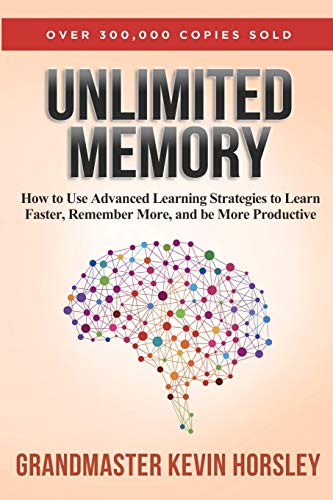
I have a habit of listening to practical nonfiction during morning runs, when my brain is alert enough to follow an argument but my hands are occupied. Unlimited Memory fits that window almost perfectly, at two hours and twenty-eight minutes, I finished it over three consecutive mornings, each day turning over one of Kevin Horsley’s three pillars while my legs did their own work. Whether any of it stuck is an open question, and that tension between the promise of the title and the reality of actual retention is worth exploring honestly.
Kevin Horsley is a Grand Master of Memory who came to the subject through necessity, he struggled with dyslexia and had to develop his memory capability deliberately rather than discovering it naturally. That biographical detail matters because it grounds the book’s central argument: memory is a skill, not a talent. You are not either a person who can remember things or a person who cannot. You are a person who has or has not learned and practiced the techniques. This is a genuinely useful reframe for teens who have internalized the opposite belief.
Our Take on Unlimited Memory
The three-pillar structure, concentrate, imagine and reconnect, practice, is clean and memorable, which is fitting for a book about memory. Horsley does not overload any single section; he builds each pillar methodically and returns to it through later examples. The techniques themselves draw on classical memory training: the method of loci, vivid visualization, the use of narrative chains to connect otherwise isolated facts. None of this is original to Horsley, these systems are ancient, but his presentation is clear and his personal credibility (Grand Master of Memory, overcome dyslexia) gives the instruction a lived-in authority that purely theoretical treatments lack.
One Audible reviewer described applying the techniques for a year and seeing gradual improvement. That timeline is honest: this is not a hack but a practice, and the book is better understood as a guide to beginning that practice than as a guarantee of immediate transformation. Listeners expecting dramatic overnight results may feel let down; listeners approaching it as a framework to build on over time will find it genuinely useful.
Why Listen to Unlimited Memory
Dan Culhane’s narration is measured without being slow. He gives the technique demonstrations, where Horsley walks through how to apply a specific method to a specific type of information, enough breathing room that a listener can follow along mentally rather than needing to pause and rewind. For an audiobook built around practical instruction, that pacing judgment is important. The runtime is efficient; there is no filler content and no extended anecdotes that pad the book without adding insight. For students preparing for exams, professionals who need to retain large amounts of new information, or simply anyone who has accepted the false premise that they have a bad memory, this is a good place to start.
What to Watch For in Unlimited Memory
The book is not designed for listeners dealing with clinical memory loss conditions, several reviewers noted this explicitly. The techniques Horsley presents require active cognitive engagement and consistent practice; passive listening alone will not produce results. You need to pause, apply, repeat. This is worth stating because the audiobook format creates a temptation toward passive consumption that works against the book’s own argument. It also skews toward memorization of explicit, structured information, facts, sequences, vocabulary, rather than the more diffuse challenge of retaining conceptual understanding across complex subjects.
Who Should Listen to Unlimited Memory
Students, particularly those in high school or early college who are developing their study methods, will get the most direct application from this. Professionals who need to retain names, technical sequences, or large volumes of new material will also find practical value. Listeners who have read widely in the memory improvement space, Moonwalking with Einstein, The Memory Book, will find the content familiar, though Horsley’s personal story and concise delivery distinguish the experience. Those dealing with medically significant memory problems should look elsewhere; this is training, not treatment.
Frequently Asked Questions
Do the memory techniques in this audiobook actually work, and how long does improvement take?
The techniques, drawn from classical mnemonic traditions like the method of loci and visualization chains, have substantial evidence behind them. One reviewer reported gradual improvement after a year of applying them. Results depend heavily on consistent practice rather than passive listening.
Is this audiobook suitable for high school students preparing for standardized tests?
Yes, Horsley’s framework is particularly useful for students memorizing vocabulary, formulas, historical sequences, or factual content. The three-pillar structure is easy to implement. It works best as a companion to active study practice, not a replacement for it.
How does Unlimited Memory differ from other memory-training books like Moonwalking with Einstein?
Where Moonwalking with Einstein is primarily a narrative about the competitive memory world, Unlimited Memory is more purely instructional. Horsley’s personal backstory with dyslexia adds credibility, but the focus stays on giving listeners actionable techniques rather than telling an engaging story about them.
Does Dan Culhane’s narration work for a technique-heavy practical nonfiction audiobook?
Yes. He gives the how-to sections enough space to follow mentally, which matters when Horsley is demonstrating a specific memorization technique step by step. His delivery is clear and unshowy, which suits the material.