Quick Take
- Narration: Meredith Atwood narrates her own story, and that authorial presence gives the performance an intimacy and earned authority that no hired voice actor could replicate.
- Themes: Endurance and self-doubt, motherhood and athletic identity, community among amateur competitors
- Mood: Warm, funny, and genuinely motivating without tipping into hollow cheerleading
- Verdict: If you have ever told yourself triathlon is for someone else, this audiobook will quietly dismantle that argument over nine hours.
I started listening to this one on a long drive back from a weekend trip, somewhere in the middle of a stretch of highway with nothing to look at but flat farmland. My running shoes were in the back seat. I had signed up for a 5K three months earlier, completed it, and then done nothing since. Within the first twenty minutes of Meredith Atwood telling her story, I was already reconsidering whether I had undersold myself.
Atwood is not a professional athlete who decided to write a training guide. She was an overworked wife and mother who found herself in a life she could not quite recognize, and triathlon became the vehicle through which she clawed her way back to something she recognized as herself. That distinction matters enormously, because it changes the entire register of the advice she gives. This is not instruction from a pedestal. It is instruction from the mud.
Our Take on Triathlon for the Every Woman
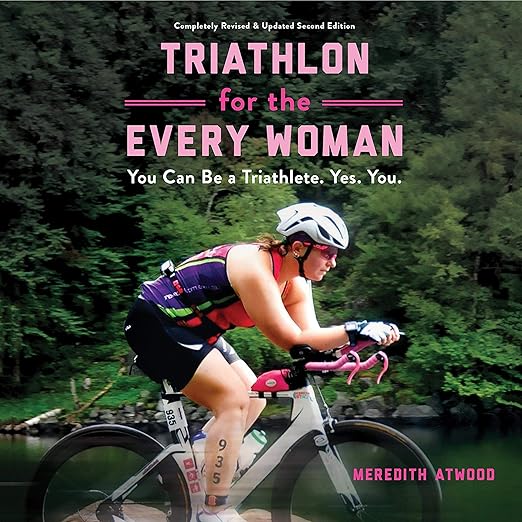
What surprised me most about this audiobook is how little it actually sounds like a training manual. Atwood weaves the practical information, compact training plans, nutrition frameworks, gear walkthroughs for swimming, biking, and running, into personal narrative in a way that makes the clinical details feel earned rather than assigned. When she explains how she went from the couch to completing an IRONMAN 70.3 in just over a year, the timeline never feels like a brag. It feels like a map she is handing you. Reviewers consistently describe the experience of this book as feeling like Atwood is talking directly to them, and narrating her own material means that effect is amplified to an unusual degree.
The second edition carries additional input from coaches, nutritionists, and experienced athletes, which gives the content genuine depth beyond memoir. But Atwood has the good sense to filter all of that expertise through her own voice and her own hard-won failures, so it never becomes a dry reference document.
Why Listen to Triathlon for the Every Woman
The most compelling reason to choose the audiobook format over the print edition is Atwood herself as narrator. Her cadence is the cadence of someone who has thought about these things deeply and genuinely wants you to succeed, not someone reading prepared material. The humor lands. One reviewer described laughing out loud at parts, and having listened to enough earnest fitness books narrated by strangers, I understand what they mean by the contrast. Atwood’s philosophy, articulated throughout as just keep moving forward, is the kind of practical wisdom that survives the end of a chapter and follows you into your actual week.
The audiobook also proves surprisingly useful as a companion for actual training. Several reviewers describe it as both an easy listen and a reference they returned to multiple times as their preparation evolved. At nine hours and two minutes, there is enough content to carry you through a meaningful stretch of prep, and the format makes it accessible during the exact moments you are most likely to be training.
What to Watch For in Triathlon for the Every Woman
This is not a book that will satisfy a seasoned competitive triathlete looking for performance optimization at an elite level. Atwood is writing for the woman who is not sure she belongs in a triathlon at all, and that audience calibration is consistent throughout. The training plans are compact by design, and the nutrition guidance, while updated for this edition, is general enough to apply broadly rather than prescriptively. If you have already completed multiple races and are looking to shave time, this is not your technical manual.
One reviewer with a more experienced eye gave it four stars rather than five specifically because of its focus on the casual triathlete perspective. That is fair, and worth knowing going in. But for the audience it is written for, which is probably larger than the sport usually assumes, the calibration is exactly right.
Who Should Listen to Triathlon for the Every Woman
This audiobook belongs with anyone who has considered triathlon and talked themselves out of it for reasons that feel convincing but might not actually be. It is particularly well-suited to women managing careers and families who have written off serious athletic pursuits as a luxury they cannot afford. It also works well for partners and coaches of women athletes, as one reviewer explicitly recommended it to male coaches and spouses who want to understand what their athletes are actually navigating. It is a harder sell for elite or semi-elite competitors who already have the technical knowledge and are looking for performance gains. Those listeners will find the ethos rewarding but the content too introductory.
Frequently Asked Questions
Does Meredith Atwood’s self-narration work for a book that also contains technical training information?
Yes, remarkably well. Atwood’s personal voice keeps the practical sections from feeling like a dry textbook, and her earned authority as both athlete and coach gives the advice weight that a hired narrator could not replicate. Reviewers consistently note that it feels like a conversation rather than instruction.
Is this audiobook useful only for first-time triathletes, or can experienced athletes get something from it?
The book is explicitly calibrated toward beginners and athletes returning to sport. Experienced competitors will find the philosophical framing and motivational content genuinely useful, but the training plans and technical breakdowns will likely cover ground they already know. It is best described as essential for the beginner, optional for the veteran.
How does the second edition differ from the first in audiobook form?
The revised edition incorporates updated training plans, current nutrition research, and additional input from coaches and athletes that was not in the original. Atwood also adds her own IRONMAN finishes and coaching experience to the perspective she brings. The personal story is expanded, and the reference material reflects developments in the sport since the first edition.
Is this audiobook primarily memoir or primarily training guide?
It is genuinely both, which is what makes it unusual. Atwood integrates the training content into the personal narrative rather than separating them into distinct sections. You will finish it having absorbed practical information about swimming, biking, running, and nutrition, but you will have absorbed it through story rather than chapter headings.