Quick Take
- Narration: Tom Parks reads the technical content clearly and without monotony, an achievement given how much of this book consists of data metrics, training zone tables, and specific workout protocols.
- Themes: Data-driven training methodology, physiological self-knowledge, performance optimization for cyclists and triathletes
- Mood: Technical and thorough, with a practical urgency that rewards engaged listeners
- Verdict: The definitive power meter training guide in its third edition, essential for any cyclist or triathlete who is serious about structured training.
I am not a competitive cyclist. I ride regularly, I have done a few organized events, and I have spent more time than I care to admit reading about training methodology without applying it systematically. I started listening to Training and Racing with a Power Meter partly out of curiosity about a tool I had been considering buying, and partly because one reviewer described it as succeeding at the rare skill of explaining something complex in a genuinely simple way. That reviewer is a data scientist. I found it persuasive.
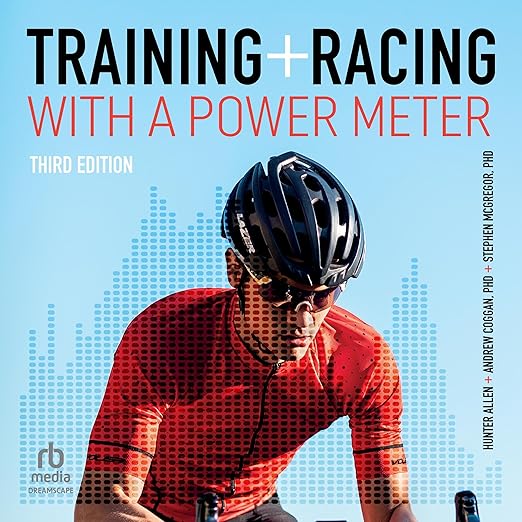
The third edition, released in audio form in 2025, updates the comprehensive guide with new metrics, FRC, Pmax, mFTP, the Power Duration Curve, alongside new training plans for master cyclists and triathletes, over a hundred new power-based workouts, and expanded guidance for triathletes managing the relationship between bike and run pacing. Hunter Allen, Andy Coggan, and Stephen McGregor have been refining this framework for years, and the third edition reflects that refinement.
Our Take on Training and Racing with a Power Meter
The core argument of the book is straightforward: a power meter gives you real-time, objective data about your effort that heart rate and perceived exertion cannot match. Heart rate lags behind actual effort; perceived exertion is affected by fatigue, heat, motivation, and a dozen other variables. Power is power. Knowing your Functional Threshold Power and how your current output relates to it gives you precise information about whether you are building fitness, digging a hole, or simply spinning your wheels.
What the book does well is move from that argument to the practical question of what you actually do with the data. Finding your baseline power data, profiling your strengths and weaknesses using the Power Duration Curve, periodizing training to build specific qualities, setting racing strategy in real time, all of this is addressed with a specificity that is refreshing compared to the generalist training advice that dominates most cycling literature. The inclusion of case studies on master cyclists and triathletes is particularly useful for the significant portion of the cycling community that is no longer in its twenties.
Why Listen to Training and Racing with a Power Meter
Tom Parks navigates the technical content with a clarity that keeps the listener engaged even through the workout protocol sections, which are essentially long lists of specific durations and target wattages. This is harder to do well than it sounds; a less capable narrator would make these sections feel like reading a spreadsheet aloud. Parks does not. The explanatory sections around why particular workouts target particular physiological adaptations are where his narration is most valuable, he keeps the scientific content feeling conversational rather than dry.
The companion PDF mentioned in the audiobook description is worth downloading. Charts, graphs, and the Power Duration Curve visualizations are referenced throughout the audio, and while Parks describes them clearly enough that you can follow the concepts without seeing them, the visual material enriches the understanding significantly for anyone who processes data better with a graph than a verbal description.
What to Watch For in Training and Racing with a Power Meter
One reviewer who found the book informative concluded it had convinced him not to buy a power meter, not because the book was bad, but because he recognized that his current level of commitment to cycling did not warrant the kind of data parsing the book describes. That is worth noting honestly: this book is written for people who are serious about racing or performance improvement. Recreational cyclists who are happy with their current level of fitness may find the methodology more elaborate than their goals require.
The audiobook format also has limits here. This is fundamentally a reference text, the kind of book you return to when planning a training block, setting up a new test, or diagnosing why a particular race did not go as planned. One linear listen is a good introduction, but the full value of the book comes from repeated consultation, which is easier with print or a searchable digital format than with an audio file.
Who Should Listen to Training and Racing with a Power Meter
Frequently Asked Questions
Is this audiobook useful if I do not yet own a power meter?
Yes, though it functions differently. The book will help you understand whether a power meter is right for your training approach, and the physiological principles and training methodologies it describes apply whether or not you have the device. Several reviewers without power meters found the workout frameworks valuable applied to other training tools.
Does the third edition significantly update the second edition, and is it worth getting if you have the older version?
Multiple reviewers who owned earlier editions describe the third edition as a significant improvement, particularly for the new metrics, the expanded triathlete guidance, and the additional training plans for master athletes. One reviewer bought the German edition of an older edition and the English third edition specifically to have the updates.
How does Tom Parks handle the highly technical workout protocol sections?
With commendable clarity. The workout sections are essentially lists of specific targets and durations, which could easily become numbing in audio form. Parks maintains enough variation in pacing and emphasis to keep the listener oriented without overclaiming expressiveness that the material does not require.
Is the companion PDF important enough that I should download it before listening?
For serious cyclists, yes. The Power Duration Curve, training zone charts, and data visualizations that the authors reference throughout are much easier to understand when you can see them alongside the audio explanation. The book works without the PDF, but the PDF significantly improves the learning.