Quick Take
- Narration: Huw Parmenter brings a quiet, unshowy attentiveness to the Osemanverse that suits the delicate emotional register of the novella.
- Themes: Mental illness in adolescence, family during the holidays, the reality behind the festive surface
- Mood: Tender, melancholic, and honest in ways that do not pretend the season is simple
- Verdict: A small, precise companion to the Heartstopper world that will mean the most to readers who love these characters and are willing to sit with a Christmas story that refuses to be cheerful on demand.
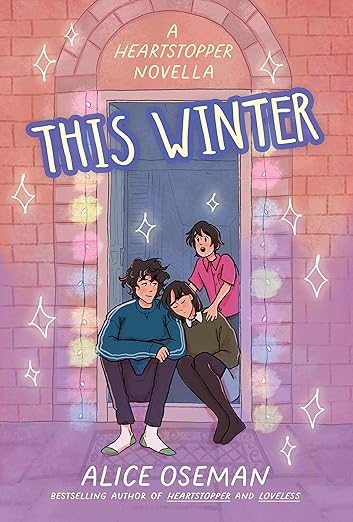
I listened to This Winter on a December evening with a cup of tea that went cold because I forgot to drink it. That is a specific kind of absorbed listening, the kind where you keep meaning to reach for something and then the next line catches you and you never do. Alice Oseman’s Heartstopper world is not always where I spend my reading time, but there is something in how they write adolescent inner life, the thinness of the membrane between functioning and not functioning, that gets me every time. This novella is available through Audible, and at just over five hours it is a compact but emotionally dense companion to the series.
This is a short work. Barely over a hundred pages in print. It reunites Tori Spring, her brother Charlie, and Charlie’s boyfriend Nick across a holiday season that one reviewer correctly described as not the typical warm Christmas story but the reality of some. Oseman is not writing aspirational holiday fiction. They are writing about what it actually feels like to be in a family when someone you love is struggling, and to be that someone, and to navigate all of it while the cultural ambient noise keeps insisting that this time of year is supposed to feel a particular way.
What Tori Carries That Others Cannot See
The choice to focus substantially on Tori’s perspective is the novella’s most interesting structural decision. In the main Heartstopper series, Tori functions as a kind of dry, watchful presence in Charlie’s life. Here, Oseman gives her an interior monologue, and what it reveals is a young woman who has been quietly managing an enormous amount of fear about her brother for a very long time. She does not perform this fear. She carries it with the slightly exhausted pragmatism of someone who has been in this position before and expects to be in it again.
The holiday setting is exactly right for this subject matter. Christmas concentrates both family pressure and the expectation of happiness in ways that are particularly difficult to navigate when someone in the household is unwell. Oseman understands that the season does not pause difficult realities; it amplifies them, and they refuse to let the novella pretend otherwise. One reviewer called it perfectly encapsulating what it is like to be a mentally ill teenager, and I think that is accurate. The Osemanverse is important in this regard, not because it offers solutions, but because it offers recognition. That recognition function is one of the things literary fiction is for, and Oseman delivers it with consistency across everything they write.
The Brevity as Both Strength and Constraint
The novella’s limitations are real and worth naming. At 128 pages, it cannot do what a full novel does. One reviewer noted wanting more perspective from both siblings, feeling that the glimpse was too brief. That is a fair critique. The relationship between Charlie and Nick is present but somewhat peripheral, and readers who came primarily for their dynamic may feel the balance is off. Tori and Charlie get the emotional center, which is a legitimate choice, but it is a choice with costs for certain readers.
Another reviewer described wanting a physical copy to revisit on a rainy day with hot apple cider in hand, which captures something real about how this novella works. It is not a once-through experience so much as something to return to, which means the audio format is one of several valid ways in. The artwork included in the physical edition is referenced by some listeners as a feature the audio cannot replicate, and that is worth noting if you are choosing between formats.
Parmenter’s Narration and the Restraint It Requires
Huw Parmenter’s narration is quiet and unshowy, which suits the novella’s interior focus. He does not try to make the emotional material more dramatic than Oseman intends. He trusts the writing, which is the right call for Oseman’s understated style. The voices are distinct enough to orient the listener without the exaggerated differentiation that would feel false to the material. Tori’s dry internal commentary and Charlie’s more fragile interiority come through as different registers rather than different performances.
Listeners who prefer expressive, highly performative narration may want a warmer style. But the restraint Parmenter brings matches the emotional register of a book about people who are not speaking their feelings out loud. The characters in this novella are carrying things they have not yet found words for, and a narrator who reaches for dramatic emphasis would undercut exactly what Oseman is doing on the page.
Heartstopper Fans and Who Else Will Connect Here
Listen to this if you are already in the Heartstopper world and want more time with these characters in a quieter, more interior register. Particularly good for readers who have personal familiarity with mental illness in a family context, since the recognition Oseman offers is specific and not softened. Skip it if you are new to the Osemanverse and hoping to understand the appeal from a standing start; this novella will not provide that context. Manage expectations for length and scope: at five hours it is a companion piece rather than a standalone experience, and it is best approached as a gift to readers who already love these characters rather than an introduction for new ones.
Frequently Asked Questions
Do I need to have read or listened to the Heartstopper graphic novels before This Winter?
Strongly recommended, yes. This novella assumes familiarity with Tori, Charlie, and Nick and their established dynamics. Without that prior investment, the emotional weight of the holiday scenes and Charlie’s struggles will not land with the same force.
Is this appropriate for younger listeners, or is the mental illness content handled in a way that might be difficult?
Oseman writes about mental illness with care and specificity, not as a plot device. The content is appropriate for the young adult audience but does deal seriously with the reality of someone struggling and its impact on the family. It is not graphic but it is honest, which may be intense for some younger listeners depending on their own experience.
How does Huw Parmenter’s narration compare to other Heartstopper audiobook performances?
Parmenter’s approach is quiet and unshowy, which suits the novella’s interior focus. He does not try to make the emotional material more dramatic than Oseman intends. Listeners who prefer expressive, performative narration may want a warmer style, but his restraint fits the writing well.
The novella is only 128 pages. Does it feel too short, or is the length appropriate for the story being told?
Opinions are divided. Most listeners who love the Osemanverse found it satisfying as a snapshot, a return visit rather than a full arc. Those hoping for more development of Charlie and Nick’s relationship specifically may feel constrained by the page count. Knowing it is a novella companion rather than a full entry sets the right expectations.