Quick Take
- Narration: Narrated by Virtual Voice AI; the synthetic narration is functional for a thriller with rapid plot movement, though it will not satisfy listeners who value performance nuance.
- Themes: Identity theft as survival, toxic marriage escape, psychological manipulation and its limits
- Mood: Dark, paranoid, and twisty with a tendency toward melodrama
- Verdict: A sharp psychological premise delivered with genuine plotting instincts, undermined by editing problems that are more distracting than the reviews let on.
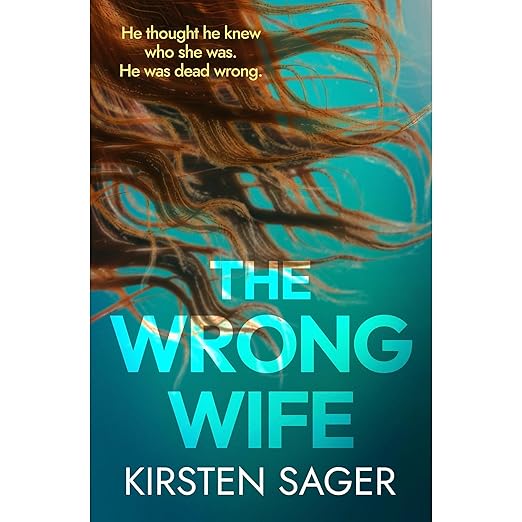
I picked this one up on a restless Thursday night when I wanted something that would ask nothing of me except attention. The Wrong Wife delivers on that narrowly defined promise. Kirsten Sager has constructed a thriller around a premise that is genuinely unsettling: a woman so desperate to escape her marriage that she hires someone else to wear her identity, only to lose control of what happens next. That is a strong hook, and Sager has the plotting instincts to complicate it in ways that keep the 7-hour listen from being predictable.
I need to address the editing problems directly, because multiple reviewers flagged them and they are real. Two instances where Bettany’s name appears where Melissa’s should, redundant passages in the middle chapters, and typographical errors in the final act are not small things in a psychological thriller where the central mystery turns on which character is which. When the book’s core tension is identity confusion, a mistake that swaps character names is not a minor copyedit issue; it is a craft failure that undermines the very mechanism the plot depends on. I noticed these. They did distract me. Any review that ignores them is doing prospective listeners a disservice.
The Premise That Carries the Weight
What Sager gets right is the initial setup’s moral complexity. Melissa Hunter is not a simple victim. She is a woman who has constructed a plan to escape a dangerous marriage by sacrificing someone else to her place in it, and the ethical dimensions of that decision are left genuinely unresolved. Bettany Carter is not a simple innocent either; she agreed to participate in a deception for money, and her situation in hospital with no memory and a man claiming to be her adoring husband is the product of choices she made. The thriller works because neither woman is entirely sympathetic, and the manipulation that follows operates on both of them simultaneously.
The comparison to Freida McFadden and Lisa Jewell on the cover is aspirational but not dishonest. Sager is working in the same territory: domestic spaces as sites of psychological danger, the unreliability of the people who are supposed to protect you, and the discovery that a woman’s apparent safety depends on how thoroughly she can disappear. Whether she achieves the level of craft those writers bring is a different question, but the instincts are aligned.
What the Virtual Voice Narration Contributes and Costs
This audiobook is narrated by Virtual Voice, which is Amazon’s AI narration service. The production is clean and the pacing is serviceable for a thriller with short chapters and rapid scene changes. Where AI narration falls short is in emotional differentiation: a scene where Bettany wakes up disoriented in a hospital bed, unsure of who she is and why she is there, should carry a particular quality of fear in the voice delivering it. Virtual Voice delivers the words with correct rhythm but without the register shift that would make the scene visceral. For a thriller that depends substantially on psychological immersion, this is a real cost. Listeners who are highly sensitive to narration quality should factor this into their decision.
The reviewer who described this as a holding-my-breath book is capturing something real about the plot mechanics; Sager constructs her reversals with genuine skill. But the experience of holding your breath is partly a function of narration, and Virtual Voice doesn’t hold its breath with you.
Sager as a New Voice Worth Watching
This is identified in reviews as Sager’s first book, and that context matters. The plotting intelligence here is notable for a debut. The structure of the dual timeline, the management of what each character knows and when, the final act twist that multiple reviewers described as genuinely unexpected: these are not beginner’s luck, they are evidence of someone who understands the mechanics of the genre. The problems are the problems of a book that needed a more rigorous editorial pass before publication. The editing failures are not evidence that Sager can’t write; they are evidence that the book reached listeners before it was finished.
Polish vs. Plot: Making the Call
Listeners who prioritize plot ingenuity over polish and are not sensitive to AI narration will find this a satisfying thriller built around a premise that earns its darkness. Those who require immaculate editing and voice performance will be frustrated by the same experience. The editing failures here are not the kind that signal a writer who cannot write; they are the kind that signal a book that needed more time in production before it reached listeners. Sager has the instincts that cannot be taught: she knows how to build a reversal and how to hide a pivot in plain sight. What she needed was a proofreader and a structural editor willing to flag the redundant passages. This is exactly the kind of debut where the right follow-up book, with better production support, could be significantly more impressive than the first. For now, it is an interesting artifact of a real thriller mind working without a full safety net. Listeners who are willing to extend the patience a debut sometimes requires will find the plot worth it.
Frequently Asked Questions
How significant are the editing errors reviewers mention, and do they genuinely affect the story?
They are significant enough to note. In a thriller built around identity confusion between two women named Melissa and Bettany, using the wrong name twice in the final chapters is particularly disruptive because it can momentarily convince readers that they have misunderstood the plot. The redundant passages in the middle are less damaging. Overall the errors don’t destroy the story, but they require listeners to work harder than they should at certain points.
What kind of listener would enjoy The Wrong Wife despite the Virtual Voice narration?
Listeners who primarily follow plot rather than performance, and who have experience with AI-narrated audiobooks, will find this most accessible. If you are new to Virtual Voice narration or strongly prefer human performance, the absence of emotional register in key scenes will be a persistent distraction. The plot is strong enough to carry the listen for tolerant listeners, but it will not transform skeptics.
Is The Wrong Wife appropriate for listeners who loved Freida McFadden’s domestic thrillers?
The comparison is structurally fair in terms of premise type: identity deception, toxic marriage dynamics, unreliable environments for women. McFadden’s prose and character work are more polished, and her books have had more thorough production support. But if you enjoy that narrative territory and are willing to accept a rougher execution, Sager is working in genuinely compatible space.
Is there a free audiobook version of The Wrong Wife available on Audible?
Yes, The Wrong Wife is listed at no cost on Audible. Given that this is an AI-narrated title, the free availability makes the risk of trying it quite low for listeners who are curious about the premise.