Quick Take
- Narration: Dani Martineck brings an authentic urgency to Wyatt’s first-person voice, navigating the emotional register between jaded self-protection and reluctant hope with notable skill.
- Themes: Transgender identity and self-determination, power structures and who they protect, the complexity of returning to places that hurt you
- Mood: Sharp and emotionally layered, with genuine anger running beneath the fae-world surface
- Verdict: A distinctive YA fantasy debut that earns its emotional weight through character specificity rather than plot machinery.
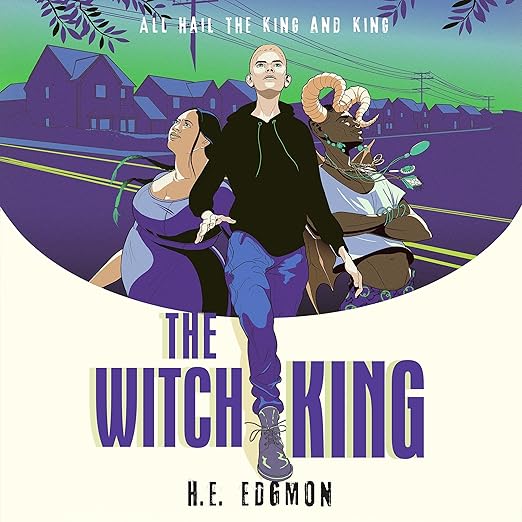
I read The Witch King in its print form when it was first published in 2021, so coming to the audiobook version was an exercise in comparison as much as revisitation. What I found was that Dani Martineck’s narration activates something in Wyatt’s voice that print can approximate but audio embeds more fully: the specific quality of someone who has built their defenses so carefully that they are surprised to find them inadequate. Wyatt is not a protagonist who wears his vulnerability openly. He wears it in the gaps between sentences, in the irony he deploys too readily, in the speed with which he reaches for the worst possible interpretation of any situation involving Emyr. Martineck understands this. The performance reflects it.
H.E. Edgmon’s debut operates within recognizable YA fantasy conventions, a fae kingdom, a broken betrothal, a protagonist who fled and is now forced to return, but the specificity of the central character’s perspective gives it a different texture than the genre average. Wyatt is a transgender witch in a world where witches are already second-class citizens in their own homeland. The oppression he faces is layered: the systemic subjugation of witches by fae, and the specific violence of being seen wrong in his own body within that already-constrained world. Edgmon does not treat these as separate issues that happen to share a protagonist. They inform each other, and Wyatt’s political consciousness about the witches’ condition is inseparable from his personal history of loss and flight.
Our Take on The Witch King
The central deal Wyatt strikes with an enemy faction, hoping to use it as an exit from Asalin forever, is the book’s most interesting structural choice. It positions him as someone actively working against his own potential stake in the outcome, not because he is foolish but because he has learned, through specific and documented losses, not to believe that the outcome will be good. Watching him revise that assumption is the emotional core of the book, and it is more compelling than a straightforward reluctant-hero arc because the revision is hard-won and specific rather than generic. Edgmon earns the change.
The pacing draws consistent attention in reviews, and it is worth naming directly. Wyatt’s journey back into relationship with Emyr is deliberately slow, and the plot moves at a pace that subordinates action to psychological development. One reviewer rated plot and pacing at three stars while giving characters and world five. That split is informative. If you come to this book for the fae-kingdom political machinations, you will spend a lot of time in Wyatt’s head waiting for the external plot to move. If you come for Wyatt’s internal landscape, the pacing is correct.
Why Listen to The Witch King
Martineck’s performance is the primary reason to choose the audio edition. The narration is not simply competent: it is emotionally precise in ways that enhance what is already working on the page. The scenes between Wyatt and Emyr, which require holding two incompatible feelings simultaneously (the residual love and the protective resentment), are handled with a subtlety that flat narration would undermine. The reviewer who called the characters unique, flawed, and beautiful was reading the print version, but the same description applies to what Martineck does with them in audio.
The book was named a New York Public Library Best Book for Teens 2021, which situates it within the institutional recognition of YA literature while not fully capturing what is unusual about it. It is a book that takes seriously the idea that stories about identity, healing, and systems of power can coexist with kissing scenes and political intrigue in the same narrative without either element diminishing the other. That is not a universal capability in the genre.
What to Watch For in The Witch King
The first book ends on terms that require the sequel, The Fae Keeper, to reach resolution. Listeners who prefer complete standalone narratives should know upfront that they are committing to a duology. The central questions about Wyatt’s future in Asalin and about the witches’ situation more broadly are not resolved here: this is the setup volume, and a consequential one, but not a complete story in isolation.
The book contains references to past trauma and to the specific experience of being misgendered and not recognized in one’s identity. Edgmon handles this with care rather than as shock material, but listeners who need those aspects flagged should know they are present and recurring throughout.
Who Should Listen to The Witch King
YA fantasy readers who are drawn to character depth over plot velocity, and who want a protagonist whose interiority feels genuine rather than genre-functional. LGBTQ+ readers, particularly those for whom transgender representation in speculative fiction matters, will find Wyatt’s characterization among the more carefully realized in the genre. Those who need fast-paced external action throughout will find the deliberate pacing a mismatch. Listeners who enjoyed the print version and want to experience Martineck’s narration of Wyatt’s voice have a specific and worthwhile reason to revisit.
Frequently Asked Questions
Does Dani Martineck’s narration add something meaningful to The Witch King beyond a straight reading of the text?
Yes. Martineck brings genuine emotional precision to Wyatt’s first-person voice, particularly in scenes that require holding contradictory feelings simultaneously. The jaded self-protection layered over residual love that defines Wyatt’s relationship with Emyr is considerably more textured in audio than it might be with a less calibrated performance.
Is The Witch King a complete story or does it require The Fae Keeper to reach resolution?
It requires The Fae Keeper. The Witch King is the first volume of a duology and ends with major questions about Wyatt’s future, the witches’ condition in Asalin, and the relationship with Emyr unresolved. Listeners who prefer standalone narratives should factor this in before starting.
How does the book handle Wyatt’s transgender identity, and is it integrated into the fantasy world-building or treated separately?
It is thoroughly integrated. Wyatt’s experience of being a transgender witch in a world where witches are already subjugated creates a layered oppression that Edgmon treats as inseparable rather than parallel. His personal history of dysphoria and misgendering is woven into his political understanding of the witches’ situation in Asalin.
Is the romantic storyline between Wyatt and Emyr the main focus, or does the political plot carry equal weight?
Reviewers consistently identify the character dynamics and Wyatt’s internal landscape as the book’s primary strength, with the political plot as scaffolding rather than the central draw. Pacing for the external political conflict is deliberately slow, which means the emotional relationship between Wyatt and Emyr carries most of the narrative momentum.