Quick Take
- Narration: Simon Bubb’s measured, unhurried delivery suits Macfarlane’s contemplative prose precisely, he reads like someone who has spent time in the places being described, which matters enormously for material this attentive to landscape.
- Themes: The meaning of wildness, ecological fragility in the British Isles, maps and migration as philosophical subjects
- Mood: Quietly urgent, beautifully melancholic, deeply attentive
- Verdict: One of the essential nature-writing audiobooks in the English language, Macfarlane’s question about whether wildness survives in Britain is answered with a complexity that rewards the nearly ten hours of careful listening it demands.
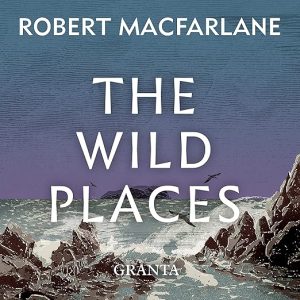
I was halfway through my evening walk when I started The Wild Places, and I found myself standing still on a suburban pavement listening to Robert Macfarlane describe a night on a ridge in the Cairngorms. That is what good nature writing does: it makes wherever you are feel like a pale version of somewhere else, and then it makes you want to pay more attention to where you actually are. I had been meaning to read this one for years. The audiobook format, with Simon Bubb’s narration, was the right way into it.
Macfarlane’s central question, are there any genuinely wild places left in Britain and Ireland, or have we tarmacked, farmed, and built ourselves out of wildness?, is deceptively simple. It sounds like an environmental lament, the kind of thing that resolves into a familiar elegiac conclusion about industrial modernity destroying what once was. What Macfarlane actually does is more interesting and more unsettling: he interrogates the concept of wildness itself, discovers that it is far more complicated than his initial assumptions, and arrives at a definition that is less about the absence of human intervention and more about a quality of attention and encounter that can survive even in deeply modified landscapes.
Our Take on The Wild Places
The structure of the book follows a series of journeys, a night on a beechwood summit, a winter crossing of the Cairngorms, a trip to the Outer Hebrides, a wade through a Somerset marsh, and each one becomes an occasion for philosophical meditation that extends far beyond the journey itself. One reviewer writes that in between the beautiful descriptions of places and wildlife are numerous meditations about such topics as the meaning of maps, migration, and the author’s evolving perception of what constitutes wildness. That description is accurate and important: this is not a travelogue, and listeners expecting a journey narrative with a destination will find Macfarlane’s approach elliptical.
The erudition that multiple reviewers note, one calls it the erudition of a well-educated and curious person twice his age, shows up in the range of references Macfarlane draws on. He reads the landscape through literature, natural history, cartography, and philosophy simultaneously, and the result is a book that accumulates meaning in a way that linear travel writing cannot. The beechwood that opens and closes the book is the same physical place but an entirely different intellectual territory by the time the listener reaches it a second time.
Why Listen to The Wild Places
Simon Bubb’s narration is the strongest argument for the audio format. He does not perform Macfarlane’s prose, he inhabits it. The measured pace he brings to the descriptive passages allows the sentences to unfold at the speed they require. Macfarlane writes in long, architecturally complex sentences that a rushed narrator would flatten; Bubb gives them their proper weight. For material that is fundamentally about paying attention, to landscape, to language, to the texture of specific places at specific times, a narrator who also pays attention is essential, and Bubb consistently does.
The 9-hour-42-minute runtime is appropriate to the material. This is not a book that can be read quickly, and the audio format enforces the right pace. Listeners who have found nature writing slow in text form may find that the narration carries them through passages that would have required more effort on the page.
What to Watch For in The Wild Places
Macfarlane’s definition of wild evolves substantially over the course of the book, and a listener who stops midway will have encountered a premise that the book then systematically complicates. The argument cannot be summarized; it has to be followed. One reviewer describes feeling humbled by the work, and that is the right response to a book that quietly demands more from its reader than most nature writing does. Listeners who want clear thesis, evidence, and conclusion will find the associative, journey-based structure frustrating. Those who are willing to follow Macfarlane’s thinking wherever it leads will find the book genuinely transformative in the way that very few nature books achieve.
Who Should Listen to The Wild Places
This recording is essential for anyone who reads serious nature writing in the tradition of Roger Deakin, Barry Lopez, or Annie Dillard. It is also an excellent entry point for listeners who want to understand why British landscape writing has a distinctive character, the compressed geography, the layered history, the paradox of a crowded island that still harbors something approaching wildness, that does not exist in the same form in North American or Australian nature writing. Listeners who need narrative momentum or practical information will find Macfarlane’s contemplative approach a poor fit. Anyone willing to spend nine hours with a question rather than an answer will find this one of the most rewarding audiobooks in its genre.
Frequently Asked Questions
Is The Wild Places primarily about specific places or about an idea?
Both, and the interplay between them is the book’s central method. Each journey to a specific place, the Cairngorms, the Outer Hebrides, a Somerset marsh, becomes the occasion for meditation on what wildness means, how we perceive it, and whether it survives in a landscape as modified as Britain’s. The places are real and vividly described; the ideas they generate are the book’s real subject.
Does a listener need to know the British landscape to appreciate this book?
One reviewer specifically addresses this: you do not have to live in or know the British Isles to appreciate this extraordinary book. The philosophical questions Macfarlane raises about wildness, attention, and the relationship between humans and landscape are universal even if the specific geography is British. Non-British listeners may simply look up the places on a map as the book progresses.
How does Simon Bubb’s narration compare to Macfarlane reading his own work?
Macfarlane has narrated some of his other works, and his own voice carries an authority that comes from direct experience of the places he describes. Bubb brings a different kind of authority, the professional reader’s discipline of staying out of the prose’s way and letting it speak for itself. Both approaches work; Bubb’s measured delivery is particularly well suited to passages that require careful pacing.
Is The Wild Places part of a series, and does it need to be read in order?
The book is listed as part of the Landscapes series and appears to be the second entry. It is completely standalone, each of Macfarlane’s landscape books addresses a different aspect of the natural world and his relationship to it, and they do not require prior knowledge of his other work. Readers who discover this one first often work backward to Mountains of the Mind and forward to The Old Ways.