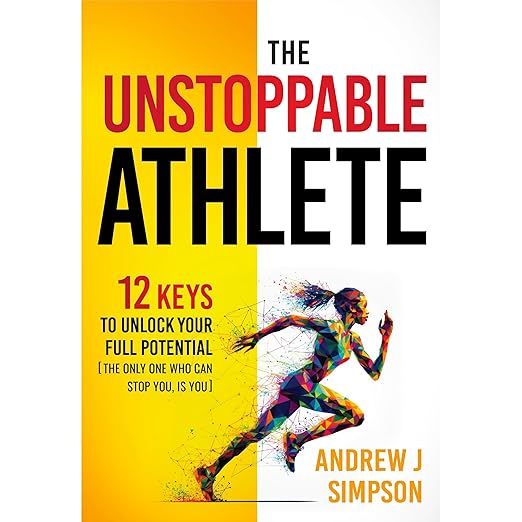
Quick Take
- Narration: Narrated by Virtual Voice (AI-generated audio) – the delivery is clear but lacks the nuance and warmth a human narrator would bring to coaching and motivational content aimed at young athletes.
- Themes: Sports psychology for young competitors, mental toughness and competition anxiety, habit formation and long-term athletic development
- Mood: Encouraging and practical, with the feel of a structured coaching manual rather than a memoir or narrative
- Verdict: Solid foundational sports psychology content for teenage athletes, though the AI narration is a meaningful limitation for material this personal in tone.
Before I get into the content itself, the narration situation for The Unstoppable Athlete is worth addressing directly. The listed narrator is Virtual Voice – Audible’s AI-generated audio product – which matters more for this particular book than it might for, say, a data-dense technical manual. Andrew Simpson’s text is built around coaching language, encouragement, anecdotes from athletes like LeBron James and Simone Biles, and reflective questions at the end of each chapter. That is material that lives or dies on warmth and human connection, and an AI voice cannot replicate what a skilled human narrator would bring to it.
That caveat placed, I want to be fair about what the book itself is attempting. Simpson has worked with over five thousand athletes and writes from genuine coaching experience. The framework he presents – twelve key habits and practices for peak performance – is organized clearly, grounded in recognizable athletic psychology principles, and aimed specifically at high school and college competitors rather than the general self-improvement audience that most sports mindset titles chase.
Our Take on The Unstoppable Athlete
The focus on competition anxiety and overthinking as specific obstacles is well chosen. These are the issues that most reliably derail young athletes who are technically skilled – the ability to perform in practice and fall apart in competition is almost universal at the developmental level, and Simpson addresses it with more specificity than the broader mental toughness literature usually offers. His treatment of how elite athletes like Tom Brady, Serena Williams, and Simone Biles have navigated the same obstacles is handled as documentation rather than mythology, which keeps it grounded.
Reviewers consistently noted the book’s accessibility. Multiple parents described giving it to their children with strong results – one mother who bought it for a daughter struggling with softball performance anxiety found that it shifted her own mindset as a sports parent, which is an interesting secondary effect. The questions at the end of each chapter, which encourage self-reflection and application, are cited as a particular strength for teen readers.
Why Listen to The Unstoppable Athlete
At under two hours, this is a short listen that could realistically be completed in a single session – a long commute, a pre-competition drive, an afternoon recovery session. The brevity is appropriate for the target audience of teen and young adult athletes who may not sustain engagement with longer formats. The structure, with each habit in its own chapter, makes it easy to return to specific sections that are most relevant to a particular athlete’s situation.
Simpson also offers a free parent edition and action guide as companion resources to the main text, which reviewers mentioned as genuine additions. For a family using this as a shared resource across coach, parent, and athlete, those materials extend the usefulness of the core audiobook.
What to Watch For in The Unstoppable Athlete
The AI narration is the most significant practical limitation. For a book whose value is partly motivational, and whose audience includes teenagers who are processing anxiety and self-doubt, the flatness of an AI voice does real damage to the emotional resonance of the content. This is not a knock on the writing – several reviewers read the print version with evident enthusiasm – but listeners choosing between audio and text formats should know that the narration does not serve the material well.
The book is also clearly positioned as an introduction rather than an advanced text. Coaches and sports psychologists looking for new frameworks will not find them here. The audience is genuinely the young athlete encountering these ideas for the first time, and within that scope the book is well calibrated.
Who Should Listen to The Unstoppable Athlete
Best suited to high school and college athletes dealing with performance anxiety, overthinking, or confidence issues who want a clear, practical framework rather than dense theory. It works well as a shared read between parent and athlete, or as a coach’s recommendation to a developing competitor. Adults already familiar with sports psychology basics will find it too introductory. Given the AI narration, listeners who are sensitive to that format should consider the print version instead.
Frequently Asked Questions
Is The Unstoppable Athlete narrated by a human or AI voice?
It is narrated by Virtual Voice, Audible’s AI-generated audio system. This is worth knowing before purchase – the delivery is clear but lacks the warmth and coaching presence that human narration would bring to motivational content aimed at young athletes.
What age range is this book designed for?
Primarily high school and college athletes, though reviewers noted it is accessible enough for younger teens around eleven or twelve who are competing seriously. Several parents described it as useful for their children at various youth sport levels.
Does the book address competition anxiety specifically, or is it general sports motivation?
Competition anxiety and overthinking are central topics rather than side notes. Simpson specifically identifies these as the key obstacles for developing athletes and addresses them with the twelve-habit framework that structures the book.
Is the free parent edition worth seeking out alongside the main audiobook?
Multiple reviewers mentioned it as a genuine supplement rather than a marketing add-on. For families using the book as a shared resource across athlete, parent, and coach, the action guide in particular was seen as extending the practical usefulness of the core content.