A childhood picturebook tears in Kat's hands and she wakes up inside it, cast not as Cinderella but as one of the stepsisters the story exists to humiliate. That is the premise this audiobook opens on, and it is sharper than the shelf it sits on usually manages. To get home she has to finish the tale properly, right through to happily ever after, which means engineering a wedding she was written specifically to obstruct.
First, the Big Picture
Obstacles listed in the description are the good kind, because every one of them is structural rather than emotional. The other stepsister is movie-star gorgeous. The fairy godmother is nowhere to be found. The prince is not interested in balls at all. Each is a broken gear in a machine Kat needs to run to completion, and the comedy comes from watching a modern teenager troubleshoot a plot that was never designed to be repaired from the inside. Aya Ling is doing something more specific than a perspective flip. This is not the stepsister's side of the story; it is a story about a reader forced to operate the machinery, and that difference does most of the work.
A five-star posting from May 2018 explains why the book outperforms its own pitch. That reader arrived braced for a watered-down imitation of Gregory Maguire, was hooked as soon as the first paragraph was done, and came away describing something other than a revisionist retelling altogether. The distinction is worth carrying into the recording. Revisionist retellings are argumentative by nature and frequently joyless. This one is affectionate toward its source, and its energy comes from a heroine who likes the story she is trapped in even while she resents the part it has assigned her. The same posting notes that Ling has written for another fairy-tale series too, which tells you the register was practiced before it was published.
Why Listen to The Ugly Stepsister
Reading this book aloud carries a specific difficulty, and Luci Christian is the one handling it. Kat is a contemporary teenager speaking from inside a mannered world of balls, godmothers, servants and princes. One voice has to hold a sarcastic modern first person and a period cast at the same time without letting either register flatten the other. Push it one way and the jokes dissolve into costume drama; push it the other and the fairy tale collapses into a sitcom. Close to twelve hours is a long stretch over which to keep that balance, and it is the one thing genuinely worth testing in the sample before you commit.
Emotional swings here are broad and entirely unembarrassed, which is the other reason audio suits the book. A five-star posting from February 2016 lists them in sequence: crying at the end, laughing, sighing, shaking a fist, occasionally putting the book down to recover. That same response is upfront that the story can look cliched or predictable in places, and says plainly that it does not care, having read a great many Cinderella retellings and still rating this one at the top of them. Broad emotional writing is what a reading amplifies best. Material that reads as slightly overcooked on the page has a way of landing cleanly once somebody speaks it aloud. Notice too what kind of room this is. All five visible responses announce a genre history before they grade, measuring this book against retellings they had already worked through. A 4.4 average over 796 graders is therefore not a general verdict on a fantasy novel. It is the verdict of an audience that arrived fluent in the form and knew precisely what it was comparing against.
A Few Reservations
Reservations cluster around the ending. A four-star posting from June 2016 says it would have handed over five stars but for one thing, and that thing is how the book finishes. The same response supplies the clearest summary of the setup anywhere on this listing, including the detail that completing the story is the only route home, and still leaves the table wishing the final stretch had gone differently. Some of that is structural. This is volume one of a series that continues, and a first volume has to leave doors open, which reads as unfinished business to anybody who came for a fairy tale and expects fairy tales to close.
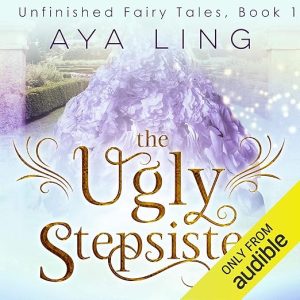
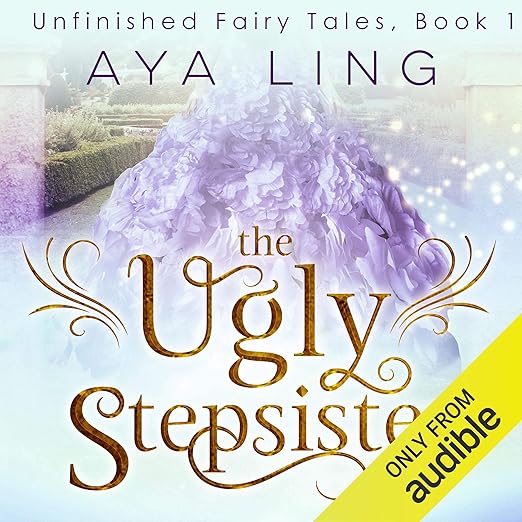
Something on the record itself is worth flagging. The description ends with a line crediting the cover design to Clarissa at Yocla Designs. That is a self-publishing courtesy carried across verbatim from the ebook's front matter, and it means nothing on an audio edition, where the artwork is a thumbnail and the designer's work is not part of what you are buying. It also dates the copy precisely, and so do the responses: the audio was published in May 2016, yet three of the five gathered under it were written earlier, one of them a full five months before. The tag list, meanwhile, sits completely empty on a fairy-tale retelling, which is a real discovery problem when the audience for a book like this shops by trope.
Who Should Pick Up The Ugly Stepsister
Ideal for listeners who want the fairy-tale furniture kept and the attitude modernized, rather than the whole cabinet burned down. Ideal too for anybody who enjoys a competence plot, because a good half of the pleasure here is watching a girl with no magic and no beauty solve the problem through logistics and nerve. The teen classification fits comfortably, and the appeal reaches well past the age bracket, as retellings of this kind reliably do. If your reading history includes portal fantasy, you will recognize the older engine humming underneath the ballgowns.
Skip it if you want the darker, chewier sort of retelling in which the stepsister becomes the wronged party of a crueler story, because this book is warm and fully intends to be. Skip it too if unresolved endings are a dealbreaker, since the series continues and the opening volume behaves accordingly. And on the format question, remember that everything the copy says about the artwork applies to an object you would be holding, not to a file you would be playing. Its charm survives the transfer; its credits do not.
Frequently Asked Questions
Is this audiobook suitable for younger teens?
Nothing on the record flags mature content, and the description points toward comedy rather than heat: a girl trying to make somebody else's wedding happen so she can go home. Expect courtship, ballrooms and social humiliation rather than anything explicit. Confident middle-grade readers will manage it, though the humor is pitched slightly older.
How does the audiobook handle the two names, Kat and Katriona?
The description sets it up directly. Kat is who she is at home; Katriona is the stepsister she becomes once she is inside the book. The doubling drives much of the comedy, since she has to answer to a name a plot assigned her, and the two names are used in different settings, so it stays easy to follow by ear.
Do you need to know the Cinderella story to follow this audiobook?
Only the outline that everybody already carries, which the book assumes and then complicates. The comedy depends on you knowing where the story is supposed to go, so the more versions you have absorbed, the more of the jokes land. No prior reading in the series is needed, since this is where it starts.