Quick Take
- Narration: Jennifer English reads with warmth and directness that mirrors Castellon’s peer-to-peer voice, it never condescends and never performs.
- Themes: Autistic identity and self-advocacy, navigating social environments, mental health and sensory experience
- Mood: Reassuring and practical, with genuine emotional honesty underneath the advice
- Verdict: A rare guide written from the inside by someone who has lived it, and the audio format makes it accessible to girls who find reading challenging.
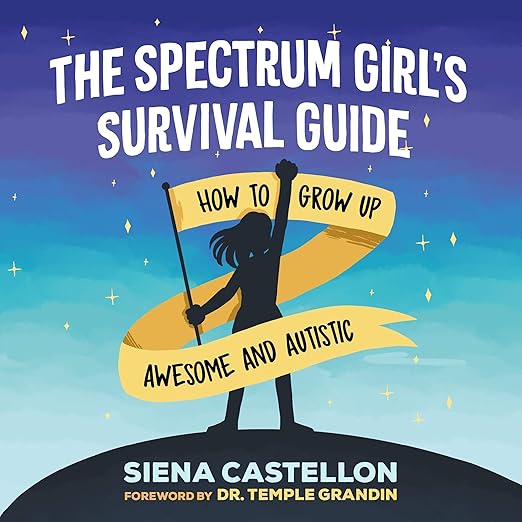
I picked up The Spectrum Girl’s Survival Guide on the recommendation of a colleague who works in special education, and I started it on a quiet Saturday morning without any particular urgency. By the time I reached the chapter on sensory overload I had stopped taking notes and was simply listening, because Siena Castellon’s voice, mediated through Jennifer English’s narration, has a quality that feels almost rare in books aimed at neurodivergent young people: it sounds like it was written by someone who actually knows what she is talking about from the inside.
Castellon is an award-winning neurodiversity campaigner who is herself autistic, and that experiential authority runs through every page. The book positions itself as a guide, and it genuinely is one, covering body language, emotional regulation, anxiety, sensory overloads, friendships, dating, body image, consent, school, and bullying in chapters that are practical without being clinical. The tone is peer-to-peer rather than instructional, which is precisely what distinguishes it from most books in this space. The opening declaration, never be ashamed of being different because it is this difference that makes you extraordinary and unique, sets the register accurately: this is not a book about managing autism. It is a book about using it, and that distinction matters to every girl who has spent years being told she needs to fit better rather than flourish differently.
The Voice That Gets Through
Several parents in the reviews describe the moment when their daughter recognized herself in this book. One mother of a recently diagnosed fifteen-year-old wrote that her daughter related to the voice and content in ways that previous resources had not achieved, that she saw herself in the pages. That is not a small thing. Autistic girls are often diagnosed later than boys and frequently encounter resources that were designed with a male presentation of autism in mind. Castellon writes from the experience of being an autistic girl navigating a world that was not built for her, and that specificity matters enormously for the audience this book is trying to reach. English’s narration carries that specificity with a lightness that keeps even the more difficult chapters from feeling heavy. She does not dramatize the harder passages, which is exactly the right choice for a book that is trying to normalize rather than pathologize.
The Practical Architecture of the Guide
The book earns its survival guide label by being genuinely operational. Chapters include practical tips on specific situations rather than abstract principles. One parent mentioned that her daughter discovered a useful app through the book to track her cycle and reduce the anxiety that monthly surprises caused, a small, concrete, specific piece of advice that would never appear in a general autism resource. That is the kind of granular usefulness that makes this more than a consciousness-raising document. It is actually trying to help with the Tuesday afternoon problems, not just the big existential ones. Castellon organizes the material thematically, moving from the immediate challenges of school and social situations toward the longer-horizon questions of identity and relationships, and that arc gives the guide a shape that feels deliberate rather than encyclopedic. The progression feels like advice given by someone who remembers in what order the problems actually arrive.
A Note on Scope and Age Range
The book covers a wide range of topics, including mature sections on dating, consent, and LGBTQ+ identity, and some parents have noted that not all of it is appropriate for younger readers without parental mediation. One reviewer described removing certain sections for a younger child while keeping the core material. This is worth knowing before handing the audiobook directly to a child, particularly at the younger end of the target range. The guide is aimed at teens, but its emotional resonance seems most acute for girls around twelve to sixteen who are in the thick of the social situations it addresses. One parent noted that some vocabulary may be above the comprehension level of children with significant language processing challenges, so the book works best for girls at the lower support needs end of the spectrum, or with parental involvement for the younger ones who are still building language confidence.
The Audience This Guide Was Written For and Those It Reaches Beyond
This guide is essential listening for autistic girls in their early to mid teens, and the audio format makes it particularly accessible for those who find reading laborious. Parents of recently diagnosed daughters will also find it illuminating as a window into their child’s experience. One parent of two autistic daughters at different support levels noted that the book helped her understand both girls better, including practical specifics she would not have found elsewhere. It is less suited for parents seeking a clinical overview of autism or for readers looking for research-heavy content. Castellon’s goal is empowerment, not explanation, and she achieves it on her own terms. The accessible, direct format means first-time listeners get a genuine sense of the book within the first twenty minutes, which is exactly how a good guide should work. At five hours and thirty-nine minutes, it is long enough to cover its subject with real depth but short enough that a teenager can move through it in a few listening sessions without the experience feeling like homework. Castellon earns her audience’s trust quickly, and the book rewards that trust by going places that other resources for autistic girls typically avoid. That is exactly the kind of book this audience has needed for a long time, and Castellon and English deliver it.
Frequently Asked Questions
Is Jennifer English’s narration well-matched to the book’s intended audience of autistic teenage girls?
Yes. English reads with warmth and directness that suits Castellon’s peer voice. She avoids the slightly patronizing register that sometimes appears in audiobooks aimed at young people, and her pacing allows the practical advice to land without rushing. Parents who have shared this with their daughters report that the narration feels accessible and relatable.
Does the book address autism as it presents specifically in girls, or does it cover autism more generally?
The book is specifically written for autistic girls, addressing the social and emotional situations they commonly face including friendship dynamics, body image, and the particular pressure girls face to mask autistic traits. This gender-specific framing is one of its key distinguishing features from general autism resources.
What age range is The Spectrum Girl’s Survival Guide best suited for?
The core audience is teens aged roughly twelve to seventeen, though reviewers describe sharing it with children as young as ten with parental support. Some sections covering dating, consent, and identity may need parental mediation for younger children. Vocabulary level may challenge readers with significant language processing difficulties.
Can parents or teachers benefit from listening to this book, or is it really written only for the autistic girls themselves?
Multiple parents in the reviews describe listening alongside their daughters or reading it themselves to better understand their child’s experience. Teachers and school counselors would also find it useful as a window into the specific challenges autistic girls face in social and academic environments.