Quick Take
- Narration: Ben Eagle reads with dry British confidence that suits the anonymous author’s sardonic voice throughout.
- Themes: Professional cycling’s hidden culture, kit endorsements, doping questions
- Mood: Candid in places, frustratingly opaque in others
- Verdict: Promises more insider bombshells than it delivers, and the anonymous format is its biggest structural problem.
I came to The Secret Cyclist during a stretch of road cycling content I had been working through, having recently spent time with Phil Gaimon’s sharply observed racing memoirs and looking for something that claimed to offer the view from inside the peloton that most pros keep carefully managed. The anonymous format intrigued me. A World Tour rider with Grand Tour top ten finishes, speaking freely without professional consequence, seemed like a genuinely compelling premise and one that the sport badly needed.
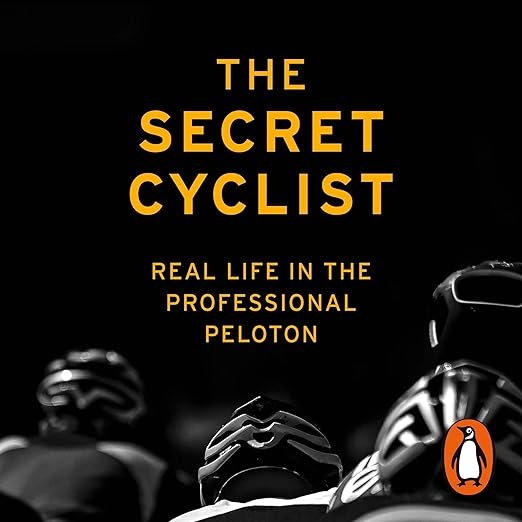
By the time I was three hours in, I had revised that expectation substantially downward. The book, published in 2019 and narrated by Ben Eagle for Penguin Audio, positions itself as the honest account that a real professional could never publicly give. The anonymous author promises candor about Team Sky, doping, pay structures, kit endorsements, and the culture of the peloton. Some of those promises are partially kept. Others are not kept at all, and the gap between the book’s implied revelations and what it actually reveals is wide enough to be genuinely frustrating for listeners who came expecting the format to deliver on its stated premise.
What the Anonymity Costs the Reader
The central problem is structural. Anonymity frees the author to be honest without professional consequence, which is the entire justification for the format. But it also means there is no way to evaluate any claim the book makes. When the Secret Cyclist describes the pay structure of a major team or offers observations about a specific rider’s behavior, the reader has no way to assess whether this is credible inside knowledge, self-serving distortion, or embellishment shaped by personal grievance. Phil Gaimon, in a review that carries some obvious personal animus given the book’s swipes at him directly, called the author a coward and the book a poorly written mess. Reviewers without personal stakes have offered more measured but similarly critical assessments about the consistent gap between promise and delivery.
One reviewer noted that they enjoyed the gossipy passages that gave insight into what pros really think and feel about their equipment, training, dieting, and fellow competitors. That gossip is real, and for cycling fans who want that kind of texture, there is some genuine value buried in the pages. The problem is that the book positioned itself as much more than gossip, and the marketing implies a depth of revelation that the actual content does not reach by a considerable distance.
On the Doping Question
The doping question is the elephant in the room, and the book’s handling of it illustrates its limitations perfectly. The author raises the question explicitly in the marketing material and then provides answers that are, at best, circumspect and carefully vague. One reviewer described the book as under delivering on all of the candid bombshell information it promised, specifically including the doping and Team Sky revelations that the premise implied were coming. Having listened to the book in full I cannot improve on that summary. The anonymous author seems to have concluded that a format that should have enabled candor was actually best served by staying vague on the most consequential topics, which defeats the purpose of anonymity entirely and leaves the reader wondering what exactly the secrecy was for.
Ben Eagle’s narration is professional and well-matched to the author’s dry, British voice. He reads with the slightly weary irony that the text sometimes achieves, and at just over six hours the listening time does not overstay its welcome. The production quality from Penguin Audio is exactly what you would expect from a major publisher.
For the Cycling Fan Calibrating Expectations
If you want genuine insider candor about professional cycling, Phil Gaimon’s Draft Animals delivers it with actual accountability behind the claims. If you want a more ambitious sociological account of how the peloton functions as a culture and institution, there are more rigorous options available in the genre. The Secret Cyclist occupies an awkward middle ground: more candid than a standard authorized biography but far less revealing than its premise suggests it should be. There are sections where the author’s genuine insider familiarity with the rhythms of professional racing creates something valuable, a sense of the texture of life in the peloton that the authorized version rarely captures. But those passages are too sparse to carry the full six hours, and the aggregate 4.0 rating feels slightly generous given how consistently reviewers note the gap between what the book promises and what it actually delivers.
Who Should and Should Not Queue This Up
Committed cycling fans with a specific interest in the professional team culture of the 2010s World Tour era will find enough here to justify the runtime, particularly if they read it as a companion to more accountable memoirs from the same period rather than as a standalone revelation. Casual cycling fans drawn primarily by the promise of bombshell disclosures should adjust expectations significantly before pressing play. The anonymous format remains the book’s most intriguing feature and its most fundamental flaw at the same time: promising everything the author cannot be held to and delivering far less than what the premise set up. That contrast between the promise and the delivery is ultimately what defines the listening experience, and it is a contrast that no amount of professional narration from Ben Eagle can fully resolve, because the problem is structural rather than technical. The book needed either more honesty or less ambition in its positioning, and it got neither.
Frequently Asked Questions
Has The Secret Cyclist’s author ever been identified?
As of the book’s publication and subsequent years, the author’s identity has not been officially confirmed. The premise depends on maintaining that anonymity, and the publisher has kept it. Various names have been speculated about by cycling media, but none have been definitively confirmed publicly.
Does The Secret Cyclist actually address the doping question in professional cycling?
It raises the question and then provides answers that most reviewers describe as disappointing and vague. Despite the marketing positioning around this topic, the book’s actual treatment of doping is circumspect enough that listeners hoping for genuine revelations will be frustrated by how little is ultimately said.
How does Ben Eagle’s narration handle the anonymous author’s voice?
Eagle reads with dry British understatement that suits the tone well. He does not attempt to create a distinctive character voice for an author who cannot be named, but his delivery carries the sardonic quality that the text occasionally achieves. The narration is a genuine strength in an otherwise uneven book.
Is Phil Gaimon’s review of The Secret Cyclist on Audible a fair assessment?
Gaimon has an obvious conflict of interest given that the book takes swipes at him directly, which multiple reviewers have noted. His assessment of the writing quality and the book’s failure to deliver on its promises is, however, echoed by reviewers with no personal stake, suggesting the criticism has genuine substance beyond professional rivalry.