Quick Take
- Narration: Siiri Scott brings careful emotional control to a story that requires tonal restraint, she handles both the survivors’ fragility and the procedural FBI sections with equal credibility.
- Themes: Grief and obsession, the long aftermath of trauma, the ethics of victim involvement in investigations
- Mood: Haunting and methodical, with an undercurrent of dread that rarely lifts
- Verdict: A worthy second entry in Dot Hutchison’s Collector series, though readers who loved the claustrophobic intensity of The Butterfly Garden may find this expanded canvas slightly diluted.
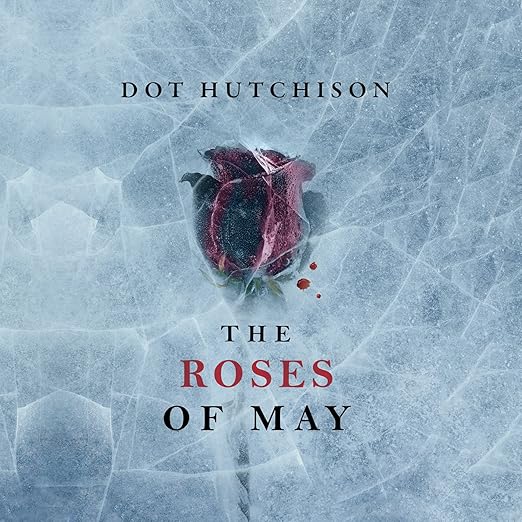
I came to The Roses of May having read The Butterfly Garden some years back, that first novel had lodged in me the way uncomfortable books do, through its specific psychological architecture rather than any single shocking moment. So I was curious and somewhat cautious about a sequel. The world Hutchison built in that first book is so hermetically sealed, so particular in its horror, that expanding it felt risky. Four months after the explosion at the Garden, the survivors, the Butterflies, are trying to adjust to ordinary life. And somewhere, another young woman will be found in a church with her throat slit and her body surrounded by flowers.
That setup is Hutchison’s challenge to herself: can a second book carry the weight of the first’s reputation while doing something genuinely different? My answer, after listening to Siiri Scott’s ten-hour narration, is mostly yes, with one significant caveat.
Our Take on The Roses of May
What Hutchison does well here is refuse to let the sequel be a simple procedural. The heart of the book is Priya Sravasti, whose sister was killed by the serial murderer now in the FBI’s crosshairs, and who has spent years moving from city to city with her mother, trying to stay ahead of a grief that moves faster than they do. Priya is drawn into the investigation not as a passive victim-adjacent figure but as someone whose loss has sharpened her into a kind of terrible clarity. That’s interesting characterization, and Hutchison earns it.
The FBI team, Eddison, Hanoverian, and Ramirez, carries over from the first book, and their chemistry is the procedural element that actually works. Eddison in particular continues to develop in ways that feel organic rather than forced. If you’ve been following the series, his scenes with the Butterflies carry real weight.
Why Listen to The Roses of May
Siiri Scott is doing something specific with this narration that I want to name: she understands that this material requires restraint. A book about trauma survivors and serial murder could easily tip into melodrama in lesser hands. Scott keeps her performance measured, which means the moments that should land emotionally actually do, they’re not buried under theatrical emphasis. Her handling of Priya is particularly strong, giving her a quiet resilience that reads as authentic rather than aspirational.
The audiobook format also suits the structure of this book. Hutchison weaves between the Butterflies’ recovery, the active investigation, and Priya’s perspective in a way that can feel fragmentary in print but flows more naturally when heard sequentially. Scott’s consistent tonal control creates a kind of connective tissue between those strands.
What to Watch For in The Roses of May
At least one reviewer noted that the storyline drifts, that the book feels long-winded compared to the focused intensity of its predecessor. I think that’s a fair observation. The Butterfly Garden had a structural elegance born from its interrogation-room conceit, everything filtered through that single conversation. The Roses of May is a more conventional thriller in its architecture, and it loses some grip because of that.
There’s also a creative tension in how much time Hutchison spends with the survivors’ healing versus the active murder investigation. Readers who want the mystery foregrounded may find those sections slow. But readers who are there for the psychological depth of characters like Priya will find those sections the most rewarding parts of the book. Know which reader you are before you start.
Who Should Listen to The Roses of May
Listen if you’ve read The Butterfly Garden and want to stay in Hutchison’s world, the returning characters and unfolding mythology reward series readers. Also well-suited to listeners who appreciate crime fiction that treats trauma with seriousness rather than as decoration. Consider skipping if you haven’t read the first book (this won’t be the entry point that wins you over), or if you need a tightly plotted mystery with momentum that doesn’t waver. This is a thoughtful, slower-burning sequel.
Frequently Asked Questions
Can The Roses of May be listened to without reading The Butterfly Garden first?
Technically you can follow the plot, but Hutchison assumes familiarity with the first book’s events and characters. The emotional resonance of the survivors’ stories, and the FBI team’s dynamics, depends heavily on that prior context.
How does Siiri Scott’s narration compare to narrators of similar psychological thrillers?
Scott is a measured, controlled narrator, she doesn’t over-emote, which is the right instinct for this material. Her consistency across the book’s multiple perspectives keeps the tonal register unified, though her range is narrower than some listeners might prefer.
Does the serial killer plot resolve fully in this book, or does it continue into later volumes?
The specific murder case at the center of this book reaches a resolution, but the overarching Collector series mythology continues across multiple volumes. This book functions as a self-contained arc within a larger ongoing world.
Is the focus more on the survivors or on the FBI investigation?
Hutchison deliberately balances both, but the most emotionally distinctive material involves the survivors and Priya’s grieving perspective. The FBI procedural elements are competent but more conventional, readers drawn by the first book’s psychological depth will find more of that in the Priya storyline.