In Brief
- Performance: Carly Foxx handles the ensemble cast competently, differentiating between Penny's brittle entitlement and Eloise's simmering menace, though some listeners found the early character work confusing.
- What it covers: Class performance and social cruelty, maternal ambivalence, secrets kept in paradise
- Feel: Sun-drenched and claustrophobic, a very British kind of uncomfortable
- Our call: An uneven but ultimately rewarding thriller that earns its twists through character work rather than pure plot mechanics.
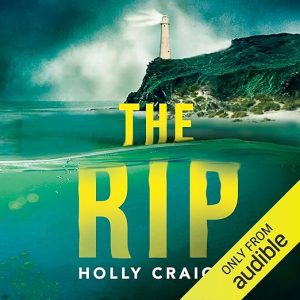
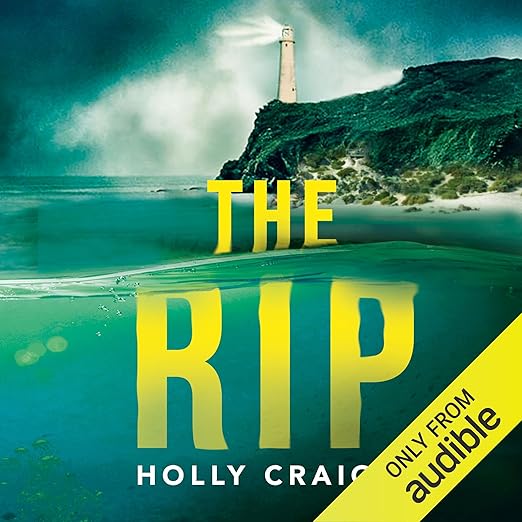
I picked up The Rip on a Friday afternoon, the kind of weekend listen that promises exactly what the cover suggests: heat, water, bad decisions made by people with too much money and not enough self-awareness. I was halfway through my Saturday morning walk when the story shifted and I found myself sitting on a bench for an extra twenty minutes because I needed to hear what happened next. Holly Craig's second novel, following The Shallows, delivers on the atmospheric promise of its premise in ways that its mixed reviews don't quite capture.
The setup is efficient: Penny, the flawless hostess, has assembled a group of guests at a luxury island villa for her husband's birthday. Self-obsessed Eloise is among them, and Penny already regrets the invitation. Then a child goes missing on the night of the party. The island becomes a trap. Suspicion distributes itself unevenly. And the relationships that were already under strain begin to fracture in ways that reveal everything that had been kept polished and smooth.
What We Made of It
What distinguishes The Rip from the crowded field of island-locked thrillers is that Craig uses the missing child premise as an engine for something more interested in the cruelty women inflict on each other, and on themselves, than in straightforward mystery mechanics. Penny and Eloise are both antagonists and something closer to mirror images, two women performing different versions of social acceptability while harboring contempt that runs deeper than any single occasion could explain.
One reviewer described Penny as a mean girl who feels superior to Eloise while also judging her son's birth mother, and Eloise as a character who hates the little adopted boy. This is not comfortable territory, and Craig doesn't make it comfortable. The uncomfortable pleasure of spending time with characters this calculating is genuine, but it requires a reader willing to sit with people who are doing things they can't fully excuse. Some listeners found the character work confusing early on, having to keep track of relationships without sufficient grounding. That's a fair criticism. The payoff for investing in that confusion tends to arrive in the back half.
The Best Parts of The Rip
One of the more interesting elements of The Rip, and one the synopsis only glances at, is the thread involving Rosie, Penny's daughter. We're told that it's not the first time Rosie has been attacked by her mother and not the first time she's turned to Eloise for support. This introduces a dynamic that exists outside the immediate crisis of the missing child and complicates the story's moral geometry significantly. Penny isn't just a tense hostess under pressure. She is a woman with a history of directing her worst impulses toward her own daughter.
Carly Foxx's narration makes this distinction audible. The way Penny's voice shifts when speaking to or about Rosie versus when she's in social performance mode is one of the more nuanced pieces of character work in the recording. It's subtle enough that first-time listeners might not register it consciously but will feel its effect in how they understand Penny as the plot moves toward its conclusion. Reviewers who praised Craig's character development specifically pointed to this layering as what kept them engaged beyond the initial premise.
What Might Not Land
The novel's pacing is genuinely uneven, and honest listening requires acknowledging this. The early chapters establish character and setting at a pace that several reviewers described as slow to grab their attention. The 3.9 average rating across nearly 900 listeners reflects a real split between those who found the gradual buildup worthwhile and those who found the early character confusion a tax they couldn't pay down. The reviewer who described it as feeling like a chore and finding the ending wasn't worth the effort is a data point serious listeners should weigh.
What the more enthusiastic reviews point toward is the quality of the final act and the way Craig manages to make her revelations feel earned rather than mechanical. One reader compared Craig's style favorably to The Shallows, noting a similar quality of drawing the reader into a setting so vividly that the thriller elements almost arrive as intrusions on something that would be interesting even without them. The island setting functions as more than backdrop. It's a pressure system that makes ordinary social nastiness into something dangerous.
Who Should Listen to The Rip
If your thriller tolerance includes character studies that move slowly before accelerating, if you're drawn to stories about women who are genuinely unpleasant to each other in specific and interesting ways, and if you can sustain interest through an ensemble cast that takes time to clarify, The Rip will reward you. Fans of Lucy Foley's island-locked stories or Kate Moretti's domestic tension thrillers will likely find this familiar territory handled capably.
Skip it if your threshold for atmospheric fiction over propulsive plotting is low, or if ensemble casts that require active tracking wear you down. The 3.9 rating reflects real readers who found the pacing too patient. The 4- and 5-star readers found something underneath the slow burn worth waiting for. Which camp you'll fall into probably depends on how much you enjoyed the last slow-build thriller you picked up rather than anything specific to this book.
One reviewer who came to Craig first through The Shallows described a quality of writing that makes the setting feel inhabited rather than staged, and The Rip maintains that quality. The island isn't just backdrop. It's a pressure chamber, and Foxx's narration keeps you inside it even when the plot is taking its time reaching the surface.