Quick Take
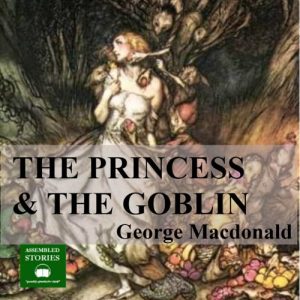
- Narration: Peter Joyce brings an old-fashioned storytelling gravity to MacDonald’s prose, the deliberate pacing suits the book’s moral seriousness without making it feel stodgy, and his character voices preserve the distinction between Irene’s elevated world and Curdie’s working-class directness.
- Themes: Faith and trust in invisible protection, the courage required by conscience, the moral education of both the privileged and the laboring child
- Mood: Quietly enchanted, not the frantic adventure of modern middle-grade but the deep, unhurried magic of Victorian fairy tale at its most sincere
- Verdict: A Victorian classic that influenced Tolkien, Chesterton, and Lewis, narrated with the care its literary legacy deserves, essential listening for anyone interested in the roots of modern fantasy.
I spent an evening in February listening to The Princess and the Goblin with a fire going and no particular agenda, and I understood by the third chapter why G.K. Chesterton called it the most real, the most realistic, in the exact sense of the phrase the most like life. That is a paradoxical claim for a book about goblins and a magical great-great-great-grandmother who may or may not exist, but Chesterton meant something precise by it: MacDonald’s moral world is accurate. The choices Irene and Curdie face, the nature of the courage required to act on trust in something you cannot prove to others, the social texture of a community where the privileged and the laboring classes must learn to see each other clearly, these map onto lived experience in ways that purely escapist fantasy does not.
George MacDonald published The Princess and the Goblin in 1872, and it has remained in print continuously since, which is itself a form of critical evaluation. The book was revolutionary for its time in treating children as moral agents capable of genuine courage and genuine fear rather than as vessels for lessons. Irene is not brave in the sense of being fearless; she is brave in the sense of following her grandmother’s thread even when Curdie cannot see it and tells her plainly that it does not exist. This distinction between courage as performance and courage as faithfulness is the book’s central gift to children’s literature.
MacDonald’s Influence and Why It Matters to Modern Readers
The reviewer who notes being changed as a person by this book is not being hyperbolic; they are reporting an experience that Tolkien, Chesterton, and C.S. Lewis all described in comparable terms. MacDonald is not typically taught in schools alongside his contemporary Dickens, but his influence on the architecture of twentieth-century fantasy is arguably as significant. The concept of eucatastrophe, the sudden joyous turn at the story’s end, which Tolkien theorized explicitly in On Fairy-Stories, is prefigured in MacDonald’s structural instincts. The integration of allegorical meaning with adventure narrative that Lewis mastered in Narnia was learned, in part, from MacDonald.
Understanding this context does not require that listeners bring it with them; the book works without it. But it does mean that Peter Joyce’s reading serves a text that carries more literary freight than its children’s classification implies. The book has been in continuous publication for over a century and a half not because it is easy or unchallenging but because it is genuinely good, morally clear without being didactic, adventurous without sacrificing depth.
The Goblin Sequences and Their Strange Effectiveness
The goblins of MacDonald’s mountains are one of the odder constructions in Victorian children’s literature. They are dangerous, territorial, and organized with a sinister coherence, but their specific weaknesses, they cannot endure poetry, and their feet are their vulnerable point, give them a comic dimension that prevents genuine menace from tipping into nightmare. This tonal balance is difficult to sustain, and MacDonald handles it with the ease of a writer who understands that children can hold terror and absurdity simultaneously in ways that adult genre categories struggle to accommodate.
Joyce reads the goblin sequences with appropriate menace in the threat sequences and appropriate bathos in the absurdist ones. When goblins are defeated by improvised verse, a genuinely funny detail in a book that otherwise operates with Victorian gravity, the delivery catches the comedy without winking at it. This matters more than it might seem: a narrator who condescended to the book’s Victorian register would undercut the entire moral architecture.
Irene and Curdie as a Double Protagonist Structure
What makes The Princess and the Goblin structurally innovative for its era is the double-protagonist design. Irene and Curdie occupy different social worlds and different relationships to knowledge and evidence. Irene has access to her grandmother’s magic and must trust what she cannot explain to others; Curdie must decide whether to trust Irene despite the evidence of his own senses telling him the thread she follows is invisible. The story is essentially about the ethics of testimony and trust, dramatized through the adventure plot.
Peter Joyce navigates this double structure with care. His Irene has the gentle dignity that her social position and her grandmother’s instruction have given her without the priggishness that Victorian child protagonists sometimes carry; his Curdie has the directness and pragmatic intelligence of a working boy without becoming a class stereotype. The relationship between them is handled as a genuine partnership rather than a hierarchical rescue narrative, which is part of why the book continues to feel less dated than many of its contemporaries.
Who This Is For and What to Expect
If you have been raised on the pacing of contemporary middle-grade fantasy, the rapid chapter-to-chapter escalation, the always-moving plot, you may need a moment of adjustment. MacDonald’s prose is unhurried and his narrator frequently pauses to address the reader directly, in the tradition of Victorian storytelling that assumes a listening audience rather than a private reader. That directness is charming once you settle into it, but it takes a chapter or two. Listeners who have enjoyed C.S. Lewis, Lloyd Alexander, or Susan Cooper’s Dark Is Rising sequence will recognize the register immediately. For children encountering classic Victorian fairy tale for the first time, this is an ideal introduction. The five-hour-and-fifty-four-minute runtime passes more quickly than it sounds.
Frequently Asked Questions
Is The Princess and the Goblin appropriate for young children, say ages five or six?
With an adult present, yes, the story has been read to children that age for well over a century. For independent listening, ages eight and up is more appropriate; the moral complexity and MacDonald’s narrator-addressing-reader style work better with slightly older listeners who can engage with a deliberately unhurried Victorian pace.
How does Peter Joyce handle the distinction between Irene’s elevated, slightly formal speech and Curdie’s more direct working-class voice?
With consistent vocal differentiation that reflects their social worlds without exaggeration. Irene carries a gentle dignity throughout; Curdie is more economical and pragmatic in delivery. Joyce never makes the class distinction condescending in either direction.
The synopsis mentions Tolkien and Chesterton were influenced by this book, how directly can you hear that influence?
The influence is structural rather than stylistic. MacDonald’s integration of spiritual allegory with adventure narrative, his sense of the hero following a thread they cannot fully explain to others, and his treatment of courage as faithfulness rather than fearlessness all appear in modified forms in both Lewis and Tolkien. Chesterton’s specific quote, calling it the most like life, refers to MacDonald’s moral accuracy, which Tolkien would later theorize as the eucatastrophe.
What is the relationship between this book and its sequel, The Princess and Curdie?
The Princess and Curdie continues the story with Curdie as the primary protagonist and a considerably darker moral vision. Many readers consider it more complex and more demanding than this first volume. It functions as a sequel and benefits from reading this one first.