Quick Take
- Narration: William Hazelgrove reads his own novel, and his delivery is emotionally invested in ways that suit the material, though listeners should know the author’s voice rather than a character actor carries the whole performance.
- Themes: Mentorship and second chances, a mother’s sacrifice, the mythology of baseball as American dream
- Mood: Warm and emotionally generous, with enough authentic grit to keep it from tipping into sentiment
- Verdict: A novel that earns its comparisons to Field of Dreams through specific, grounded characterization rather than nostalgia alone, Hazelgrove has written the kind of baseball story that works even if you have never watched a game.
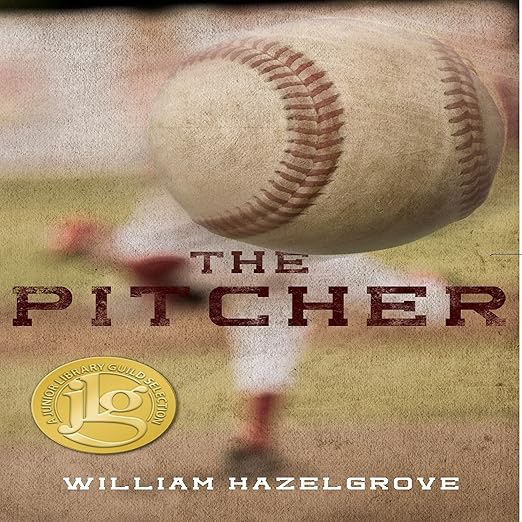
I found The Pitcher on a Sunday afternoon when I was looking for something that would occupy me without demanding too much. I did not expect to be tearing up ninety minutes in while technically doing laundry. That is probably the most honest testimony I can offer about what this book does.
I should say upfront that I am not a baseball listener in the sports-radio sense. I do not follow standings. But the best baseball fiction has never really been about baseball, and Hazelgrove is operating firmly in that tradition. He uses the game the way Malamud used it in The Natural, as a vehicle for something older and less easily named.
Our Take on The Pitcher
The setup involves three characters who are, at first glance, archetypes: a boy named Ricky with a gift for pitching and no money for lessons; his mother Maria, who is dying and wants to see her son make his high school team before she goes; and a former World Series pitcher named Sal Donatello, broken down and becalmed after the death of his own wife, who cannot seem to find a reason to go on. Hazelgrove puts these three people in the same orbit and then, and this is where the novel earns its length, develops each of them until the archetypes become people you recognize.
Maria in particular is a character that several reviewers singled out as the novel’s moral and emotional center. One called her and Ricky’s relationship something you “come to respect and admire” rather than simply root for. That is the right word, this is not a book that asks for sentimentality. It asks for recognition.
Why Listen to The Pitcher
Hazelgrove narrating his own novel is a choice that works more often than it fails. He is not a trained voice actor, and there are moments where the range of voices in dialogue scenes feels limited. But he knows this story from the inside in a way that makes the emotional beats land with conviction. When Sal has a moment of something approaching hope, Hazelgrove’s delivery does not oversell it. He trusts the material. That restraint, for a novel that could easily tip into melodrama, is exactly right.
The comparison the synopsis makes to The Natural and Field of Dreams is not marketing hyperbole, it is a signal about the register Hazelgrove is working in. This is mythic baseball fiction in the American tradition, which means it is interested in fathers and sons and second chances and the specific American dream of getting to try again. One reviewer called it “more moving” than both those reference points, which is a claim I would not make so boldly, but I understand what they meant.
What to Watch For in The Pitcher
Two caveats from reviewers are worth passing along. First: the book contains substantial profanity, particularly in its earlier sections. One reader who bought it for a teenage grandson noted this explicitly, the language is deployed to convey authenticity rather than shock, but it is present throughout the first half in ways that make the novel unsuitable for some younger readers despite the YA-adjacent subject matter.
Second: the ending has divided readers. One described it as “a trifle too happy” for their tastes, noting they felt the novel pulled its punches in the final act. I can see the argument. The novel has worked very hard to establish genuine stakes, and the resolution is generous in ways that may feel earned or may feel like mercy the story has not quite justified, depending on your threshold for that kind of grace. It is not saccharine, but it is optimistic. For a novel about a dying mother’s last gift to her son, that seems like the right call.
Who Should Listen to The Pitcher
This audiobook suits listeners who respond to sports fiction as character fiction rather than sports fiction, people who pick up Friday Night Lights or The Art of Fielding not for the games but for what the games reveal about people under pressure. The baseball sequences are vivid and specific enough that actual fans of the sport will find them credible, but the novel does not require that knowledge.
Parents of teenage boys in particular have responded strongly to this book, several reviewers mentioned its power as a portrait of mentorship and of what it means for a boy to have a man in his life who takes his dreams seriously. That dynamic drives the novel more than any single game sequence. If either the mentor-protege arc or a story about a parent’s final act of love sounds like your territory, five and a half hours with Hazelgrove is worth your time.
Frequently Asked Questions
Is The Pitcher suitable for younger readers or a family listen despite the profanity?
Probably not for younger teens without parental awareness. One reviewer who bought it as a gift for a teenage grandson noted the profanity, particularly concentrated in the first half. It is not gratuitous, Hazelgrove is aiming for authenticity, but it is present enough to matter if you are selecting this for a specific age group.
Do you need to know baseball to follow the novel?
No. Hazelgrove provides enough context that the mechanics of pitching and the tryout sequences make sense without prior knowledge. The baseball is specific enough to feel real, but the novel’s emotional architecture does not require anything beyond a basic understanding of what the game means culturally.
How does Hazelgrove compare as a narrator to a trained voice actor for this kind of emotionally charged fiction?
He is less technically versatile than a professional narrator, and the range in dialogue scenes is more limited. But his emotional investment in the material is evident and genuine, and for a novel this personal, about dying, about second chances, about mentorship, that authenticity carries significant weight.
Is the ending satisfying or does it feel unearned given the weight of what comes before?
Responses are genuinely split. One reviewer called it a trifle too happy; others found it earned and moving. The novel works hard to establish real stakes, and the resolution is generous. If you have a low tolerance for optimistic endings following serious hardship, that is worth knowing. If you find that kind of grace appropriate to a story about a dying mother’s last act for her son, it will likely land right.