Quick Take
- Narration: Dan John Miller maintains consistent tension across the dual-perspective structure, keeping Christopher’s and Hannah’s viewpoints distinct without overplaying the horror.
- Themes: The gap between idealized parenthood and its reality, trauma and its transmission, the limits of medical understanding
- Mood: Slow-building dread with a clinical undertow, like watching a marriage and a family deteriorate under fluorescent lighting
- Verdict: Readers drawn to psychological suspense with a genuine foundation in trauma psychology will find this one worth the discomfort it creates.
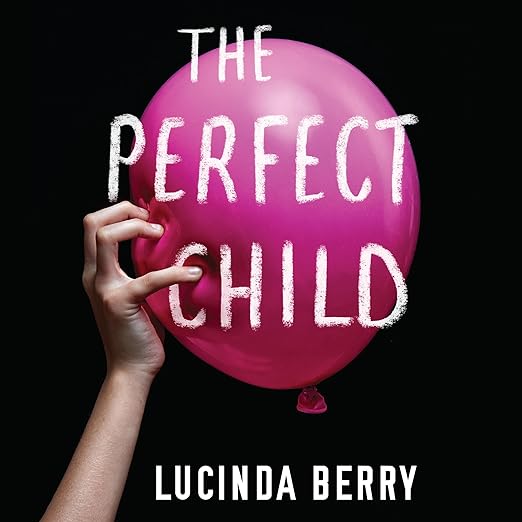
I almost did not finish The Perfect Child, and I mean that as something close to a compliment. Lucinda Berry’s debut thriller has a specific quality of sustained discomfort that is difficult to sit with for the full ten hours, and that difficulty is exactly the point. This is a book about what happens when idealized parenthood collides with a reality that cannot be managed, explained, or fixed by love alone. It is not comfortable. It is not supposed to be.
The setup is precise: Christopher is a surgeon, Hannah is a nurse, they are, as the synopsis puts it, happily married with picture-perfect lives. They want a child and cannot have one. When Janie, an abandoned six-year-old, appears at their hospital, Christopher forms an instant connection and pushes to bring her home. What follows is the systematic dismantling of Hannah’s stability, her marriage, and her sense of reality, all while Christopher refuses to see what she is seeing. The Washington Post and Amazon Charts bestseller designation reflects a readership that responded to Berry’s ability to make that systematic dismantling feel both inevitable and genuinely suspenseful.
Janie and the Author’s Psychology Background
Berry has a background in psychology, specifically in trauma and clinical psychology, and that background is the book’s single greatest asset. Janie is not a stock evil-child figure in the tradition of The Bad Seed. She is a child whose behavior is rooted in attachment trauma so severe that ordinary parenting strategies are not just ineffective but actively counterproductive. One reviewer who clearly has relevant professional knowledge describes Berry’s characterization of PTSD resulting from abuse as honest: the trauma is in the story because the story is about trauma, and you cannot write meaningfully about one without the other.
The question the book plants and refuses to cleanly answer, whether children can be born damaged in ways that supersede their abuse history, is handled with the ethical seriousness it deserves. Berry does not resolve it neatly. The ambiguity of that open ending has frustrated some readers and struck others as the only honest conclusion available.
Christopher and Hannah and the Marriage at the Center
The dual perspective structure, alternating between Christopher’s and Hannah’s experiences of the same household events, is the book’s primary mechanism for dread. We see Hannah’s growing terror through her own narration, and then we see Christopher’s entirely different experience of the same household. He is not villainous, which is more unsettling than if he were. He is in love with the idea of what this family could be, and that love is both genuine and destructive. Berry is precise about the way idealized attachment can make a person selectively blind, and she does not let Christopher off the hook while also refusing to make him simply a bad husband.
Dan John Miller’s narration maintains the distinction between these two perspectives with care. His handling of Christopher’s scenes carries a certain warmth that makes the gap between his perception and Hannah’s feel legitimately tragic rather than cartoonish.
The Predictability Question and What It Misses
One reviewer notes the story is slightly predictable. In terms of where the plot is heading, that assessment has some validity: the genre conventions of domestic psychological suspense do create certain expectations. But predictability in plot mechanics is not the same thing as predictability of emotional experience. Berry’s real skill is not in hiding the destination but in making the journey genuinely difficult to endure. The dread in this book is not about whether something terrible will happen but about watching it happen to people who cannot stop it, and that is a meaningfully different experience than a traditional twist-dependent thriller.
The graphic content question, raised in some reviews, is worth addressing directly. The book deals with child abuse and trauma. It treats those subjects with psychological honesty. That is not the same thing as gratuitous content, and one reviewer makes that point persuasively. Berry is a psychologist, and the darkness in this book serves the story it is telling.
Who Should and Should Not Listen
The Perfect Child is for listeners who can tolerate sustained psychological discomfort in service of a serious exploration of trauma, attachment, and the limits of parental love. Readers who prefer their thrillers driven by external plot mechanics and surprise reversals may find the pace too slow and the ending too open. Check the trigger warnings: child abuse and neglect are central to the narrative. But for listeners who can engage with that material, Berry’s psychology background gives this book a grounding that most domestic thrillers never achieve.
Berry’s debut also deserves credit for what it does not do. It does not resolve the central ambiguity about Janie through a neat explanation that makes everything comprehensible and therefore comfortable. The ending leaves the reader, and the listener, sitting with a question that has no clean answer: what do we owe a child whose damage may exceed our capacity to repair it? That question is not academic in Berry’s telling. It is lived by Hannah across the full ten-hour runtime, and the audiobook format makes that experience of sustained uncertainty particularly immersive. You are in Hannah’s perspective for hours at a time, and Hannah does not get to close the book and breathe. Neither does the listener.
The 4.2 rating reflects a genuine audience split, but the positive reviews consistently cite Berry’s psychology background as what elevates this above standard domestic thriller territory. That is the right read: the clinical grounding is what makes the darkness meaningful rather than merely unpleasant.
Frequently Asked Questions
How does Lucinda Berry’s background in psychology affect the portrayal of Janie’s behavior?
It is foundational to the book’s credibility. Berry draws directly on trauma psychology in constructing Janie’s attachment disorders and behavioral patterns. The result is a child character who feels clinically specific rather than generically sinister, which makes the horror considerably more uncomfortable.
Does The Perfect Child have a clear resolution, or does it end ambiguously?
It ends with deliberate ambiguity on the book’s central question about whether Janie’s damage is environmental or something deeper. Several reviewers find this frustrating; others find it the only honest conclusion. The domestic situation does reach a resolution of sorts, but not a comfortable one.
How graphic is the content involving child abuse in The Perfect Child?
The abuse is present in the story as backstory and as behavioral consequence rather than as depicted scenes. Multiple reviewers, including one with professional psychology knowledge, push back on the characterization of the content as particularly graphic. It is disturbing because the subject matter is disturbing, not because Berry is gratuitous.
Is Dan John Miller’s narration suitable for the dual-perspective structure of the novel?
Yes. His voice work maintains meaningful distinction between Christopher’s and Hannah’s perspectives without overplaying the contrast. The consistency of his performance is particularly important in a book where the same events need to feel genuinely different depending on whose point of view is active.