Quick Take
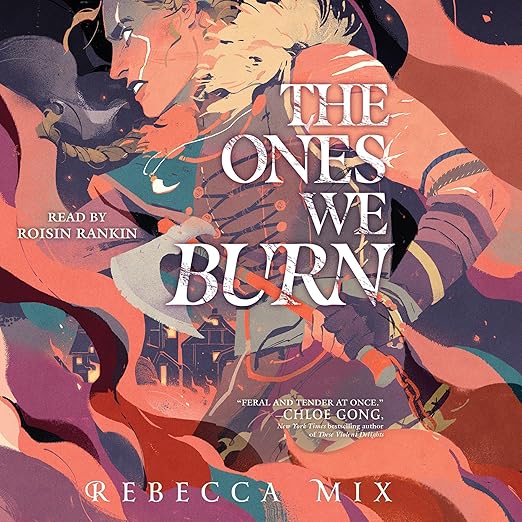
- Narration: Roisin Rankin captures Ranka’s raw volatility and her fragile interior with impressive range, the performance matches the novel’s tonal swings between ferocity and vulnerability.
- Themes: trauma and the monster built to survive it, political betrayal and loyalty, queer identity against systems designed to erase it
- Mood: Fierce and emotionally raw, with genuine dark fantasy atmosphere and a slow-burning sapphic romance
- Verdict: A debut that lands with unusual emotional weight, Ranka’s arc will stay with you long after the plague mystery resolves.
I finished The Ones We Burn late on a Saturday, sitting in a coffee shop that had long since gone quiet around me. I had started it that morning with moderate expectations for a YA dark fantasy debut, and arrived at the final chapter having had the emotional equivalent of a long hard conversation with someone who tells you true things about survival and what it costs. Rebecca Mix is doing something unusual here, and it announces itself early.
This is the story of Ranka, a blood-witch named Bloodwinn, the treaty bride sent by her northern witch coven to marry the human king. Her actual directive: kill the prince. Except the prince is frightened and kind and does not want the crown. And his sister, Princess Aramis, is the real political force in the palace, and Ranka finds herself drawn into an alliance with someone she is supposed to be moving against while witches start dying from a mysterious magical plague.
Our Take on The Ones We Burn
What separates this novel from comparable YA dark fantasy is the treatment of Ranka’s psychological history. She is described in the synopsis as a monster, but the novel spends its full length dismantling the architecture of that identity. Her blood-magic compels killing. Her coven shaped her into a weapon. The violence she has committed is real and its weight is never minimized. Mix writes the relationship between trauma and monstrosity with uncommon precision, she understands that people shaped into weapons do not become weapons because of character flaws, and that the hardest thing about recovering humanity is that you built survival on its absence.
One early reviewer described Ranka as fragile and ferocious, and that pairing is precise. The novel holds both qualities simultaneously rather than treating them as opposites. Rankin’s narration handles this duality with real skill, her Ranka sounds genuinely dangerous and genuinely wounded in the same breath, which is harder to pull off in performance than it looks on the page.
Why Listen to The Ones We Burn
The pacing is well-managed for what is a lot of plot: treaty politics, a magical plague, a coup timeline, a developing sapphic romance, and Ranka’s psychological unraveling and rebuilding all running simultaneously. Mix keeps the threads distinct without letting any one of them dominate to the point of crowding the others out. The romance between Ranka and Aramis develops slowly and credibly, they spend most of the novel in something closer to wary alliance than anything else, and the progression feels earned rather than convenient.
The world-building is specific enough to feel inhabited. The distinction between Witchik and Isodal, the mechanics of blood-magic versus other witch abilities, the political fragility of the treaty, these are developed through action and consequence rather than exposition dumps. As one reader noted, the story remained focused on this root conflict, which keeps what could easily become an unwieldy narrative tight and purposeful.
What to Watch For in The Ones We Burn
Some readers flagged editing issues in the prose, occasional inconsistencies or moments where the writing felt slightly underprocessed. These are minor enough that they did not disrupt the overall experience for most listeners, but they are present. Mix’s emotional instincts are stronger than her structural ones at this stage, which is typical for a debut and which she will almost certainly correct in future work.
The backstory of certain secondary characters is gestured at rather than fully excavated. If you find yourself wanting more from the supporting cast, that is a sign of the novel’s success rather than a flaw: they feel real enough to want more of.
Who Should Listen to The Ones We Burn
Listeners who connect with dark fantasy built around psychological damage and identity rather than pure worldbuilding spectacle will find this particularly resonant. If you liked how books such as The Poppy War or An Ember in the Ashes handled the relationship between violence and personhood, Mix is working in that emotional register, though with a younger intended audience and a more optimistic core.
Readers looking for a comfortable, lighthearted fantasy should skip this one. The plague deaths, the history of abuse, and Ranka’s accumulated violence are treated with weight rather than distance. That is exactly as it should be, but it is worth knowing in advance. Roisin Rankin’s performance makes the darker passages genuinely affecting.
Frequently Asked Questions
Is The Ones We Burn the first book in a series, or does it stand alone?
It functions as a standalone, the central plot threads, including the plague mystery and Ranka’s central choice about loyalty, are resolved within this book. The novel includes a brand-new short story and character art in some editions, suggesting a complete world rather than an open-ended series setup.
How explicit is the sapphic romance between Ranka and Aramis?
The romance is present but slow-burning and not sexually explicit. The novel is YA dark fantasy, and the relationship develops through antagonism, reluctant alliance, and emotional vulnerability rather than through direct romantic scenes. The payoff is emotional rather than physical.
Does Roisin Rankin’s narration handle both Ranka’s violence and her vulnerability effectively?
Yes, this is one of the more praised elements of the audio experience. Rankin finds the dual register that Ranka requires, conveying genuine danger alongside genuine damage. The performance is a strong match for Mix’s prose style.
Is this book suitable for younger YA readers, or does the dark content skew it older?
The content is on the darker end of the YA spectrum. Ranka’s history of violence, the plague deaths, and themes of abuse and psychological control are handled with weight rather than filtered for younger readers. It is solidly YA in structure and target audience but carries real darkness throughout.