Quick Take
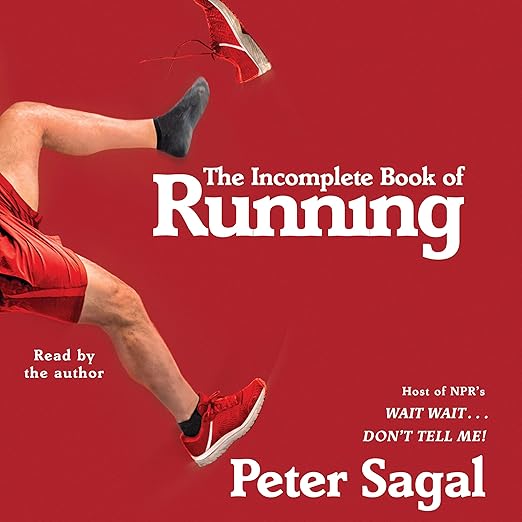
- Narration: Peter Sagal narrates his own memoir with the dry wit and exact timing of a seasoned radio host, making the personal passages land harder than they might in print.
- Themes: Running as life metaphor, divorce and identity reconstruction, guiding the visually impaired
- Mood: Funny and then quietly devastating, often within the same chapter
- Verdict: A running memoir that earns its place on the shelf by refusing to stay within the genre’s limits, equally affecting for runners and non-runners willing to follow where it goes.
I am not a runner. I want to be clear about that before I tell you that I found The Incomplete Book of Running deeply affecting. I started it on a Tuesday evening mostly because I admire Peter Sagal’s work on Wait Wait… Don’t Tell Me! and I was curious how that particular voice, the brisk wit, the precisely timed deflection, would handle material that was evidently personal. It handles it by turning out not to be a deflection at all. This is a memoir that uses running as a frame and then slowly makes you understand that the frame and the subject are the same thing.
Peter Sagal, who describes himself on the opening pages as a brainiac Harvard grad, short bald Jew with a disposition towards heft, and a sedentary star of public radio, started running seriously at forty and did not stop. He ran fourteen marathons. He crossed the finish line of the 2013 Boston Marathon moments before the bombings. He ran the 2014 Boston Marathon, organized as a kind of collective answer to the violence of the previous year, as a guide for a visually impaired runner. He ran charity races in his underwear in St. Louis in February. The book is about all of that, and the title’s honesty about incompleteness is the first signal that Sagal knows what he is doing and what he is refusing to claim.
The Radio Voice and What It Allows Him to Say
Peter Sagal is a radio professional, and this audiobook benefits from that in ways that are immediately audible. He knows where the beats fall. He knows when to pause before a line that needs space. He knows how to move from comic self-deprecation to something more serious without jarring the listener, and he makes those transitions constantly throughout the five and a half hours. The chapter on running as a guide for visually impaired athletes, which is one of the book’s best passages, begins with gentle humor about the logistics of running tethered to another person and ends in territory that is genuinely moving without announcing that it is doing so.
That tonal range is harder to manage than it looks, and Sagal manages it with the practiced ease of someone who has done it live, in front of studio audiences, for decades. Reviewer Curtis, who describes himself as square in the target demographic of both Wait Wait… Don’t Tell Me! and amateur running, called this one long serious note with enough humor to keep it from becoming heavy-handed. That is precisely the right frame. Sagal’s comedic reflex is genuine, but it is not armor against the difficult material. It is how he lets the difficult material in without losing the listener.
The Boston Marathon Chapters and What They Carry
The book does not dramatize the 2013 bombing. Sagal was across the finish line by the time the explosions occurred, and his account of that afternoon is careful and specific in a way that avoids both trauma tourism and false resolution. What he does instead is trace the cultural meaning of the 2014 race, the one the running community organized as something between a memorial and a defiance, and his participation in it as a guide for a runner who could not see the crowd. Those chapters are the emotional core of the book, and they earn their weight because of everything that precedes them, all the miles and the marriage chapters and the body image passages that establish who Sagal is before he arrives at the moment that tests it.
One reviewer who enjoyed the book raised a fair point about the divorce chapters: Sagal is the narrator of his own life, and his framing of the end of his marriage presents one perspective without much acknowledgment of its partiality. That is a real limitation in an otherwise self-aware book, and listeners should hold it lightly. He talks about his own failings sparingly and his ex-wife’s behavior in ways that have bothered some readers. It does not undermine the other material, but it does make the book’s self-portrait incomplete in ways that go beyond what the title intends.
For Runners and Everyone Adjacent to Them
This works beautifully for anyone who listens to public radio and suspects there is more to running than fitness metrics. It works for anyone navigating a life transition that requires finding a new physical self. Reviewer Lawrence Townsend listed everything the book covers, from adolescent growing pains to aging and genuinely caring about others, and noted it adds up to something more than any single category can hold. Non-runners who read Susan Orlean’s blurb, which calls the book winning, smart, honest, and affecting, should trust that assessment fully. The running is the frame; the life is the subject. You do not need to have logged a single mile to recognize yourself in what Sagal is trying to work out on the road, mile after mile, well past the point where a sensible person would have stopped.
Frequently Asked Questions
Do you need to be a runner to get something out of this audiobook?
No. Several reviewers who do not run described finding it meaningful. The running serves as a vehicle for thinking about identity, aging, divorce, and connection. The genre is memoir first, running manual not at all, and non-runners consistently report engaging with the emotional material on its own terms.
How does Peter Sagal handle the 2013 Boston Marathon bombing in the book?
Carefully and without dramatization. He was across the finish line before the explosions and does not pretend to a centrality he did not have. The more significant chapters concern the 2014 Boston Marathon, which he ran as a guide for a visually impaired runner, and what that race meant culturally and personally.
What does the title mean by ‘incomplete’?
Sagal is signaling that the book does not pretend to cover everything about running or about his life. It is selective and honest about its selectivity. The word also points toward the ongoing nature of both running and the self-examination running prompts, the sense that the project is never finished.
Is this audiobook appropriate for someone who is just beginning to run seriously?
Technically yes, but this is not a training guide. There is almost no practical instruction about running itself. What it offers is a vivid account of what running means psychologically over years of practice, which may be motivating for a new runner but will not help with pacing, form, or injury prevention.