I came to Mark Frost's account of the 1913 US Open through the back door. A friend who cares nothing about golf had recommended it after watching the Bill Paxton film adaptation, and when I asked what made it worth her time given her total indifference to the sport, she said something I found useful: it's not really about golf. It's about two men from different worlds who happened to collide on a golf course in a way that changed how Americans thought about who could belong. That description turned out to be accurate and undersold the book simultaneously.
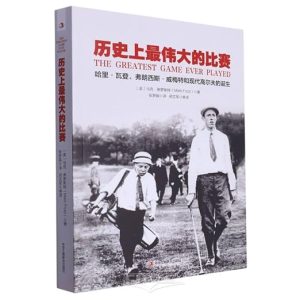
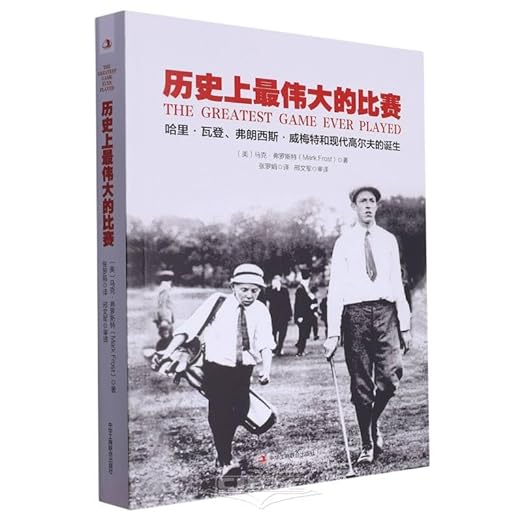
The Greatest Game Ever Played was first published as a hardcover in 2002 and subsequently adapted into a Walt Disney Pictures film in 2005. The audiobook edition, narrated by Robertson Dean, tells the parallel stories of Harry Vardon and Francis Ouimet, the two central figures in what Frost argues is golf's defining moment. Vardon was the reigning superstar of the sport, a man who had escaped poverty in Britain to become universally recognized as the greatest champion in the game's history. Ouimet was twenty years old, a Massachusetts amateur who had spent his early years as a caddie, who grew up directly across the street from the Brookline country club where the 1913 Open would be played, and who worshiped Vardon to the point of idolization before the tournament brought them together as opponents.
How The Greatest Game Ever Played Holds Up
Frost's structural choice to develop both men's lives in parallel before bringing them together at Brookline is the right one, and it is executed with patience. The early chapters on Vardon's childhood in Jersey, his self-taught development as a golfer in an era when the game was still largely the property of the British upper class, and his conquest of championship golf through sheer technical innovation, establish him as a figure of genuine complexity. He is both a beneficiary of the sport's social hierarchies and an outsider who challenged them by the force of his excellence. The famous Vardon grip, which revolutionized the game's mechanics, functions here as a biographical detail rather than a technical footnote.
Ouimet's chapters are necessarily different in register. His story is more overtly a class narrative. Growing up across the street from a country club that his family could never afford to belong to, caddying as a teenager to afford his own modest equipment, playing a sport that his economic circumstances marked him as a servant to rather than a participant in. Frost handles the social history with care, embedding Ouimet's personal story in a broader account of how American sport was beginning to negotiate the tensions between inherited aristocracy and democratic aspiration that would define the twentieth century.
Why The Greatest Game Ever Played Works as an Audiobook
Historical sports writing makes specific demands on narration. The challenge is maintaining dramatic tension around events whose outcomes many listeners already know, and Robertson Dean manages it by investing heavily in character rather than plot. His performance of Vardon's interiority during the tournament, and his rendering of Ouimet's almost vertiginous experience of competing against his hero, keeps the human drama legible even when the golf mechanics are detailed. At seventeen hours, the audiobook rewards a narrator who understands that the listener needs to care about these people before they care about the scoreboard, and Dean consistently prioritizes that.
The publisher information on this edition notes a Chinese publisher with the book listed in Chinese, which appears to be a metadata anomaly since the synopsis, narration, and content are entirely in English. Robertson Dean is an American narrator and the text is drawn from Frost's original English-language manuscript. Listeners should not be deterred by the listing irregularity.
Weak Spots in The Greatest Game Ever Played
Frost's account of the tournament itself is where the book earns its title. The 1913 US Open playoff between Vardon, Ted Ray, and Ouimet, an unknown twenty-year-old amateur against the two greatest professional golfers in the world at that moment, has the structure of a story that seems designed by someone who wanted to make a point about American possibility. The crowd that gathered at Brookline was larger than any golf crowd the country had seen. The press coverage was extraordinary. The outcome, which I will not detail here for the readers who haven't encountered the story, sent ripples through American sports culture that Frost traces forward to the explosion of golf's mass popularity that followed.
What Frost does particularly well is resist reducing the story to a simple underdog narrative. Vardon's dignity and technical supremacy are honored even as the emotional logic of the match runs against him. The book does not require Vardon to diminish in order to make Ouimet's achievement meaningful, which is the mark of a sports historian who understands that the most honest stories are not the tidiest ones.
The Right Listener for The Greatest Game Ever Played
Listen if you are interested in American sports history, social history, or the early twentieth century more broadly. The golf is the vehicle rather than the destination, and listeners who have no particular relationship with the sport will find the book's concerns legible and absorbing. Golf enthusiasts will find additional texture in the technical and cultural details Frost includes about how the game was played and understood in 1913, but those details are not prerequisites for the rest.
Skip if seventeen hours of historical narrative biography is beyond what you want right now, or if your interest in golf is primarily contemporary rather than historical. The book does not engage with modern golf at all, and listeners looking for connections to the current professional game will find little here. But for readers drawn to the kind of social history that finds its way into a single remarkable athletic event, The Greatest Game Ever Played delivers with care.
Key Details
- Read by: Robertson Dean reads Frost's historical narrative with gravitas and pacing, letting the parallel biographies breathe without losing the tension that builds toward the 1913 US Open.
- At its heart: Class mobility through sport, immigrant ambition, the birth of golf as a mass spectacle
- Vibe: Stately and absorbing, the kind of sports history that reads like a novel without pretending to be one
- Short version: A carefully constructed dual biography that uses a single golf match to illuminate a social history far larger than the sport itself.
Good to Know
Do you need to know golf to appreciate this book?
No. Multiple readers with little or no golf background have found the book absorbing because its real subject is class, ambition, and the social transformation of American sport in the early twentieth century. The golf serves as the vehicle for that story.
How does the audiobook compare to the Bill Paxton film adaptation?
The book is considerably more detailed and historically rich than the film. It develops both Vardon's and Ouimet's biographies at length before arriving at the tournament itself, whereas the film necessarily compresses that context. Frost's parallel biography structure gives the climax more weight than the film can build to in two hours.
Is the 1913 US Open outcome widely known? Does knowing the result in advance diminish the listening experience?
Frost writes in a way that sustains tension even for readers who know the historical outcome. The experience of the match is rendered through the interiority of both Vardon and Ouimet in a way that makes the moment feel alive regardless of prior knowledge. Robertson Dean's narration reinforces that quality.