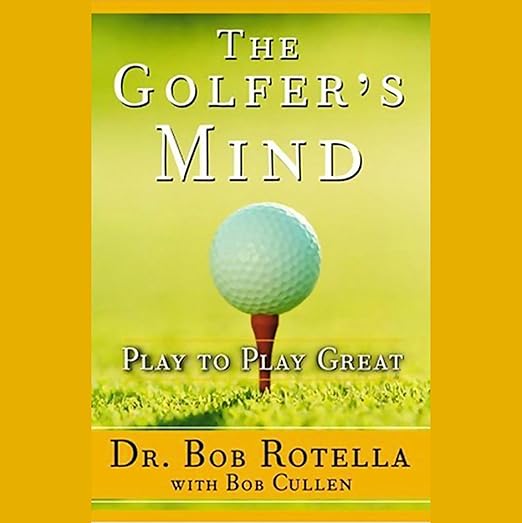
Quick Take
- Narration: Bob Rotella reads his own work with the calm, confident authority of someone who has spent forty years coaching elite athletes, it sounds like a lesson from a trusted mentor.
- Themes: mental approach to golf, pre-shot routine, managing setbacks on the course
- Mood: Focused and practical, with just enough warmth to keep it from feeling clinical
- Verdict: A compact, densely useful quick-reference for golfers who already know their swing needs less fixing than their thinking does.
I was halfway through a round that was going nowhere good when a playing partner mentioned Bob Rotella. Not for the first time, Rotella’s name comes up regularly among golfers who have figured out that the problem is rarely the mechanics, but this time it prompted me to actually sit down with The Golfer’s Mind. At just over an hour, it is not the most comprehensive of Rotella’s books, but it turned out to be the one I needed. The book functions exactly as Davis Love Jr. originally suggested it should: as something you keep close and consult when a specific problem is giving you trouble.
Rotella is a sports psychologist who has worked with touring professionals for decades. His philosophy is consistent across his books, Golf is Not a Game of Perfect, Putting Out of Your Mind, and others, and The Golfer’s Mind is best understood as a distilled, topically organized reference version of those larger arguments. The core insight is that most recreational golfers undermine their own performance by playing defensively, thinking too mechanically during the round, and failing to develop the kind of committed, process-focused mental approach that separates consistent players from inconsistent ones. His Ten Commandments, beginning with Play to play great, not to avoid playing poorly, give that argument its most compressed form.
Our Take on The Golfer’s Mind
What Rotella does exceptionally well is make the psychological case for commitment. His discussion of routine, the importance of a consistent pre-shot process, is particularly practical. He also covers butterflies (how to work with nerves rather than against them), the rhythm of the game, setbacks, and the mechanics of winning. None of these topics receive exhaustive treatment in seventy minutes, but the treatment is targeted enough to be actionable. Reviewers consistently describe this as a book they return to chapter by chapter rather than reading once straight through, which reflects the quick-reference design. The chapter on setbacks, for instance, is something many golfers will want close at hand during a stretch of poor form.
Why Listen to The Golfer’s Mind
Rotella narrating his own material is the right choice here. He sounds exactly like what he is: a confident, experienced coach who has had these conversations with elite players and whose advice is grounded in that experience without being inaccessible to recreational golfers. There is no sense of performance or sell in his delivery, he talks to you the way he would talk to a client, calmly and directly. At seventy minutes, this is also a rare audiobook you can listen to in a single drive to the course, which is genuinely useful if you want to prime your thinking before a round.
What to Watch For in The Golfer’s Mind
Listeners who already own other Rotella titles will notice significant overlap in themes and even phrasing. The core philosophy is consistent across his books by design, and some reviewers note that portions of The Golfer’s Mind cover ground already addressed in Golf is Not a Game of Perfect. This is not plagiarism but repetition with purpose, Rotella believes these ideas need to be reinforced rather than encountered once and forgotten. That said, if you are choosing a single Rotella book as your entry point, this one may be too compressed to carry the full weight of his argument. Not a Game of Perfect or Putting Out of Your Mind are more developed treatments for new readers. The Golfer’s Mind rewards listeners who already have some Rotella foundation and want the concise reference version.
Who Should Listen to The Golfer’s Mind
Golfers who have read or listened to other Rotella books and want a topically organized companion for targeted use. Recreational players who have identified that the mental side of their game is holding them back more than their technical ability. People who want something they can revisit chapter by chapter when specific mental challenges, nerves before a big round, difficulty recovering from a bad hole, inconsistent commitment to targets, arise during a season. This is not the right entry point for total newcomers to sports psychology or for listeners who want a comprehensive philosophical treatment of the mental game.
Frequently Asked Questions
Is The Golfer’s Mind the right Rotella book to start with, or should I read Golf is Not a Game of Perfect first?
Not a Game of Perfect is the more complete foundational text. The Golfer’s Mind works better as a supplement or quick-reference companion once you already understand Rotella’s core argument.
At just over an hour, is this audiobook substantial enough to be useful?
For its purpose, yes. It is designed as a reference tool organized by topic rather than a comprehensive read. The brevity is a feature, you can listen to a relevant chapter in minutes before a round.
Does the mental game advice in this book apply to golfers at all skill levels?
Yes, explicitly. Rotella works with touring professionals but writes for all levels. The psychological principles around commitment, routine, and managing setbacks apply whether you are a scratch handicap or a twenty.
Is there meaningful overlap between this and Rotella’s other audiobooks?
Yes, intentionally. Rotella’s core philosophy is consistent across his books, and some passages revisit themes from Not a Game of Perfect and Putting Out of Your Mind. Readers who know his other work will recognize the framework; new readers may want more depth.