Quick Take
- Narration: Produced with a Virtual Voice AI narrator, which delivers the text clearly but without the nuance a human performance would bring to instructional material.
- Themes: Skill acquisition science, simplicity over mechanics, natural athletic instinct
- Mood: Methodical and quietly persuasive
- Verdict: The ideas in Chris Riddoch’s book are genuinely useful, but listeners sensitive to AI-generated narration should know what they are getting before purchasing.
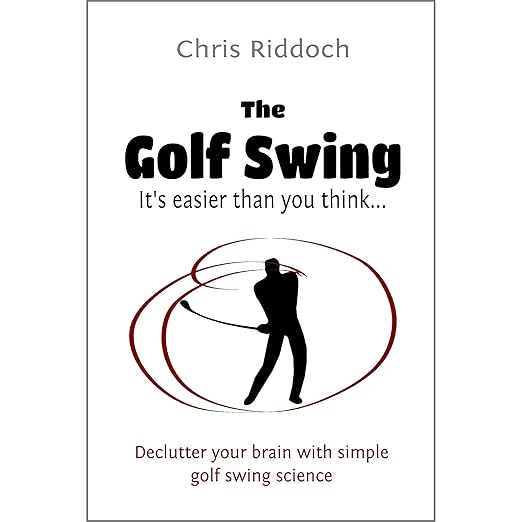
I should be upfront about something before getting to the content: The Golf Swing is narrated by Virtual Voice, which means the audiobook uses AI-generated narration rather than a human performance. That is not necessarily a dealbreaker for instructional nonfiction, where you are primarily absorbing information rather than inhabiting a narrative, but it is a material fact that affects the listening experience. The delivery is clean and intelligible, but it lacks the emphasis and pacing variation a skilled human narrator would bring to the moments where Riddoch’s argument turns on a key distinction. If you are already a fan of the book and want an audio version, this does what it needs to do. If you are encountering these ideas for the first time, a human narrator would serve the material better.
With that said: the ideas themselves are worth your attention if you play golf and have ever felt like the accumulated advice of a dozen different coaches has left you more confused than when you started. Riddoch, drawing on a review of more than 200 research articles, argues that the golf world’s obsession with dissecting the swing into a precise sequence of positions and angles actively prevents improvement. The reason, he contends, is that this approach overrides the body’s natural skill-learning mechanisms, which function best when given simple, whole-movement targets rather than fragmented technical instructions. He calls the accumulated confusion around swing mechanics the swing theory quagmire, and it is a description that will resonate with any recreational player who has spent an afternoon on the range getting progressively worse after trying to implement four contradictory tips simultaneously.
Our Take on The Golf Swing
Riddoch’s argument sits within a broader tradition of intuitive-skill literature that includes Dave Stockton’s Instinct Putting and similar texts from the sports science world. One reviewer who situates this book in exactly that lineage notes that these authors do not agree on everything but share the conviction that analytical overthinking is the enemy of athletic performance. Riddoch’s contribution is the systematic evidence base: he is not just asserting that simplicity works, he is drawing on published research to explain why. The audiobook’s instructional passages covering centrifugal force, passive wrist release, and the distinction between hitting and swinging are delivered by the Virtual Voice narrator with mechanical accuracy, which is both the format’s limitation and, in a narrow sense, its adequacy. For factual content, clarity matters more than expressiveness.
Why Listen to The Golf Swing
The book has an unusual structure that one reviewer describes as half outstanding and half less convincing: the sections on mental approach, external focus, and deliberate practice are the strongest material, while the chapters on swing technique itself are more debatable. That distinction matters for how you approach the audiobook. Riddoch’s case for liberating your natural skill mechanisms is compelling and well-supported. His specific technical recommendations have generated more disagreement in the golfing community. Knowing this in advance lets you engage more critically with the latter sections rather than treating the whole book as unified prescription. The Virtual Voice narration does not help you navigate this distinction; it reads all sections with the same unvarying authority.
What to Watch For in The Golf Swing
At just over three hours, this is a short audiobook, and some listeners may find that brevity works against Riddoch in the technique chapters, where the science-based claims benefit from more thorough evidence. The book’s core argument, that you should stop thinking and start swinging, is easier to absorb in audio than in text, because hearing it removes the temptation to annotate and analyze, which would be somewhat ironic given Riddoch’s central thesis. Listeners who want actionable takeaways will find the external focus and deliberate practice sections most immediately useful. Golfers looking for a technical correction manual will be disappointed: this book is a philosophy of practice, not a swing diagnostic.
Who Should Listen to The Golf Swing
Recreational golfers frustrated by mechanical instruction overload will find Riddoch’s reframe genuinely useful, especially the first half dealing with skill acquisition science and mental approach. The Virtual Voice narration is serviceable but not a strength, so listeners who find AI-generated voices distracting should be aware before committing. Those who have already read books like Bob Rotella’s mental game titles or Dave Stockton’s putting works will find familiar territory here, with a more rigorous research basis than most popular golf psychology texts.
Frequently Asked Questions
Is The Golf Swing audiobook narrated by a real person or an AI voice?
It uses a Virtual Voice AI narrator, as listed on the Audible product page. The narration is clear and intelligible but does not have the expressive range of a human performance. This is worth knowing before purchasing if you are sensitive to AI-generated audio.
Does Riddoch’s approach contradict conventional golf instruction?
Significantly, yes. His central argument is that breaking the swing down into a sequence of mechanical positions actively prevents improvement by overriding the body’s natural skill-learning systems. He advocates instead for whole-movement thinking and an external focus on the target rather than internal focus on body positions.
Is this book appropriate for beginner golfers, or does it assume existing knowledge?
Riddoch assumes basic familiarity with what the golf swing is supposed to do, though he is not writing for low-handicap players specifically. A complete beginner may find some of the critique of existing instruction hard to evaluate without having encountered that instruction first.
At just over three hours, is this audiobook long enough to cover the topic adequately?
For the conceptual argument, the length is sufficient. Riddoch states his case clearly and does not pad. Listeners hoping for extensive technical drill sequences or detailed swing examples will find the coverage thinner than dedicated instruction books, but that is consistent with his premise that over-instruction is the problem.