Quick Take
- Narration: Rebecca Gethings handles the dual-timeline structure cleanly, differentiating Anna, DS Rebecca Dance, and the peripheral women around Luke with enough distinction to keep the threads clear.
- Themes: Narcissistic abuse and coercive control, unreliable memory and confession, female solidarity and survival
- Mood: Unsettled and claustrophobic, slowly pressurizing
- Verdict: A competent domestic thriller with a genuinely satisfying ending, though it takes patience to get there and the middle stretch tests it.
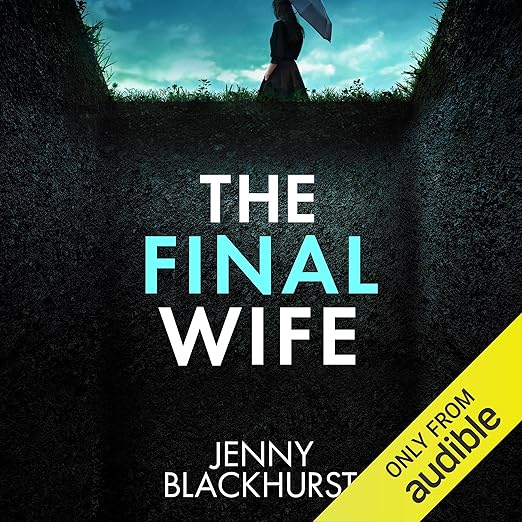
I started The Final Wife on a Sunday afternoon with a cup of tea, expecting a propulsive listen I’d finish before dinner. I did finish it before dinner, but not quite in the way I expected. Jenny Blackhurst’s novel is a slow build that rewards patience, which isn’t exactly what the thriller packaging promises. The cover and the copy suggest something that moves. The actual experience is more like watching a photograph develop, details emerging gradually until the full picture arrives and you realize it was worth the wait.
The setup is immediately compelling: Luke Whitney, plastic surgeon, is found stabbed to death. His wife Anna is found next to the body covered in his blood and confesses immediately. So what’s the mystery? The mystery is that Anna cannot account for the details of the crime she claims to have committed. DS Rebecca Dance, investigating, finds inconsistencies that push the case open rather than closed. From there, Blackhurst works with multiple timelines and multiple women connected to Luke: Anna, his scorned ex, his neglected mistress. The central question is not who killed Luke but which of the women around him finally ran out of patience.
The Man Everyone Wanted Gone
Luke Whitney is one of those thriller victims who works because he is comprehensively unpleasant without being cartoonish. He is a narcissist, a cheat, and a man who cycles through wives with the clinical detachment of someone updating a subscription. The title’s logic becomes clear fairly early: to Luke, wives are replaceable. Anna knows what happened to the previous Mrs. Whitneys. One reviewer quoted Anna’s internal voice directly: I was determined I would be the final wife. That line carries the whole novel. It’s both a declaration of love and a threat, and Blackhurst is smart enough to let it be both simultaneously.
Rebecca Gethings handles these complications in the narration with commendable steadiness. She doesn’t tip her hand about who is lying and who is remembering. The various women in Luke’s orbit have distinct registers in her delivery, and she navigates the timeline shifts without the kind of tonal signaling that can telegraph twists before they arrive. One reviewer with significant reservations about the book noted specifically that the narrator was great. That’s a meaningful compliment when the review around it is largely critical.
Where the Pacing Earns Its Reputation
Here is where honest criticism is necessary: the middle section of The Final Wife is slow. Not terminally so, but noticeably. The dual timelines create some drag in the first two thirds, and listeners who prefer their domestic thrillers to move with relentless momentum may find themselves checking the runtime. One reader characterized the experience as watching wet paint dry, which is too harsh but not entirely wrong for the section that spans roughly the midpoint of the book.
What saves it is the final movement. Several reviewers noted that the book really accelerates from around the seventy percent mark, and that assessment matches my own experience. The twists that arrive in the closing section are not cheap reversals. They recontextualize what came before in ways that require you to reassess characters you thought you’d understood. Blackhurst has constructed a novel where the ending genuinely earns its satisfaction, which is harder than it looks in a genre full of endings that simply arrive.
Reading Anna Right
The central performance question for this novel is whether Anna reads as a victim, a perpetrator, or something more complicated. Blackhurst is careful not to flatten her. Anna is not simply a passive sufferer. She made choices, accepted compromises, told herself stories about what her marriage meant. The narrative refuses to let the fact of Luke’s awfulness serve as complete moral absolution for everyone around him, and that moral texture is what distinguishes The Final Wife from more mechanical domestic thrillers in the genre.
DS Dance as the investigator is less fully drawn than Anna, which is the novel’s main structural weakness. She functions effectively as the procedural engine but doesn’t generate the kind of investment that the domestic storylines do. Listeners who prefer detective-forward crime fiction may find the balance frustrating. Those who read domestic suspense primarily for the psychological profiles of the people inside the marriage will be more satisfied.
Who Should Listen and Who Should Skip
This works best for listeners who are comfortable with slow-burn domestic suspense and who find the psychology of coercive relationships genuinely compelling. Fans of Claire Douglas and Adele Parks will likely feel at home here. Skip it if you need your thriller to maintain sustained tension throughout, or if slow-burning middles reliably lose you. The final quarter is worth the wait, but only if you’re prepared to earn it by staying with the slower build. Gethings’s narration makes the waiting more bearable than it might otherwise be.
Frequently Asked Questions
Does The Final Wife keep you guessing, or is the killer obvious early on?
The novel distributes suspicion across several women connected to Luke, and the resolution isn’t telegraphed. Most readers report being genuinely uncertain about the answer until the final section, though some found the pacing made them less invested in the reveal by the time it arrived.
How graphic is the domestic abuse content?
The coercive control and narcissistic behavior is depicted in some detail through flashbacks and revelations, but the book does not contain graphic physical violence beyond the framing murder. It’s psychologically intense rather than viscerally brutal.
Is this book part of a series, or does it stand alone?
It stands alone as a self-contained thriller. Jenny Blackhurst has written other psychological thrillers, but this novel does not require familiarity with her previous work.
Does Rebecca Gethings’s narration help or hurt the mystery by the way she voices the characters?
Gethings plays it carefully neutral, which is the right call for this kind of multiple-suspect structure. She doesn’t editorialize through tone. Several readers who found the book slow still singled out her narration as a genuine strength.