Quick Take
- Narration: Elaine Heney narrates her own work, and the effect is intimate and warm – you’re listening to a practitioner, not a performer, which suits the material perfectly.
- Themes: Human-horse communication, trust-building, mindset reset for equestrians
- Mood: Encouraging and grounded, like a quiet conversation at the barn
- Verdict: A genuinely useful listen for horse owners who sense there’s a deeper relationship possible with their animal but aren’t sure how to get there.
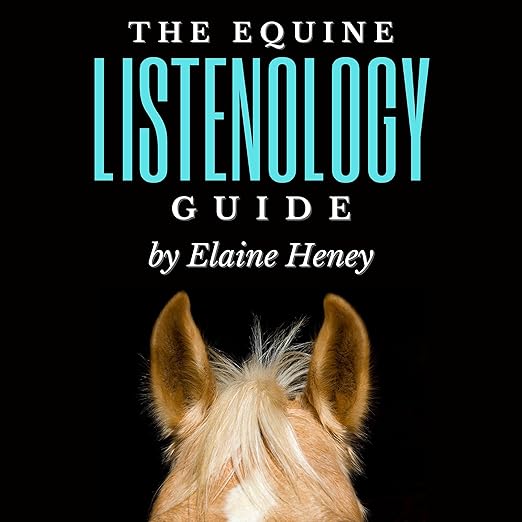
I came to this one on a Thursday afternoon, windows cracked, and the kind of afternoon light that makes you want to slow down and think. I’d been curious about the Listenology approach for a while – the name alone suggests something different from the usual instruction-heavy equestrian content. What I found in Elaine Heney’s first book in the Listenology trilogy is less a training manual and more a reorientation: a guide to rethinking the entire premise of what it means to work with a horse.
Heney opens from a place of experience that spans not just riding but documentary filmmaking, having created the Listening to the Horse film that preceded this book. The stories she tells – including her own horses, Ozzie and Matilda, whom she lives with in Ireland – feel genuinely inhabited. This isn’t someone narrating theory from a distance. One reviewer put it plainly: “Elaine writes like she speaks,” and that’s exactly what you get in the audio version, which she narrates herself.
Our Take on The Equine Listenology Guide
The book’s central argument is deceptively simple: most equestrians are conditioned to do and direct, when the more productive relationship with a horse begins with listening and observing. Heney unpacks this through a combination of case studies, exercises, and personal stories that keep the content from feeling abstract. The “listenology” framing is less gimmick than it might initially sound – it’s a practical philosophy that asks riders and handlers to read their horse’s behavior differently, to stop pushing through signals they’ve learned to ignore.
What makes this land, especially in audio format, is that Heney isn’t writing for competitive riders chasing ribbons. The book reaches the equestrian who has been at it for years, maybe decades, and still feels like something is missing in the connection they have with their horse. One reviewer described being “at a crossroads” in her equestrian journey, contemplating quitting entirely, until Heney’s framing of insecurity and self-doubt as something that horses pick up on opened a new way of thinking. Another described coming back from a broken wrist with a newly sensitive horse, using the ground exercises in the book to rebuild trust at a pace both horse and human could handle. These aren’t unusual listener experiences – they’re the norm in the review record.
Why Listen to The Equine Listenology Guide
The audio format works particularly well here for a few reasons. Heney’s narration is unhurried, conversational, and carries genuine affection for her subject matter – you can hear it when she talks about Ozzie and Matilda in the stories that thread through the lessons. For listeners who have taken any of Heney’s courses (and several reviewers mention doing exactly that), the audio feels like a natural extension of that experience: the same voice, the same cadence, the same philosophy made available in a different format.
The four and a half hours of content is well-paced. This isn’t a dense reference work you’ll need to pause and rewind every few minutes. It’s accessible on a first pass, and I suspect it’s the kind of audiobook that rewards a second listen after you’ve spent time applying some of the exercises. The exercises themselves are described clearly enough to follow without needing to reference a written version, which isn’t always the case with instructional content in audio form.
What to Watch For in The Equine Listenology Guide
The book covers an impressively wide range of horsemanship territory. One reviewer noted there’s “not much she doesn’t cover,” and while that’s a compliment, it does mean some topics get shorter treatment than others. Listeners looking for deep dives into specific disciplines or technical training progressions may find the breadth a limitation. The listenology approach is also fundamentally about relationship and mindset, which means it works best for listeners who are open to examining their own behavior and assumptions, not just learning new techniques.
There’s also a mild promotional note in the text around Heney’s broader course offerings and the other books in the trilogy, which is expected for a self-published work of this kind but worth knowing going in. It doesn’t undermine the content, but listeners who are unfamiliar with Heney’s online presence may feel occasionally that the book is building toward something rather than delivering everything up front.
Who Should Listen to The Equine Listenology Guide
This is for horse owners at any experience level who feel their relationship with their horse has plateaued or become frustrating. It’s particularly useful for anyone dealing with anxiety around riding, working with a sensitive or reactive horse, or recovering from a difficult experience with an animal. Longtime equestrians who are willing to revisit foundational assumptions will get the most from it. Those seeking technical training progressions, discipline-specific instruction, or a quick fix for specific behavioral problems should look elsewhere. This is a book about changing how you think, and it works best when you let it do that.
Frequently Asked Questions
Do you need to own a horse to get value from this audiobook?
No, though having a horse you’re actively working with will make the exercises far more applicable. The philosophy and mindset content is useful even for those who ride regularly but don’t own their own horse.
Is this suitable for complete beginners to horsemanship?
Heney addresses riders at all levels, and the mindset content translates across experience levels. Absolute beginners might find some of the case studies more relatable once they have a bit more time around horses, but the core ideas are accessible from day one.
Does Elaine Heney’s self-narration work well for an audiobook format?
Very much so. Several reviewers specifically comment that she writes and speaks in the same way, which makes the narration feel like a direct conversation rather than a read manuscript. The warmth and conviction in her delivery are real assets.
How does this compare to other horse training audiobooks?
Most equestrian audiobooks skew either toward competitive instruction or rescue and rehabilitation stories. The Equine Listenology Guide occupies a distinct space: it’s primarily a philosophy and relationship book, with practical exercises woven in, aimed at changing how you approach your horse rather than drilling specific techniques.