Quick Take
- Narration: Virtual Voice narration is serviceable but lacks the warmth and texture a human narrator would bring to a procedural set in the frozen Minnesota north.
- Themes: Police procedural, secrets and blackmail, women in law enforcement
- Mood: Cold and tightly wound, with a slow accumulation of dread
- Verdict: A solid debut procedural with a compelling central detective and a satisfying twist, though the AI narration keeps it from reaching its full atmospheric potential.
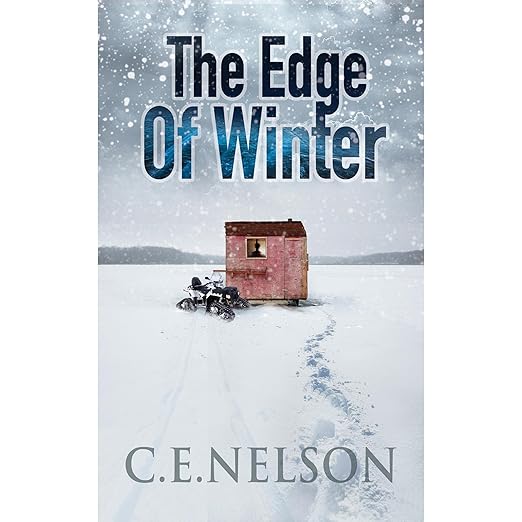
I started listening to The Edge of Winter on a January afternoon when the temperature had dropped to something genuinely unpleasant. The timing turned out to be appropriate. C.E. Nelson sets her debut mystery in Duluth, Minnesota, during a brutal Christmas season, and one reviewer noted they felt cold the entire time they read it. I understand exactly what they meant. The book does something quietly effective: it makes the landscape a character. The frozen lake, the fish houses, the snow accumulating alongside the bodies. Nelson uses the physical environment as a kind of moral weather system, and the result is a procedural that feels more grounded than most first entries in a new series.
Agent Danny Carlisle of the Minnesota Bureau of Criminal Apprehension is handed a case that should, by all appearances, be simple. A powerful and thoroughly unpleasant man is found stabbed to death in his fish house on a frozen lake. Nearly everyone who knew him had reason to want him gone. His employees hated him, his family seems relieved, and even the local sheriff barely conceals his indifference. The only person invested in finding justice is the victim’s personal assistant, who is now forced to reveal a cache of secrets that could destroy careers and derail at least one gubernatorial campaign. That political thread is one of the stronger elements of the book, giving the investigation stakes beyond the usual procedural machinery. The victim emerges, through depositions and witness accounts, as a man with a particularly comprehensive talent for making enemies: a blackmailer, an exploiter of people who depended on him financially, a figure whose death feels less like a crime and more like an inevitability that someone finally acted on.
A Detective Worth Following Into Future Books
What makes The Edge of Winter worth your time is Danny Carlisle herself. This is her first assignment as lead agent, and Nelson does not paper over that inexperience with false bravado. Carlisle is observant, methodical, and genuinely uncertain at key moments in ways that feel true to a character navigating new professional territory. Reviews consistently highlight her down-to-earth attitude and the way her personality grounds the story even when the plot becomes complicated. A developing romantic subplot runs alongside the investigation without overwhelming it, and Nelson handles both threads with a light touch that is harder to pull off than it looks. There is also a secondary pressure that lifts the stakes considerably: a parallel killer appears to be working alongside the investigation, narrowing the suspect list from the outside by eliminating people before Carlisle can interview them. That element adds urgency without tipping into the kind of melodrama that would undercut the procedural tone Nelson is working hard to establish. By the end of the book, Carlisle feels like someone with a future, not just a function.
What the Writing Does and Does Not Do
Some readers have flagged issues with the prose itself, and I think those criticisms are fair enough to mention. One reviewer points to a specific problem with timeline clarity, where events from two separate timeframes are written as though simultaneous. That kind of structural confusion can break a reader’s trust, and it happened to me once during the middle third of the book. The character naming also occasionally creates confusion in a cast that is deliberately large. Nelson gives us many suspects precisely because the victim was so widely despised, and keeping them all distinct is a challenge the book does not always meet. These are editing-level problems rather than fundamental failures of craft, and they tend to diminish in subsequent entries as an author finds their footing. The reviewer who called it a brisk mystery-thriller is probably the most accurate single descriptor. Nelson moves things along without dwelling in backstory or philosophical asides. The story ends with a twist that recontextualizes certain earlier scenes in a way I found satisfying rather than frustrating.
The Narration Question and Final Assessment
The audiobook uses a Virtual Voice narrator, and this is worth naming plainly. AI narration has improved substantially, and for a procedural like this one, where the prose is functional rather than literary, the Virtual Voice manages adequately. But it cannot replicate the subtle vocal differentiation that a skilled human narrator brings to a cast of twelve or more characters who sound too similar to one another in the audio version. For a story that depends heavily on character dynamics and the small signals that distinguish one suspect’s demeanor from another, the narration is a real limitation. If you have the option, this is a book that might serve you better in print. That said, the free audiobook availability removes the financial barrier entirely, so if you are between longer listens and want a cold-weather mystery with a protagonist worth revisiting, it does the job it sets out to do. Readers who enjoy John Sanford’s Prey series or Sue Grafton’s procedural patience will find familiar pleasures here. Nelson’s comparisons to those authors in the marketing copy are not entirely wrong, even if Carlisle is still early in her development as a series anchor.
Who Should Listen and Who Might Skip
Readers who enjoy procedurals set in harsh environments will find the Duluth winter atmosphere genuinely effective, and the series comparisons to John Sanford and Sue Grafton in the publisher’s copy are not misplaced, even if Carlisle is still developing as a character across future entries. Listeners who require technically polished prose throughout may find the timeline inconsistencies mentioned by reviewers frustrating enough to put the book down. Those who are bothered by AI narration specifically should consider the print edition. But if you want a debut mystery with a compelling lead, a politically charged motive structure, and a mystery that pays off at its conclusion, C.E. Nelson delivers a solid first entry. I will return for the next Danny Carlisle investigation.
Frequently Asked Questions
Is The Edge of Winter the first book in the Danny Carlisle series?
Yes, this is book one of the Danny Carlisle Murder Mystery series. It follows Carlisle on her first assignment as a lead agent with the Minnesota Bureau of Criminal Apprehension, and it works well as a standalone introduction to the character.
Does the Virtual Voice narration seriously affect the listening experience?
It is a real consideration. The AI narration is serviceable for a plot-driven procedural, but it struggles to differentiate the large cast of suspects vocally. Readers who prioritize strong character voice work may prefer the print edition.
How dark is the content, given the synopsis mentions blackmail and sexual exploitation?
One reviewer flags sexual abuse as a trigger theme. There is violence, but the book avoids gratuitous gore. The darkness is more structural, built around the victim’s exploitation of those around him rather than graphic depiction.
Is the political angle about the gubernatorial candidate a major plot thread?
It is a significant motivating element. The personal assistant’s secrets threaten a politician with gubernatorial ambitions, which gives the investigation broader stakes. It does not dominate the book but adds meaningful texture to the motive landscape.