Quick Take
- Narration: Ana Osorio brings a grounded, emotionally consistent voice to the Name-Bearer’s increasingly desperate mission, handling a complex multi-POV structure well.
- Themes: Faith tested by circumstance, prophecy as burden rather than gift, queer identity without apology
- Mood: Epic and emotionally urgent, with a sense of spiraling pressure that never quite lets you rest
- Verdict: The third volume in Natalia Hernandez’s Flowers of Prophecy series expands the world while keeping the emotional stakes personal, though it is entirely inaccessible without the first two books.
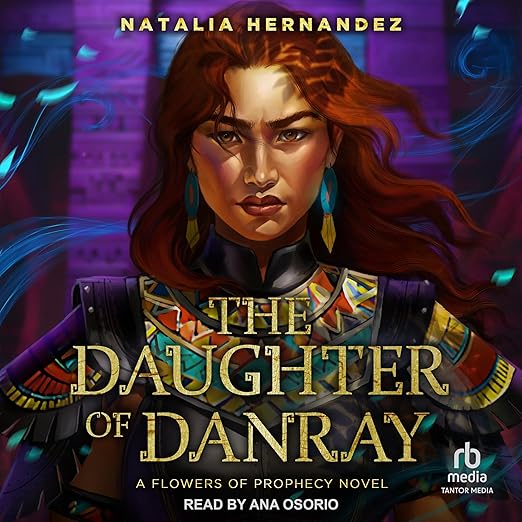
I came to The Daughter of Danray having not read the earlier Flowers of Prophecy entries, which immediately put me at a disadvantage. This is Book 3 in an ongoing series, and Natalia Hernandez does not slow down for newcomers. The opening chapters deposit you directly into a world of monstros, prophecy, and a protagonist called the Name-Bearer whose mission, find the Unnamed Prince and deliver him to the Flowers of Prophecy, is already years deep when the story begins. I found my footing eventually, but I want to be honest: this audiobook is not where you start.
For readers who have followed the series from the beginning, The Daughter of Danray clearly delivers. The response from listeners who know these characters is one of the more emotionally intense reactions I have tracked in recent YA fantasy, with multiple reviewers describing needing to know what happens next with an urgency that borders on the physical. One reader wrote that her heart and soul had received the best thrashing. Another simply wrote AHHHHHHH!!!!!!! in capital letters, which I take to mean the book delivered.
Our Take on The Daughter of Danray
What Hernandez is doing that distinguishes this series from generic prophecy-driven fantasy is the treatment of her queer characters. One reviewer, describing herself as an older queer person, made a comment I keep returning to: she loves when queer characters just ARE. They don’t have to be any stereotype; they just are. This is a specific and meaningful observation about what separates contemporary queer fiction from earlier work in the genre. Hernandez is not writing coming-out narratives or queer suffering stories. Her characters happen to be queer the way they happen to have particular skills or histories, as an aspect of who they are rather than the drama they must survive.
The structural challenge of Book 3 in an ongoing series is always the same: how do you maintain momentum through what is functionally a bridge volume, escalating stakes without resolving them? Hernandez manages this better than most, though at least one reviewer found the book more expanded than needed, and specifically felt that Nova’s POV was less compelling than Rawl’s sections. A dual or multi-POV structure lives and dies on the relative weight of each perspective, and this is a limitation worth knowing about for readers who found earlier volumes’ POV balance more satisfying.
Why Listen to The Daughter of Danray
Ana Osorio’s narration is a significant asset. Her reading of the Name-Bearer has the quality of someone operating under sustained pressure but not yet broken, which is exactly where the character lives through most of this book. The monstros overrunning the capital, the missing champion, the allies losing faith: these are circumstances that require a narrator who can convey exhaustion without flagging, and Osorio manages it. At nearly thirteen hours, the audiobook is substantial but does not drag.
The worldbuilding in the Flowers of Prophecy series seems to have a distinctive texture, with Spanish-inflected proper nouns like Tierramadri and the Danrayan Temple giving the setting a specific cultural flavor that distinguishes it from the generic northern-European-medieval of much YA fantasy. This is something the audio format carries particularly well, because you hear those names spoken aloud, hear the rhythm of the language, rather than just seeing them on a page.
What to Watch For in The Daughter of Danray
The revelation that a fourth book is coming, discovered by at least one reviewer partway through their reading, is both exciting and frustrating. The Name-Bearer’s journey is not completing itself here. The third volume is raising stakes and forcing separations rather than delivering the reunion and resolution that the setup from earlier books seems to promise. Listeners who are patient with ongoing series will be fine. Those who hoped this would close out the story cleanly should brace themselves.
The emotional intensity of the fan response to this series suggests Hernandez has built genuine attachment to her characters across three volumes. The test of Book 3 in any series is whether it keeps that attachment alive rather than just maintaining plot, and the evidence from readers who know the earlier books is that it does.
Who Should Listen to The Daughter of Danray
Exclusively recommended for listeners who have completed the first two Flowers of Prophecy books and want to continue. For those listeners, this is described as a lush, emotionally intense continuation with queer characters rendered without the burden of their queerness serving as the plot. Skip if you want a standalone or series entry point. This is deep in an ongoing world.
Frequently Asked Questions
Is The Daughter of Danray the final book in the Flowers of Prophecy series?
Based on reader responses, it appears a fourth book is planned. At least one reviewer discovered this mid-read and described the mixed feelings of excitement and frustration at having to wait longer for a conclusion.
How does the dual or multi-POV structure work in this audiobook, and does Ana Osorio distinguish between them?
The book includes at least two major POVs, with the Name-Bearer and Rawl generating more reader engagement than Nova’s sections according to reviews. Osorio handles the transitions, though listeners note some imbalance in the relative richness of different perspectives.
How are the queer characters handled in this series compared to other YA fantasy?
Reviewers specifically highlight that Hernandez does not foreground queerness as crisis or coming-out drama. Queer characters simply exist as themselves, which is described by readers as a relief and a distinction from much of the genre.
Is the Flowers of Prophecy series complete at three books, or is this an ongoing series?
The series is ongoing. The Daughter of Danray is Book 3 and does not resolve the overarching prophecy story. A fourth volume appears to be in development based on author communication with readers.