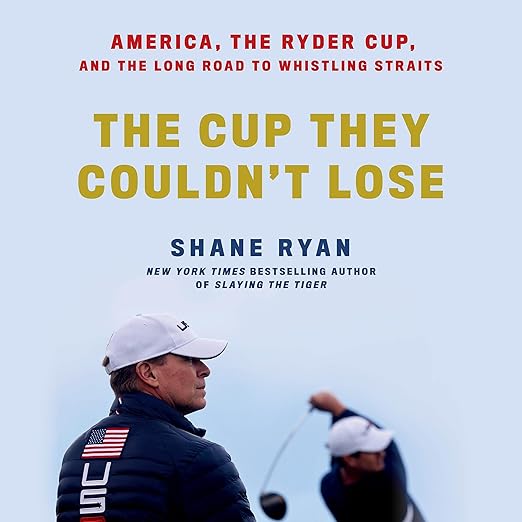
Quick Take
- Narration: Shane Ryan narrating his own work gives this a journalist’s confidence and a fan’s barely contained excitement. He knows these players, these moments, and it shows.
- Themes: American sporting identity, team cohesion versus individual talent, the psychology of pressure
- Mood: Propulsive and richly detailed, with an 80s nostalgia streak running through the historical sections
- Verdict: Essential listening for Ryder Cup devotees and a surprisingly accessible entry point for casual golf fans interested in what the competition actually means.
The Ryder Cup is one of those sporting events that baffles people who do not follow it closely. Why would the world’s best individual golfers, men who win majors by protecting their own score, suddenly play as a team, with the emotional intensity of a World Cup final and without a cent of prize money? Shane Ryan spent a book answering that question for the 2021 edition at Whistling Straits, and I finished listening to it on a long Sunday walk, genuinely unwilling to pull out my earbuds even when I arrived home.
The task Steve Stricker faced as American captain in 2021 was, as Ryan describes it, enormous. The US had not won on home soil in decades. Tiger Woods was absent after his car crash. Patrick Reed, Captain America to his supporters, was hospitalized with double pneumonia weeks before the event. Brooks Koepka and Bryson DeChambeau were conducting an escalating public feud. And across the Atlantic, Jon Rahm had just become the first Spanish player to win the US Open, while Rory McIlroy was looking for redemption after previous Ryder Cup disappointments. Ryan layers all of this against forty years of history, and the structure works beautifully even for listeners who did not follow the tournament live.
Our Take on The Cup They Couldn’t Lose
What Ryan does particularly well is explain why the US kept losing despite having superior individual talent. The European renaissance under Tony Jacklin and Seve Ballesteros in the 1980s created a team culture that American golf, structured entirely around individual achievement, took decades to understand. The sections covering that era are the book’s richest, and Ryan’s portrait of Ballesteros in particular is worth the price of admission on its own. One reviewer felt these historical passages outperformed the 2021 event coverage, and that is not an unreasonable read. The build to Whistling Straits can occasionally feel like the history was the actual story all along, with the 2021 event as its final chapter rather than its subject.
Why Listen to The Cup They Couldn’t Lose
Because Ryan narrates his own work with the easy authority of someone who covered every press conference and walked every fairway. There is no performance anxiety in his delivery. He moves between anecdote and analysis without losing momentum, and his genuine affection for the event prevents the historical sections from becoming a lecture. Chris Wurst’s review captures it well: Ryan takes a subject familiar to golf fans and pulls back the curtain on decades of history to deliver a deeper appreciation. That depth is the book’s real gift, and it arrives through a narrator who has spent years earning the right to explain why any of this matters so much.
What to Watch For in The Cup They Couldn’t Lose
One legitimate criticism is that the book operates with the benefit of hindsight, which occasionally makes the author’s judgments feel cleaner than they would have in the moment. Calling certain captains poor choices reads differently when you know the outcome. The analysis of Tom Watson and Nick Faldo’s captaincies is persuasive but ungenerous in the way that hindsight allows. Ryan acknowledges this tension without fully resolving it. Still, that is a modest complaint against a book that runs ten hours and earns most of those hours. For pure Ryder Cup history, Ryan also wrote Slaying the Tiger, which readers wanting more on the 2010s era would do well to track down alongside this one.
Who Should Listen to The Cup They Couldn’t Lose
Golf fans who watched the 2021 Ryder Cup will find the behind-the-scenes detail illuminating. Fans of sports history generally will find the European-US rivalry narrative a model of how to contextualize a single event within a long arc of competition. Casual listeners who need to know the difference between a birdie and a bogey before engaging should do five minutes of background reading first. The technical golf content is light enough that the book is accessible to near-outsiders, but Ryan assumes a baseline familiarity with the tour players involved. The reward for that minimal investment of prior knowledge is ten hours of genuinely excellent sports history.
Frequently Asked Questions
Do I need to have watched the 2021 Ryder Cup to follow this book?
No, though it helps. Ryan provides enough context that the event’s stakes are clear even if you missed the broadcast. The historical sections require no prior knowledge at all.
How does Shane Ryan handle the Koepka-DeChambeau feud in the narration?
With sharp journalistic fairness. He presents it as genuine tension that could have derailed the team, while also tracking how Stricker navigated it, and lets the result speak for itself.
Is there material here for readers who already know Ryder Cup history well?
Yes. Ryan draws on interviews and behind-the-scenes access that adds texture even to well-documented matches. The Ballesteros and Jacklin sections in particular contain material not widely available elsewhere.
How does this compare to Shane Ryan’s earlier golf writing, particularly Slaying the Tiger?
The Cup They Couldn’t Lose is more historically expansive and structurally ambitious. Slaying the Tiger is a closer portrait of a specific Tour year. Both reward serious golf readers; this one is more useful as a Ryder Cup primer.