Quick Take
- Narration: Jonathan Yen navigates a large cast with precision, giving Shimada’s exterior investigation and the trapped ensemble distinct rhythms that keep the parallel timelines from blurring.
- Themes: Locked-room mystery, architectural horror, paranormal investigation gone wrong
- Mood: Claustrophobic and relentlessly ticking
- Verdict: A fiendishly constructed puzzle-box mystery that rewards patient listeners who enjoy the classic detective tradition filtered through a distinctly Japanese sensibility.
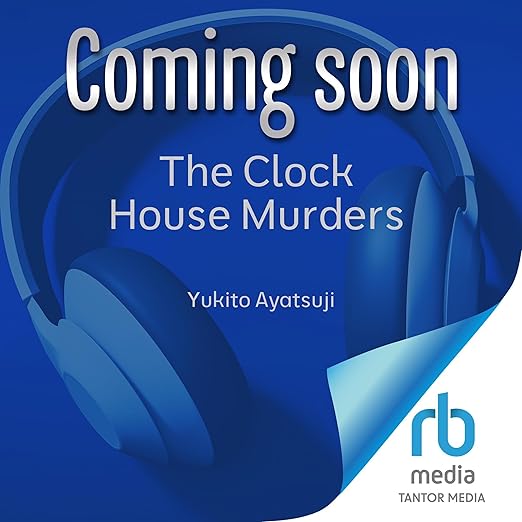
I started listening to The Clock House Murders on a Wednesday evening after finishing a run of contemporary psychological thrillers that had left me craving something more architecturally precise. Yukito Ayatsuji belongs to a tradition I find deeply satisfying: the honkaku school of Japanese detective fiction, which holds the puzzle contract with the reader as sacred. No cheating. No vague psychological resolution. By the time the house’s clock-tower symbolism had fully landed, I was two hours in and had completely abandoned my plan to stop at bedtime.
This is the fourth installment in Ayatsuji’s Bizarre House Mysteries series, and the Clock House itself is a masterstroke of setup. Built by the notorious architect Nakamura Seiji for a long-dead clock enthusiast, the mansion becomes the site of a paranormal magazine investigation gone catastrophically wrong. Three days locked inside, a psychic medium in the group, and murders beginning almost immediately. Outside, detective Shimada Kiyoshi works the puzzle from the exterior, racing against a body count that keeps climbing. It is Agatha Christie’s And Then There Were None by way of a Japanese architect’s obsession, and the comparison to Christie is one that readers have independently reached, which tells you something about the structural ambition at play here.
Our Take on The Clock House Murders
What Ayatsuji does brilliantly is use the mansion’s original purpose as a thematic engine. The ticking clock is not decorative. Every mechanism in the house, every design choice attributed to Nakamura Seiji, feeds back into the logic of the murders. One reviewer specifically praised the ambiance of the ticking clock and the original purpose of the Clock House, describing the concept as fantastic even given the dark reason behind it. I agree completely. The house feels less like a setting and more like an accomplice.
Jonathan Yen’s narration handles this well. The split structure of the novel, Shimada investigating outside while the investigators are picked off inside, could easily become disjointed in audio format, but Yen maintains enough tonal separation between the two threads that listeners won’t lose the thread. His pacing through the final revelations is controlled rather than rushed, which is exactly right for a novel of this type. You need a narrator willing to let the clockwork click into place deliberately.
Why Listen to The Clock House Murders
One thing worth naming plainly: this is a translation, and translations of this specific sub-genre carry particular weight because the puzzle logic depends entirely on clarity. A mistranslated pronoun or ambiguous character designation can collapse the entire architecture. One German reviewer flagged exactly this problem, citing what appeared to be misgendered characters and pronoun inconsistencies suggestive of machine translation. That is a real concern, and listeners sensitive to translation quality should know it going in. The majority of English-language reviewers did not flag this as a distraction, but for a mystery where every detail is potentially load-bearing, even minor errors can undermine the contract with the reader.
That said, the underlying novel is formidable. The poetic destruction at the end, which one reader said they wanted to see as a film, is genuinely memorable. Ayatsuji earns his endings. The resolution is both surprising and retrospectively inevitable in the way that the best locked-room mysteries always are, where you feel slightly foolish for not seeing it sooner.
What to Watch For in The Clock House Murders
Listeners new to this series should know that Shimada Kiyoshi appears across multiple books in the Bizarre House Mysteries, but each novel is designed to stand on its own. You do not need the prior three books to follow the plot here. However, if you come in cold, you might initially wonder about the dynamic between the detective and the house, which carries more weight for series readers. Ayatsuji built a mythology around Nakamura Seiji’s architectural creations that gives recurring readers an additional layer of dread. New listeners get a complete, satisfying mystery; returning readers get that extra chill.
The 12.5-hour runtime is appropriate for the scope. This is not a lean novella, it is a fully constructed puzzle novel, and the length allows Ayatsuji to develop the ensemble inside the Clock House before beginning to eliminate them. The deaths carry more weight because the characters have been given enough space to feel distinct.
Who Should Listen to The Clock House Murders
This one is for listeners who want their mysteries architecturally rigorous: fans of the classic Golden Age tradition who also have an appetite for Japanese fiction, readers who admired the structure of Soji Shimada’s work or Seishi Yokomizo’s Kosuke Kindaichi novels, and anyone who found that recent psychological thrillers leave them feeling cheated by endings that rely on unreliable narration rather than actual clues. Skip it if you require momentum that never slows, or if you find ensemble casts in a single location claustrophobic rather than compelling. The pacing is methodical in the honkaku tradition, and that is a feature, not a flaw, but it does demand a certain patience.
Frequently Asked Questions
Do I need to read the earlier Bizarre House Mysteries books before The Clock House Murders?
No. Each novel in Ayatsuji’s series is self-contained, and The Clock House Murders works as a standalone locked-room mystery. That said, series readers will have additional context about the architect Nakamura Seiji’s history, which adds an extra dimension of dread.
There are concerns about the translation quality flagged in some reviews. Is this a problem?
At least one reviewer noted pronoun inconsistencies and possible misgendering of characters, suggesting issues with the translation. For most listeners this did not appear to be a major obstacle, but in a mystery where every detail is potentially a clue, translation errors are more consequential than in other genres. It is worth being aware of going in.
How does Jonathan Yen handle the dual-timeline structure of the narration?
Yen maintains distinct tonal registers for Shimada’s exterior investigation and the ensemble trapped inside the mansion. The parallel timelines are handled clearly enough that the audio format does not obscure the plot logic, which is the critical test for a mystery of this complexity.
Is The Clock House Murders similar in structure to Agatha Christie’s And Then There Were None?
The comparison is one several readers have made independently, and it is apt in terms of premise: investigators are trapped in an isolated location and killed one by one. But Ayatsuji’s approach is distinctly Japanese in its architectural precision and puzzle-box sensibility, less about psychological atmosphere and more about the rigorous logic of how the murders were physically possible.