Quick Take
- Narration: Christian Banas brings warmth and comedic timing to Noah’s first-person narration, capturing both the desperation and the sweetness of a character who just wants to be seen accurately by the world.
- Themes: Trans identity and social recognition, fake-to-real romance, the gap between performance and authenticity
- Mood: Sweet and anxious in equal measure, with genuine laughs and a few moments that hit harder than you expect
- Verdict: The Borrow a Boyfriend Club is a tender debut that delivers genuine trans representation alongside a romance that earns its happy resolution.
I have a particular soft spot for debut novels that arrive knowing exactly what they want to do and then do it without apology. The Borrow a Boyfriend Club is that kind of book. I picked it up on a Saturday afternoon expecting something light and found myself still listening three hours later, not because the plot is especially complex, but because Page Powars has written a protagonist I genuinely wanted to watch succeed.
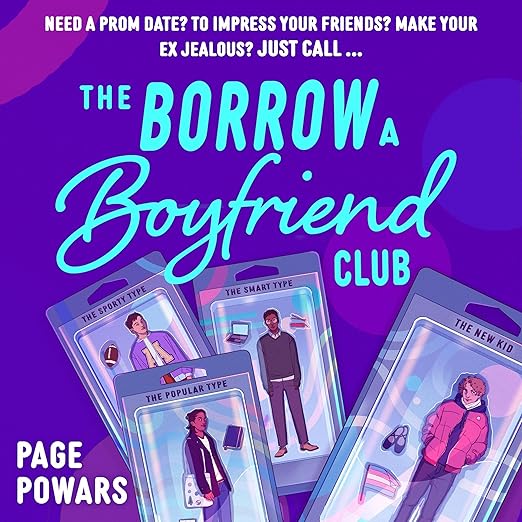
Noah is sixteen, trans, and absolutely determined that his new school will be different. No more misgendering. No more people looking at him and seeing something other than what he is. The plan to join a club with the word boy in the name is both charming in its logic and quietly heartbreaking in what it reveals: that Noah is still in the position of having to prove his gender to other people, and that a social credential might do what simply existing has not managed to accomplish. That is the emotional engine of this story, and it runs clean.
Our Take on The Borrow a Boyfriend Club
What Powars does well is keep Noah’s trans identity central without making it the only thing Noah is. He is funny, occasionally his own worst enemy, and he develops a genuine friendship with a group of characters who matter to the story beyond their supporting-cast function. The fake romance with Asher is handled with enough specificity that it does not feel like a genre formality. The tension between performing a relationship for external validation and actually wanting something real with this particular prickly, reluctant person is where the book lives, and the audio format serves that tension well. Hearing Noah’s internal negotiations through Christian Banas’s narration makes the self-deception feel intimate rather than coy.
Why Listen to The Borrow a Boyfriend Club
Christian Banas is a smart casting choice. His voice has the quality of someone telling you a story while also figuring out how it ends, which suits Noah’s perspective exactly. Noah is not a character who has everything sorted. He knows what he wants in the broad sense but not always in the immediate one, and Banas makes that uncertainty feel alive rather than frustrating. The romantic progression with Asher benefits from this: Banas can make you feel the exact moment when the performance stops and something genuine starts, without the text having to announce it.
What to Watch For in The Borrow a Boyfriend Club
The club’s premise, students renting out fellow students as dates, is acknowledged even by enthusiastic reviewers as somewhat far-fetched. Powars is not making a case for realism here, and the book works better if you accept the conceit as the kind of cheerful setup that makes teen comedy possible rather than as something that needs to hold up to structural scrutiny. The parental relationship subplot, touching on Noah’s sense that his parents do not see him as enough, carries more weight than the surrounding lightness might suggest, and a few scenes there land with genuine force. Be prepared for that.
Who Should Listen to The Borrow a Boyfriend Club
This audiobook is right for YA listeners who appreciate trans protagonists written with specificity and care, and who want their romance to feel earned rather than formulaic. It will resonate most strongly with readers who remember the particular anxiety of wanting a community to see you accurately, regardless of their own gender history. Adult listeners who found themselves moved by something like If This Gets Out or Cemetery Boys will recognize what Powars is doing here. Anyone expecting dark edges or narrative complexity beyond the genre conventions should look elsewhere. This is a warm story that does its job warmly and without apology, and for the right listener, that lack of apology is exactly the point. Powars is a debut author worth watching for precisely this reason: she has not hedged her first novel toward the middle. That confidence, in a debut, is worth paying attention to.
Frequently Asked Questions
Is The Borrow a Boyfriend Club appropriate for younger teen listeners, or is it aimed at older YA audiences?
The book is comfortably suited to readers 13 and up. The romance is sweet rather than explicit, and the trans identity themes are handled with care and age-appropriate nuance. It was published by a children’s imprint and sits firmly in the younger end of the YA spectrum.
Does the audiobook address transphobia directly, or does it present a more idealized social environment?
The story presents a mixed environment. Noah faces some misgendering and moments of dismissal, but the overall tone is hopeful and the social world of the school is more accepting than hostile. This is a feature for many readers, though those seeking a sharper engagement with the realities of transphobia will find this gentler than they might want.
Is this a standalone audiobook or does it end on a cliffhanger?
It is a complete standalone. The romantic arc and Noah’s central identity struggle both reach satisfying resolutions within this single listening experience.
How does Christian Banas handle the narration of Asher, who is a significant secondary character with a different personality from Noah?
Banas differentiates Asher effectively through cadence and a slight sharpness in delivery that softens as the story progresses. It is not a dramatic voice performance but a subtle one, which works for this kind of intimate first-person narration.